
Restaurant Kitchen Equipment Suppliers: What to Check Beyond Unit Price
Choosing restaurant kitchen equipment suppliers based only on unit price can expose a foodservice business to hidden costs, compliance risks, and operational downtime. For business evaluators, the real question is whether a supplier can support long-term efficiency, food safety, energy performance, and scalable kitchen operations. This article outlines the key factors to assess beyond the quoted price, helping restaurants, hotels, and central kitchens make more reliable procurement decisions.
Why Unit Price Is Only One Part of Supplier Evaluation
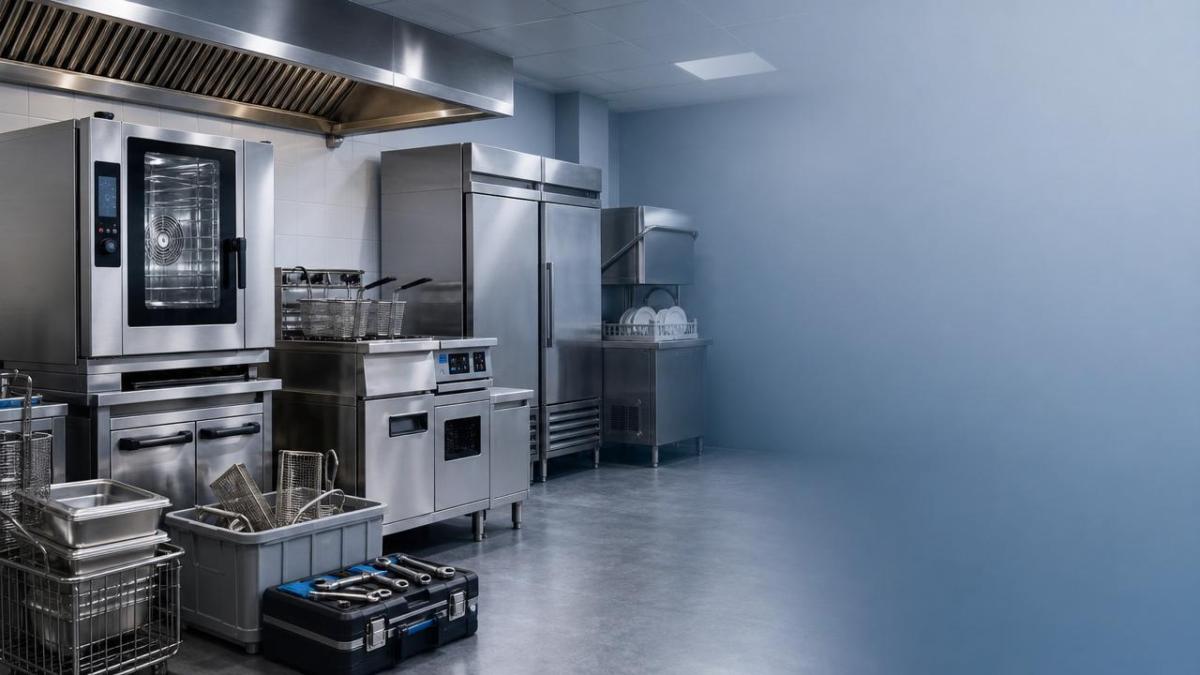
Unit price is easy to compare, but restaurant kitchen equipment suppliers influence many costs that appear after purchase. Installation, compatibility, energy use, spare parts, and downtime can change the real value of a quotation.
Business evaluators should treat kitchen equipment as an operational asset, not a simple commodity. A cheaper fryer, oven, mixer, or refrigeration unit may become expensive if it slows service or fails during peak hours.
What a complete quotation should reveal
- The exact equipment specification, including capacity, power requirements, materials, control type, and intended foodservice application.
- The delivery scope, such as accessories, installation guidance, manuals, packaging, spare parts, and training support.
- The warranty terms, response process, claim requirements, and expected availability of replacement components.
- The compliance basis, including food-contact safety, electrical safety, gas safety, or market-specific documentation.
Reliable restaurant kitchen equipment suppliers usually make these points clear before the buyer asks repeatedly. Lack of detail often creates procurement friction and weakens internal approval confidence.
Supplier Capability Checklist for Commercial Kitchens
For restaurants, hotels, food processing facilities, and central kitchens, supplier capability should be checked against the operating model. The right restaurant kitchen equipment suppliers understand workflow, hygiene, and production pressure.
The table below helps evaluators compare suppliers using factors that directly affect project success, not only purchasing expense.
This checklist is especially useful when comparing overseas restaurant kitchen equipment suppliers. It separates a low quote from a dependable sourcing partner that can support installation and daily operations.
How Different Foodservice Scenarios Change Equipment Priorities
A supplier that works for a small café may not suit a hotel banquet kitchen or food processing line. Business evaluators should first define capacity, menu complexity, and service rhythm.
Restaurant kitchen equipment suppliers with broad industry experience can suggest alternatives based on actual usage patterns, rather than pushing the same configuration for every project.
Common application scenarios
- Quick-service restaurants need compact equipment, rapid heating, easy cleaning, and predictable output during short peak periods.
- Hotels require flexible cooking, refrigeration, and preparation systems that support breakfast, room service, banquets, and staff dining.
- Central kitchens need high-capacity preparation, cooking, chilling, packaging, and digital management compatibility.
- Food processing facilities often focus on automation, batch consistency, sanitation design, and integration with production flow.
The table below shows how scenario-based evaluation changes supplier requirements before the final purchasing decision.
Scenario matching prevents overbuying and underbuying. Strong restaurant kitchen equipment suppliers help buyers avoid both excessive specifications and equipment that cannot handle real demand.
Technical Performance Factors That Affect Long-Term Cost
Technical details should be translated into financial impact. Energy consumption, heating recovery, refrigeration stability, motor load, and cleaning time all affect operating cost.
When reviewing restaurant kitchen equipment suppliers, evaluators should ask for measurable specifications instead of relying on generic claims about efficiency or durability.
Parameters that deserve closer review
- Capacity: Check output per hour, tray quantity, batch volume, or storage capacity against peak service needs.
- Energy use: Compare rated power, standby consumption, insulation design, compressor type, or burner efficiency.
- Material: Confirm food-contact surfaces, stainless steel grade suitability, corrosion resistance, and cleaning requirements.
- Control system: Review manual, digital, programmable, or intelligent control options based on staff skill and repeatability needs.
- Maintenance access: Inspect whether filters, seals, heating elements, pumps, and motors can be reached without major disassembly.
A smart procurement team connects these parameters to labor planning and service continuity. The lowest unit price rarely wins if equipment consumes more power or needs frequent intervention.
Compliance, Certification, and Market Entry Risks
Foodservice equipment must satisfy safety expectations in the destination market. Depending on the product and region, buyers may need documents related to electrical safety, gas safety, sanitation, or food-contact materials.
Restaurant kitchen equipment suppliers should not make vague promises about compliance. They should clarify which standards apply to which product category and which documents are available.
Common compliance areas to confirm
- Electrical safety requirements for ovens, mixers, refrigeration equipment, dishwashers, and kitchen appliances.
- Food-contact material declarations for stainless steel surfaces, plastic parts, coatings, containers, and utensils.
- Gas appliance safety documentation where burners, ranges, grills, or steam equipment use gas fuel.
- Sanitation design considerations, including cleanable surfaces, drainage, access panels, and contamination control.
Examples of common market references may include CE, UKCA, UL, ETL, NSF, FDA-related food-contact expectations, RoHS, or local import documentation. Applicability depends on equipment type and destination.
The following table helps procurement teams organize compliance conversations with restaurant kitchen equipment suppliers before payment terms are finalized.
Compliance should be reviewed early because documentation may affect product selection, lead time, and cost. A supplier that cannot explain requirements clearly may become a project risk.
Total Cost of Ownership: Where Hidden Costs Usually Appear
Total cost of ownership includes purchase price, transport, installation, energy, maintenance, downtime, operator training, and replacement cycle. It is the practical basis for comparing restaurant kitchen equipment suppliers.
A quotation may look attractive because accessories, commissioning support, or spare parts are excluded. Evaluators should ask whether each item is included, optional, or unavailable.
Cost items beyond the invoice
- Utility upgrades, including electrical capacity, water pressure, drainage, gas connection, and ventilation adjustments.
- Operating cost caused by power consumption, water use, heat loss, inefficient refrigeration, or extended cooking time.
- Maintenance cost related to seals, filters, heating elements, blades, pumps, motors, and cleaning consumables.
- Downtime cost when a key unit stops working during lunch service, banquet preparation, or scheduled production.
For chain restaurants and hotel groups, standardization also matters. If equipment varies across locations, training and spare parts become harder to manage.
Procurement Process: How to Compare Restaurant Kitchen Equipment Suppliers
A disciplined process helps avoid emotional price decisions. Business evaluators should create a supplier scorecard that combines technical fit, commercial terms, service capability, and risk control.
The process should also involve kitchen managers, finance teams, engineering staff, and compliance reviewers. Each group sees a different risk in the same purchase.
Recommended evaluation steps
- Define kitchen goals, including menu volume, service hours, batch size, storage needs, and hygiene expectations.
- Shortlist restaurant kitchen equipment suppliers that can provide suitable categories, documentation, and delivery support.
- Request detailed specifications, drawings, accessory lists, packing information, and available compliance documents.
- Compare total cost of ownership, not only unit price, using estimated energy use and maintenance requirements.
- Confirm lead time, sample support if needed, payment terms, logistics responsibilities, and after-sales communication channels.
This structure makes supplier comparison more transparent. It also helps procurement teams justify decisions internally when a higher quotation provides better operational value.
Common Mistakes When Selecting Restaurant Kitchen Equipment Suppliers
Many purchasing mistakes are not caused by lack of budget. They come from incomplete specifications, weak communication, or assuming that similar-looking equipment performs the same.
Mistake 1: Ignoring kitchen workflow
Equipment should support receiving, storage, preparation, cooking, plating, cleaning, and waste handling. A poor layout increases walking distance and slows service even if each machine works correctly.
Mistake 2: Treating certifications as universal
A certificate for one model does not automatically apply to another. Evaluators should confirm the exact product name, configuration, destination market, and document validity.
Mistake 3: Overlooking spare parts strategy
Critical parts should be identified before purchase. For busy kitchens, having basic seals, sensors, belts, filters, or heating elements available can reduce downtime.
FAQ: Practical Questions Before Placing an Order
How do I know if restaurant kitchen equipment suppliers understand my project?
A capable supplier asks about menu type, daily covers, peak periods, kitchen size, utilities, local compliance, and delivery deadline. If the conversation stays only on price, the evaluation is incomplete.
Should I buy standard equipment or request customization?
Standard equipment is suitable when capacity, dimensions, and controls match the operation. Customization may be necessary for central kitchens, unusual layouts, special voltage, or integrated production lines.
What lead time should I confirm before procurement approval?
Lead time depends on stock status, customization, documentation, packaging, and shipping route. Evaluators should separate production time, inspection time, export preparation, and transit time.
Is energy-efficient equipment always worth the higher initial cost?
It depends on daily usage hours and energy prices. For refrigeration, ovens, dishwashers, and continuous cooking equipment, lower consumption can justify a higher purchase price over time.
Why Choose Us for Kitchen Equipment Sourcing Support
Choosing restaurant kitchen equipment suppliers should be a structured business decision. We help evaluators clarify product specifications, application scenarios, certification needs, and total cost factors before committing budget.
Our support can cover parameter confirmation, equipment selection, quotation comparison, delivery cycle discussion, sample coordination, customization feasibility, and documentation review for restaurants, hotels, and central kitchens.
If you are comparing restaurant kitchen equipment suppliers, share your kitchen type, target capacity, destination market, and preferred timeline. We can help prepare a practical procurement checklist and discuss suitable equipment options.
Popular Tags
Kitchen Industry Research Team
Dedicated to analyzing emerging trends and technological shifts in the global hospitality and foodservice infrastructure sector.
Industry Insights
Join 15,000+ industry professionals. Get the latest market trends and tech news delivered weekly.
No spam. Unsubscribe anytime.
Hot Articles
 How to Size a Commercial Oven for Peak Production Without Wasting Energy
- How to Evaluate Foodservice Equipment Suppliers for Reliability, Service, and Total Cost
- How to Choose a Cutlery Set for Restaurants: Material, Durability, and Cost
- How to Evaluate Restaurant Supplies Distributors for Reliable Multi-Location Delivery
Contact With us
Contact:
Anne Yin (Ceramics Dinnerware/Glassware)
Lucky Zhai(Flatware)