
Wholesale restaurant kitchen equipment: Why MOQs vary wildly between factories
When sourcing restaurant kitchen equipment wholesale, buyers often face puzzling disparities in minimum order quantities (MOQs)—a challenge rooted in factory capabilities, compliance with restaurant kitchen safety standards, and specialization (e.g., fireproof restaurant kitchen equipment or hygienic restaurant kitchen design). Whether you’re a procurement professional evaluating a restaurant kitchen equipment factory for hospitals, schools, or catering, or a decision-maker optimizing restaurant kitchen workflow optimization and space saving restaurant kitchen layouts, understanding MOQ drivers is critical. This article unpacks why MOQs vary wildly—and how to align them with your needs, from energy efficient restaurant kitchen solutions to smart restaurant kitchen solutions and global export requirements.
Why MOQs Aren’t One-Size-Fits-All: Core Drivers Behind the Variance
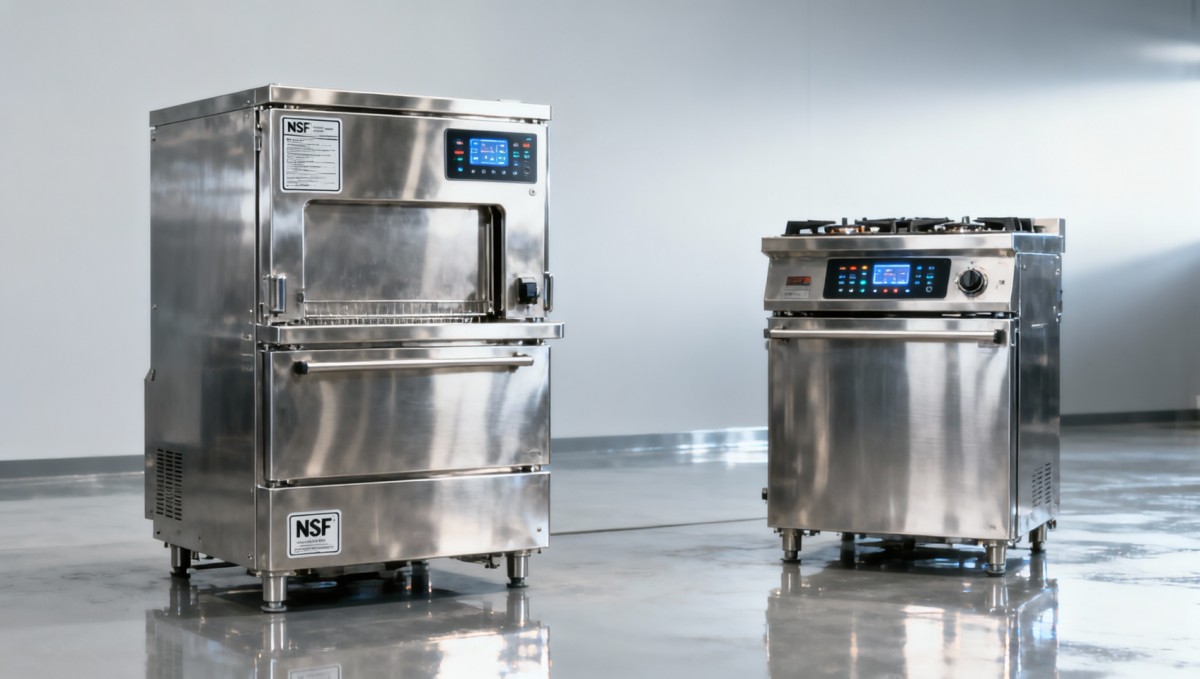
MOQs for wholesale restaurant kitchen equipment aren’t arbitrary—they reflect tangible operational constraints and strategic priorities embedded in each factory’s production model. A stainless steel combi oven may carry an MOQ of 5 units from a German OEM focused on precision engineering and CE-certified commercial-grade systems, while a Chinese contract manufacturer offering entry-level electric steamers may quote MOQs as low as 1 unit—but only for standard configurations without custom insulation or NSF/ANSI 4 certification.
Three structural factors dominate MOQ variation: production line setup time (typically 8–12 hours per new SKU), raw material procurement cycles (3–6 weeks for food-grade stainless steel 304 vs. 1–2 weeks for common-grade alternatives), and regulatory validation overhead—especially for equipment destined for U.S. (NSF/ANSI), EU (CE + EN 13480), or Australian (AS/NZS 4661) markets. Factories serving high-compliance verticals like healthcare or education rarely accept sub-10-unit orders for hood systems or blast chillers due to mandatory third-party testing costs exceeding $3,500 per configuration.
Automation level also plays a decisive role. Fully automated welding lines for dishwashing system frames require batch runs of ≥50 units to amortize programming and fixture costs—whereas semi-automated workshops handling modular prep tables can scale down to 3–5 units without sacrificing yield. This explains why MOQs for standardized undercounter refrigerators often sit at 8–12 units, while bespoke walk-in cold rooms demand MOQs tied to project-based engineering sign-off (minimum 1 full installation package).
How Equipment Type & Certification Level Shape MOQ Realities
Not all kitchen equipment carries equal MOQ weight. The table below compares MOQ ranges across four high-demand categories, segmented by primary market destination and core compliance requirements:
This variance underscores a key procurement insight: MOQs are not just volume thresholds—they’re proxies for risk allocation. Lower-MOQ suppliers often shift certification, traceability, or after-sales service responsibilities to the buyer. In contrast, higher-MOQ factories embed those costs into unit pricing, delivering turnkey-ready equipment with full documentation packages—including electrical schematics, material certifications (e.g., RoHS, REACH), and FAT/SAT checklists.
Strategic Sourcing: Matching MOQs to Your Operational Scale & Timeline
Procurement professionals must map MOQs against three concrete business parameters: deployment timeline (e.g., opening a 12-location QSR chain within 90 days), facility type (central kitchen vs. satellite café), and lifecycle commitment (5-year TCO vs. short-term pop-up use). For fast-track rollouts, factories offering “modular MOQs”—such as 10 units of base equipment + optional add-ons (smart controllers, extended warranty, local language UI)—reduce lead time by 2–4 weeks versus fully customized builds.
Consider these real-world alignment rules:
- For school district cafeterias requiring NSF-certified steam kettles: prioritize factories with MOQs ≤8 units and documented USDA Food Safety Modernization Act (FSMA) supplier audits.
- For hotel groups deploying IoT-enabled combi ovens across 20 properties: target OEMs offering “certification pooling”—validating one unit for multiple configurations, cutting MOQ impact by 40%.
- For emerging-market food processors needing cost-optimized but GMP-aligned equipment: seek hybrid models where MOQs drop from 15 to 5 units upon shared tooling agreements or consignment inventory arrangements.
Crucially, MOQ flexibility often correlates with service depth—not just price. Factories providing CAD layout support, thermal load calculations, or commissioning engineers on-site typically maintain MOQs 25–30% higher than transactional suppliers—but reduce total project risk by eliminating rework delays averaging 11–17 days per site.
Why Partner With Us: Precision MOQ Alignment for Global Kitchens
We specialize in bridging the gap between rigid factory MOQs and dynamic global deployment needs. Our platform connects you with over 120 pre-vetted manufacturers across China, Italy, Germany, and Malaysia—each mapped against 7 procurement dimensions: certification readiness (NSF, CE, SASO), minimum customization lead time (7–21 days), modular configuration options, local technical support coverage, spare parts SLA (<48h response), and flexible payment terms (LC, TT, or open account for qualified buyers).
Whether you need 3 certified fire-suppression integrated hoods for a hospital kitchen retrofit—or 42 smart induction ranges with Arabic-language UI for a GCC-based hospitality group—we engineer MOQ-efficient pathways. This includes shared-container consolidation, multi-SKU bundling with staggered delivery windows, and factory-direct sample programs (with MOQ waiver for first-time partners meeting Tier-2 credit criteria).
Ready to align MOQs with your next rollout? Contact us to request: (1) a factory-matched MOQ analysis for your specific equipment list, (2) compliance gap assessment against target market regulations, (3) delivery timeline simulation including customs clearance buffers, or (4) a no-obligation sample unit with full test report documentation.
- central kitchen
- kitchen design
- restaurant kitchen
- kitchen solutions
- Food Processor
- Commercial Dishwasher
- kitchen equipment
- restaurant kitchen equipment
- kitchen equipment wholesale
- restaurant kitchen design
- energy efficient restaurant kitchen
- restaurant kitchen equipment wholesale
- smart restaurant kitchen solutions
- hygienic restaurant kitchen design
- space saving restaurant kitchen
- fireproof restaurant kitchen equipment
- restaurant kitchen workflow optimization
- restaurant kitchen equipment factory
- restaurant kitchen safety standards
- restaurant kitchen layout
- restaurant kitchen safety
- restaurant kitchen workflow
Popular Tags
Kitchen Industry Research Team
Dedicated to analyzing emerging trends and technological shifts in the global hospitality and foodservice infrastructure sector.
Industry Insights
Join 15,000+ industry professionals. Get the latest market trends and tech news delivered weekly.
No spam. Unsubscribe anytime.
Contact With us
Contact:
Anne Yin (Ceramics Dinnerware/Glassware)
Lucky Zhai(Flatware)