
How to source restaurant kitchen equipment parts without delays
Sourcing restaurant kitchen equipment parts without delays is essential for stable foodservice operations. A missing thermostat, gasket, igniter, valve, or control board can stop production fast.
In commercial kitchens, downtime affects food safety, labor efficiency, revenue, and customer experience. That is why restaurant kitchen equipment parts should be sourced through a structured, risk-aware purchasing process.
This article explains how to shorten lead times, verify suppliers, standardize specifications, and improve supply continuity across ovens, refrigeration systems, dishwashers, fryers, and automated prep equipment.
Core understanding of restaurant kitchen equipment parts sourcing
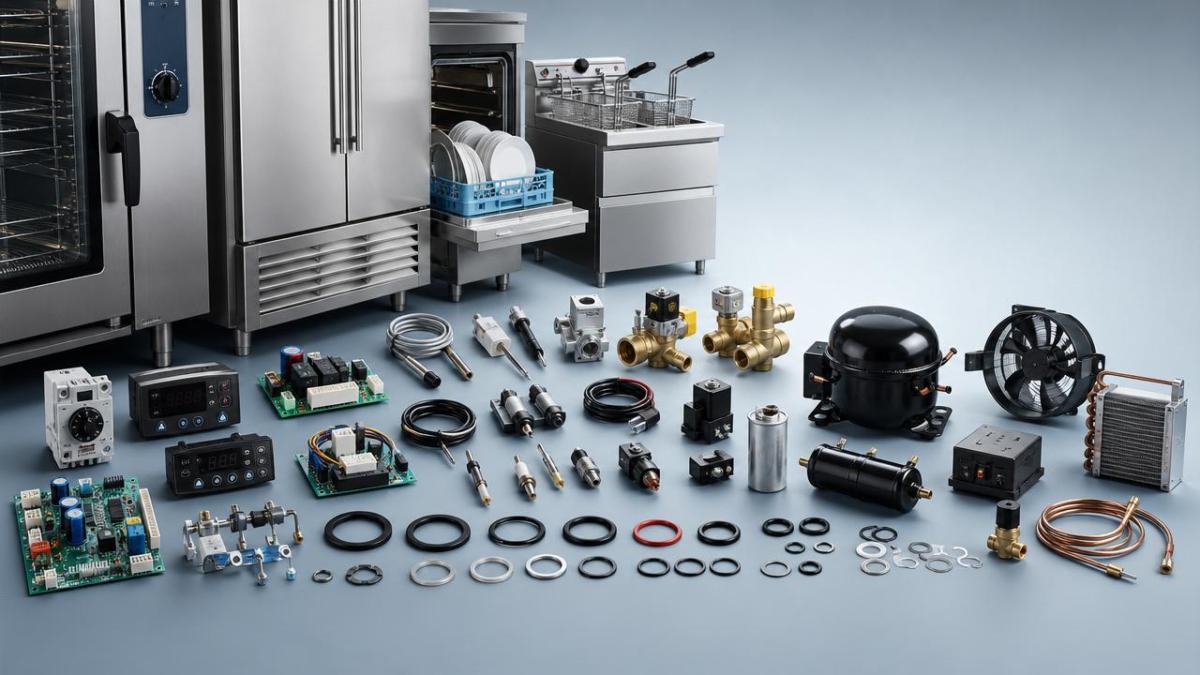
Restaurant kitchen equipment parts include mechanical, electrical, electronic, and safety components used to maintain, repair, or upgrade commercial kitchen systems.
Common examples include burners, heating elements, door seals, fan motors, condensers, relays, sensors, compressors, switches, pumps, belts, filters, and digital control modules.
Delays usually happen for four reasons. Specifications are incomplete. Supplier stock is inaccurate. Logistics are poorly planned. Cross-border compliance is not checked early enough.
The best sourcing process starts with precise identification. Equipment brand, model, serial number, voltage, dimensions, material, and compatibility details should be confirmed before ordering.
This reduces wrong purchases and avoids repeated shipping cycles. It also helps compare OEM and compatible restaurant kitchen equipment parts more accurately.
Market conditions shaping lead times
The kitchen equipment industry supports restaurants, hotels, food factories, central kitchens, and institutional catering. It is also becoming more automated, digital, and energy efficient.
That shift increases demand for specialized restaurant kitchen equipment parts. Smart controls, sensors, software-linked modules, and energy-saving components often require tighter sourcing discipline.
Global production is concentrated in countries such as China, Germany, Italy, and Japan. This creates broad sourcing options, but it also introduces logistics and compliance complexity.
Recent supply chain pressure has changed buying priorities. Buyers now focus more on availability, part traceability, multi-source planning, and after-sales technical support.
Why sourcing speed matters to business continuity
Fast access to restaurant kitchen equipment parts protects operations in ways that go beyond repair speed. It improves planning, service consistency, and total equipment life.
A delayed compressor can spoil temperature-sensitive inventory. A delayed fryer basket support can reduce output during peak periods. Small parts can create large business losses.
Reliable sourcing also supports preventive maintenance. Instead of waiting for failure, replacement parts can be stocked or scheduled around service intervals.
- Lower unplanned equipment downtime
- Better food safety and sanitation compliance
- Improved labor productivity during service hours
- Reduced emergency freight and rush-order costs
- Longer useful life for core kitchen assets
Typical categories of restaurant kitchen equipment parts
Not all parts carry the same urgency or sourcing risk. Classifying restaurant kitchen equipment parts helps prioritize stock, supplier coverage, and replenishment timing.
Practical methods to reduce sourcing delays
Build a complete part identification record
Create a standardized record for every asset. Include equipment photos, data plate images, part codes, dimensions, material, and known substitute options.
This one step prevents many ordering errors. It also accelerates quotation requests for restaurant kitchen equipment parts from multiple sources.
Qualify suppliers beyond price
A low unit cost does not guarantee fast delivery. Review stock depth, export experience, response speed, packaging quality, and warranty support.
Ask whether the supplier offers OEM parts, compatible alternatives, or both. Confirm test standards, product traceability, and replacement policy before placing urgent orders.
Use dual sourcing for critical parts
Single-source dependence creates avoidable risk. For high-failure or high-impact restaurant kitchen equipment parts, maintain at least two approved suppliers.
One source can cover routine replenishment. The other can serve as a backup for urgent needs, regional disruption, or model-specific shortages.
Plan inventory by failure criticality
Not every part should be stocked. Focus on components with high failure frequency, long replacement lead time, or strong food safety impact.
- Stock fast-moving seals, probes, switches, and filters locally
- Review quarterly usage trends for restaurant kitchen equipment parts
- Set minimum stock levels for critical equipment families
- Remove obsolete items after model retirement reviews
Improve logistics and compliance checks
Lead time is not only manufacturing time. It includes picking, export paperwork, customs clearance, local delivery, and final technical verification.
Confirm HS codes, packaging labels, voltage standards, and destination requirements early. This is especially important for electrical restaurant kitchen equipment parts.
Supplier evaluation framework for dependable purchasing
A structured evaluation framework helps compare suppliers fairly and supports consistent decisions across categories of restaurant kitchen equipment parts.
Common sourcing mistakes to avoid
Many delays are preventable. They often come from process gaps rather than supplier failure alone.
- Ordering by visual similarity without checking exact part numbers
- Ignoring voltage, frequency, or regional certification requirements
- Choosing only the cheapest restaurant kitchen equipment parts
- Keeping no backup source for high-risk categories
- Skipping lead time review for imported electronic components
- Failing to update equipment and spare-parts master records
Operational next steps for a stronger sourcing system
A resilient sourcing system for restaurant kitchen equipment parts starts with visibility. Map all critical equipment, identify vulnerable parts, and rank them by downtime impact.
Then create approved supplier lists, stock rules, and emergency ordering workflows. Review performance data regularly and adjust according to failure history and seasonal demand.
For cross-border purchasing, align technical, logistics, and compliance checks before confirming orders. This reduces confusion and keeps replacement cycles predictable.
When restaurant kitchen equipment parts are sourced with accurate data, qualified suppliers, and realistic inventory planning, delays become easier to control and operations stay more stable.
Popular Tags
Kitchen Industry Research Team
Dedicated to analyzing emerging trends and technological shifts in the global hospitality and foodservice infrastructure sector.
Industry Insights
Join 15,000+ industry professionals. Get the latest market trends and tech news delivered weekly.
No spam. Unsubscribe anytime.
Hot Articles
 How to Size a Commercial Oven for Peak Production Without Wasting Energy
- How to Evaluate Foodservice Equipment Suppliers for Reliability, Service, and Total Cost
- How to Choose a Cutlery Set for Restaurants: Material, Durability, and Cost
- How to Evaluate Restaurant Supplies Distributors for Reliable Multi-Location Delivery
Contact With us
Contact:
Anne Yin (Ceramics Dinnerware/Glassware)
Lucky Zhai(Flatware)