Why glass tea server capacity affects daily serving flow
In busy kitchens, the capacity of a glass tea server can directly influence serving speed, portion consistency, and workflow efficiency. Whether used in cafés, hotels, or restaurant service stations, choosing the right glass tea server helps operators reduce refills, manage peak-hour demand, and maintain beverage quality. Understanding this detail is essential for smoother daily service and better customer satisfaction.
Why does glass tea server capacity matter more than many operators expect?
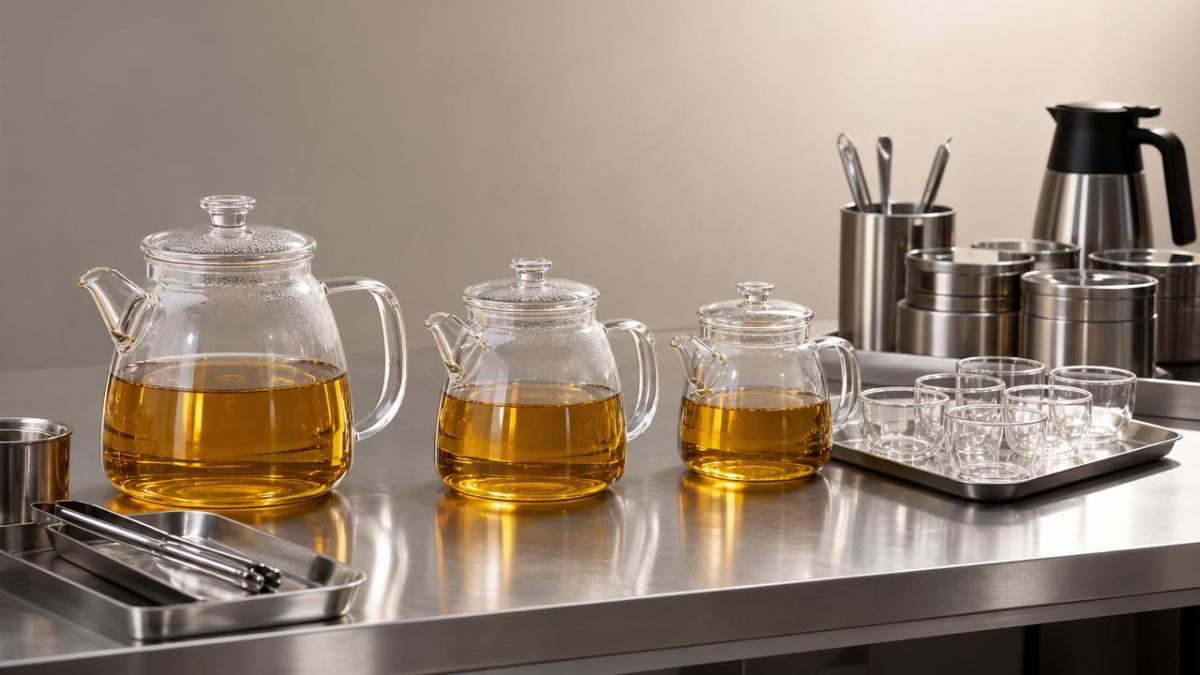
A glass tea server looks simple, but its capacity affects labor rhythm, beverage turnover, and table service timing. In commercial kitchens and beverage stations, small hardware choices often shape daily efficiency more than expected.
For operators, the issue is not only how much tea a server can hold. The real question is whether that volume matches order frequency, cup size, holding time, and refill distance during active service periods.
In the kitchen equipment industry, workflow design has become closely linked to output consistency and energy-aware operations. Even a basic glass tea server should support smooth service, safe handling, and clear visual control.
- A server that is too small increases refill frequency and interrupts beverage station flow.
- A server that is too large may keep tea sitting too long, affecting flavor, aroma, and temperature.
- An unsuitable capacity can also create portion variation, especially when teams serve different cup formats across breakfast, afternoon, and banquet periods.
This is why capacity selection should be treated as an operating decision, not only a purchasing detail. For restaurants, hotels, and central beverage points, the right size supports repeatable service and fewer avoidable delays.
Which service scenarios need different glass tea server sizes?
Not every environment uses a glass tea server in the same way. A front-of-house tea station, a hotel breakfast line, and a back-of-house prep area all face different refill patterns and serving expectations.
The table below helps operators compare common scenarios and estimate practical capacity ranges before discussing product selection, procurement planning, or sample testing.
These ranges are not strict rules, but they offer a practical starting point. Operators should still verify cup volume, tea turnover time, and service route length before confirming a final glass tea server specification.
Front counter service
At the counter, speed matters more than maximum volume. Staff usually benefit from a medium-capacity glass tea server that is easy to lift, easy to pour, and quick to refill without breaking order rhythm.
Buffet and self-service lines
Buffet lines often need a larger vessel because guest waves come suddenly. However, if the tea type is delicate or loses freshness quickly, several medium units may perform better than one oversized server.
Table service in restaurants and hotels
For table service, balance is critical. A server must hold enough tea for multiple pours while remaining stable in hand. Overly large glassware can feel heavy and increase spill risk during busy movement between tables.
How capacity changes daily serving flow in real operations
Serving flow depends on repeated micro-actions: brewing, carrying, pouring, checking levels, and refilling. If a glass tea server is undersized, these micro-actions multiply and create bottlenecks at beverage stations.
If capacity is oversized, the workflow problem changes. Staff may carry more weight, pour less accurately, or let tea stand too long before the next cycle. Both extremes reduce operational control.
- Refill frequency rises when the server cannot cover one full service wave.
- Walking distance increases if staff must return repeatedly from dining area to beverage prep zone.
- Flavor stability falls when oversized batches are held beyond ideal serving time.
- Portion control weakens if staff compensate by overpouring to avoid another refill trip.
In integrated kitchen systems, operators increasingly review equipment by workflow impact rather than by unit price alone. A glass tea server should therefore be chosen as part of service design, not as an isolated utensil.
What technical details should operators check besides capacity?
Capacity is the main topic, but several technical features determine whether a glass tea server performs well under real service pressure. Operators should assess pouring behavior, temperature suitability, cleaning convenience, and visual level visibility.
The table below compares the technical points that often influence practical use more than expected during restaurant, hotel, and catering operations.
When these details align with the right capacity, the glass tea server becomes easier to standardize across teams. That matters in operations where multiple shifts and varying skill levels can otherwise cause inconsistent beverage service.
Material and food-contact expectations
Operators should confirm that the glass tea server is suitable for hot beverage contact and routine washing. In professional settings, materials should support hygienic cleaning practices and fit common food-contact compliance expectations in target markets.
Visibility and batch control
One advantage of transparent servers is immediate level monitoring. Staff can see sediment, remaining volume, and color strength without opening lids or interrupting service, which supports both quality control and faster replacement timing.
How to choose the right glass tea server for procurement and operations
Procurement teams and front-line operators should make the decision together. Buyers may focus on budget and supply timing, while users understand pouring comfort, station congestion, and refill pressure during actual peak periods.
A practical selection process reduces mismatch and prevents the common problem of buying attractive glassware that performs poorly in daily service.
- Start with actual cup size. A 200 ml tea cup and a 350 ml mug create very different demand per refill cycle.
- Measure peak orders per 15 to 30 minutes rather than relying on average daily volume.
- Check who handles the server. A banquet server, barista, and buffet attendant may need different ergonomic balance.
- Review cleaning method, including hand washing, dishwasher exposure, and drying space.
- If possible, test one or two capacities during a live shift before placing a larger order.
This method matches current kitchen equipment purchasing trends, where functionality, service efficiency, and long-term usability matter as much as initial price. For multi-site operations, a standardized glass tea server range can also simplify replacement planning.
When to choose one size only
A single capacity works best when menu structure, cup size, and service model are stable. This is common in focused cafés, compact breakfast rooms, or branded chains seeking operating consistency across locations.
When mixed capacities are more practical
Mixed sizes are useful when one site handles multiple demand patterns. For example, a hotel may need medium units for table service and larger ones for buffet display during morning peaks.
What are the common mistakes when selecting a glass tea server?
Many selection problems come from evaluating the glass tea server as a visual item rather than an operating tool. Good appearance matters, but service performance matters more in fast-paced foodservice environments.
Mistake 1: Choosing the biggest option to avoid refills
This seems efficient, yet oversized servers can increase stale holding time, create heavier lifting, and reduce control at the table. More volume is not always better volume.
Mistake 2: Ignoring refill route and station layout
If the beverage prep point is far from the serving area, a slightly larger capacity may reduce wasted walking time. If it is nearby, smaller fresh batches may be the better choice.
Mistake 3: Overlooking cleaning and replacement needs
A narrow opening, unstable base, or hard-to-remove residue can turn a usable glass tea server into a maintenance burden. Operators should think about end-of-shift work, not just live service.
Mistake 4: Purchasing without sample verification
Photos and catalog dimensions rarely show how a full server feels in hand. A sample test helps verify balance, drip control, pouring angle, and compatibility with real cups and trays.
FAQ about glass tea server capacity and daily use
How do I know if a glass tea server is too small for my operation?
If staff must refill before completing one normal service round, or if guests regularly wait during second pours, the capacity is likely too small. Track refill count during peak 30-minute windows to confirm.
Is a larger glass tea server always more efficient?
No. A larger glass tea server reduces refill trips but may lower freshness, increase wrist strain, and create uneven pouring. Efficiency comes from matching capacity to turnover rate, not simply maximizing volume.
What capacity works well for hotel breakfast service?
Many breakfast operations start review in the 800–1200 ml range, but the final decision should depend on guest flow, number of beverage points, and how quickly tea is replaced. Multiple medium units often support fresher service than one very large vessel.
What should procurement teams ask suppliers before ordering?
Ask about actual usable volume, thermal suitability, packaging protection, sample availability, lead time, and whether the design supports the cleaning process used in your facility. These points matter more than catalog photos alone.
Why this small equipment choice fits bigger kitchen industry trends
The kitchen equipment industry is moving toward smarter, more efficient, and more standardized operations. Even traditional serving tools are now judged by labor impact, food safety compatibility, and integration into controlled service systems.
For operators, that means selecting a glass tea server with the same logic used for larger equipment categories: match the tool to usage intensity, cleaning requirements, workflow layout, and service expectations.
This approach supports restaurants, hotels, and foodservice facilities seeking better consistency without unnecessary complexity. In a competitive market, smoother beverage service contributes directly to guest satisfaction and staff productivity.
Why choose us for glass tea server selection and supply support?
If you are comparing glass tea server options for restaurant, hotel, café, or catering use, we can help you evaluate more than appearance and nominal volume. The key is selecting a practical capacity that fits your serving flow.
You can contact us to discuss specific points such as cup size matching, volume recommendation, sample support, lead time, packaging needs, and whether one capacity or mixed capacities suit your operation better.
- Parameter confirmation for capacity, opening size, and handling comfort.
- Product selection support based on café, hotel, buffet, or table-service scenarios.
- Delivery schedule discussion for routine orders or project-based purchasing.
- Sample evaluation to test pouring behavior, cleaning suitability, and station workflow fit.
- Quotation communication for different order quantities and replacement planning.
A well-matched glass tea server can reduce interruptions, support portion control, and improve service pace every day. If you want a more accurate recommendation, share your use scenario and expected volume, and we can help narrow the right option efficiently.
Popular Tags
Kitchen Industry Research Team
Dedicated to analyzing emerging trends and technological shifts in the global hospitality and foodservice infrastructure sector.
Industry Insights
Join 15,000+ industry professionals. Get the latest market trends and tech news delivered weekly.
No spam. Unsubscribe anytime.
Hot Articles
 How to Size a Commercial Oven for Peak Production Without Wasting Energy
- How to Evaluate Foodservice Equipment Suppliers for Reliability, Service, and Total Cost
- How to Choose a Cutlery Set for Restaurants: Material, Durability, and Cost
- How to Evaluate Restaurant Supplies Distributors for Reliable Multi-Location Delivery
Contact With us
Contact:
Anne Yin (Ceramics Dinnerware/Glassware)
Lucky Zhai(Flatware)