
Restaurant kitchen ideas that improve workflow and space
Smart restaurant kitchen ideas can transform how project managers and engineering leaders plan efficient, scalable foodservice spaces. From workflow zoning and equipment layout to energy-saving systems and automation, the right design choices help reduce bottlenecks, improve safety, and maximize every square foot. This guide explores practical strategies for building a restaurant kitchen that supports productivity, compliance, and long-term operational growth.
How restaurant kitchen ideas improve workflow from the planning stage
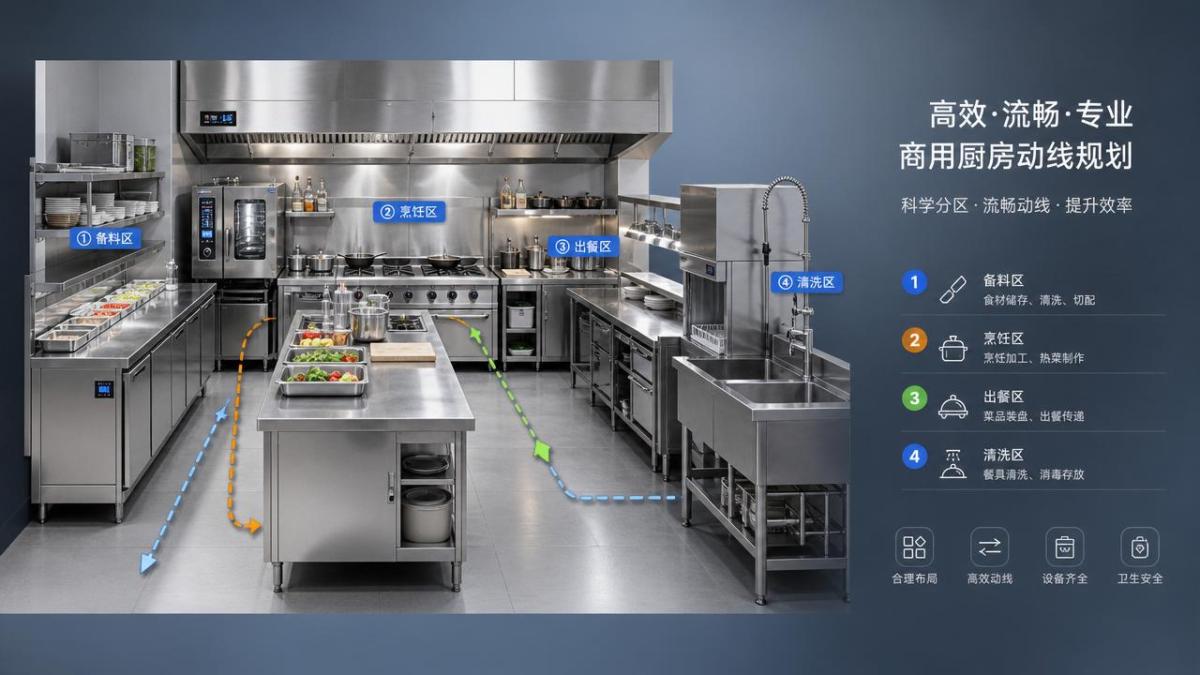
For project managers, the best restaurant kitchen ideas start long before equipment arrives on site. Workflow performance is decided during layout planning, utility coordination, ventilation design, and equipment selection. A kitchen that looks efficient on paper can still fail if prep, cooking, holding, washing, and dispatch areas compete for the same path.
In commercial foodservice projects, space pressure is common. Operators want more output from smaller back-of-house footprints, while owners expect lower energy use and faster service. That is why kitchen design must connect operational logic with engineering practicality rather than treating equipment as isolated purchases.
Core planning goals for high-performance kitchens
- Separate incoming goods, raw prep, hot cooking, plating, and waste flow so staff movement remains predictable during rush periods.
- Match equipment capacity to menu volume and service model instead of overbuilding every station.
- Reserve service corridors and maintenance clearances to avoid future shutdowns when repairs or cleaning are needed.
- Integrate ventilation, drainage, gas, water, and power requirements early to prevent rework during installation.
Strong restaurant kitchen ideas reduce labor friction. They also support food safety by limiting cross-traffic between raw and cooked products. For engineering teams, this means fewer late-stage design conflicts and a more reliable handover to operations.
Which layout strategy fits your restaurant kitchen ideas best?
Layout choice should reflect menu complexity, service speed, and daily peak load. A fine dining kitchen, a quick-service line, and a central production kitchen all need different circulation logic. The table below compares common layout approaches used in restaurant projects.
The right option depends on movement paths, not just equipment count. If your team expects menu growth, choose restaurant kitchen ideas that allow modular expansion. Flexible layouts reduce the cost of future renovation and lower downtime when new stations are added.
Questions to ask before freezing the layout
- How many meals must the kitchen produce per hour during the busiest service window?
- Which stations share ingredients, and where do handoffs currently slow production?
- Will the kitchen support dine-in only, or also takeout, delivery, banquet, or central prep functions?
- Can heavy equipment be serviced without dismantling surrounding workstations?
Space-saving restaurant kitchen ideas for small and medium projects
Space limits do not automatically reduce performance. In many urban projects, compact restaurant kitchen ideas outperform larger kitchens because every meter is assigned to a specific function. The challenge is balancing storage, production, sanitation, and access without creating staff congestion.
Practical ways to maximize usable space
- Use vertical shelving and wall-mounted systems for utensils, ingredient bins, and small appliances to free floor area.
- Select combination equipment, such as combi ovens or prep counters with refrigerated bases, when menu logic supports multifunction use.
- Place high-frequency tools within one-step reach of each station to cut micro-delays repeated hundreds of times per shift.
- Separate clean storage from raw receiving so loading activity does not block active production zones.
Engineering leaders should also pay attention to door swings, aisle widths, and turning radius for carts. These details often determine whether a compact design remains workable after opening. Restaurant kitchen ideas that save space must still support cleaning access, emergency movement, and safe handling of hot items.
What equipment choices support better flow and lower operating cost?
Equipment selection has a direct effect on speed, labor demand, and energy consumption. Project teams should compare not only purchase price, but also output stability, cleaning time, service access, utility demand, and compatibility with smart kitchen systems. The table below helps structure those decisions.
For many operators, energy-efficient restaurant kitchen ideas deliver the strongest long-term return when equipment runs daily at high load. Smart controls, standby modes, and connected monitoring can reduce waste, but only if staff workflows are designed to use these features consistently.
When automation makes business sense
Automation is most useful where labor is repetitive, consistency matters, and service demand is predictable. Examples include automated frying programs, programmable ovens, digital temperature logging, and production dashboards. These solutions are particularly relevant in chain restaurants, hotels, central kitchens, and high-volume sites where standardization affects profitability.
Procurement guide: how project managers evaluate restaurant kitchen ideas
Procurement should connect design intent with installation reality. A low-price equipment list may create hidden costs through delayed lead times, utility mismatch, poor serviceability, or noncompliant materials. Structured evaluation reduces these risks and makes supplier discussions more productive.
Evaluation checklist before placing an order
- Confirm whether each item is sized for real production volume rather than theoretical maximum output.
- Review power, gas, water, drain, and ventilation interfaces against the latest MEP drawings.
- Ask for material details on food-contact surfaces, insulation, and corrosion resistance for wet zones.
- Check service access dimensions and consumable replacement intervals to avoid long maintenance shutdowns.
- Align delivery sequence with site readiness so heavy equipment is not stored, damaged, or rehandled unnecessarily.
Many restaurant kitchen ideas fail during procurement because teams focus on catalog specifications but ignore sequencing. For example, refrigeration may arrive before floor finishes are protected, or hood installation may conflict with ceiling work. Cross-functional review between procurement, engineering, and kitchen operations prevents these avoidable delays.
Compliance, safety, and utility coordination that should not be overlooked
Efficient kitchens still need to comply with local food safety, fire protection, ventilation, and workplace requirements. Exact rules differ by market, but project leaders should expect checks around hygiene zoning, grease management, extraction performance, drainage, material cleanability, and emergency shutoff arrangements.
Common compliance topics in kitchen projects
When teams use restaurant kitchen ideas without checking utility and compliance details, redesign becomes expensive. Early coordination with local consultants, installers, and inspectors helps keep projects on schedule and reduces change orders during commissioning.
Common mistakes that weaken otherwise good restaurant kitchen ideas
Mistake 1: Oversizing equipment without matching demand
More capacity is not always better. Oversized equipment raises capital cost, consumes more energy, and may reduce usable workspace. Capacity should reflect realistic peak production, menu mix, and batch timing.
Mistake 2: Ignoring service and cleaning access
A tightly packed line may look efficient but become costly when filters, compressors, burners, or drain points cannot be reached. Preventive maintenance access should be part of every equipment layout review.
Mistake 3: Treating storage as leftover space
Insufficient cold, dry, or day-use storage creates repeated restocking movement. That adds labor pressure and increases the chance of clutter in production aisles.
Mistake 4: Separating design from future expansion
Restaurant kitchen ideas should support future menu changes, digital ordering growth, and possible automation upgrades. If there is no spare utility capacity or no room for additional stations, expansion becomes disruptive and expensive.
FAQ: practical questions behind restaurant kitchen ideas
How do I choose between a compact kitchen and a larger back-of-house plan?
Base the decision on menu complexity, service channels, and peak hourly output. If the concept has a focused menu and high repetition, compact restaurant kitchen ideas often perform well. If the operation supports banquets, room service, or multiple cuisines, more zoning and circulation space is usually required.
Which equipment should be prioritized when budget is limited?
Prioritize equipment that controls throughput, food safety, and daily labor use. In most projects, this means core cooking, refrigeration, extraction, and warewashing first. Secondary specialty items can sometimes be phased in after opening if utility planning has already reserved for them.
What delivery risks should project managers watch closely?
Watch fabrication lead time, import timing, access restrictions, utility readiness, and installation sequencing. Long-lead items such as hoods, walk-in cold rooms, or custom stainless assemblies should be reviewed early because they can affect several trades at once.
Are smart systems always necessary in modern restaurant kitchen ideas?
Not always. Smart monitoring and automation are most useful when the kitchen runs at scale, suffers from labor turnover, or needs tighter consistency across shifts or locations. Smaller independent sites may gain more value from better zoning and durable equipment than from advanced digital layers.
Why choose us for restaurant kitchen ideas, equipment planning, and project coordination
We support project managers and engineering teams with restaurant kitchen ideas that combine workflow design, equipment logic, and implementation detail. Our approach aligns commercial kitchen equipment, smart kitchen trends, energy-saving priorities, and practical site conditions so your project can move from concept to operation with fewer revisions.
You can contact us to discuss equipment parameters, layout optimization, utility matching, delivery schedules, phased procurement, sample support, certification expectations, and quotation planning. If you are comparing alternatives for a restaurant, hotel, central kitchen, or food processing application, we can help structure the decision around output goals, budget limits, and long-term operating efficiency.
For teams under deadline pressure, early consultation is especially useful. It helps confirm whether your restaurant kitchen ideas are feasible before procurement begins, and it reduces the risk of cost overruns caused by layout changes, utility conflicts, or mismatched equipment capacity.
Popular Tags
Kitchen Industry Research Team
Dedicated to analyzing emerging trends and technological shifts in the global hospitality and foodservice infrastructure sector.
Industry Insights
Join 15,000+ industry professionals. Get the latest market trends and tech news delivered weekly.
No spam. Unsubscribe anytime.
Hot Articles
 How to Size a Commercial Oven for Peak Production Without Wasting Energy
- How to Evaluate Foodservice Equipment Suppliers for Reliability, Service, and Total Cost
- How to Choose a Cutlery Set for Restaurants: Material, Durability, and Cost
- How to Evaluate Restaurant Supplies Distributors for Reliable Multi-Location Delivery
Contact With us
Contact:
Anne Yin (Ceramics Dinnerware/Glassware)
Lucky Zhai(Flatware)