
What makes durable kitchen tools last in humid kitchens?
In humid kitchens, durable kitchen tools last longer when they combine stainless steel kitchen tools construction, ergonomic design, and surfaces that resist rust, wear, and food buildup. Whether you are sourcing commercial kitchen tools, kitchen tools for restaurants, or kitchen tools for home use, understanding materials, maintenance, and supplier quality helps buyers compare kitchen tools wholesale options, kitchen tools price list details, and long-term value with confidence.
Humidity is not a minor background condition. In busy restaurants, hotel kitchens, central kitchens, and even compact residential spaces, moisture levels can remain high for 8-16 hours a day due to steam, washing cycles, and limited ventilation. That constant exposure accelerates corrosion, loosens joints, damages handles, and shortens the useful life of poorly made kitchen tools.
For operators, durability means fewer interruptions and safer handling. For procurement teams, it means lower replacement frequency, more stable cost planning, and less waste across 12-36 month usage cycles. For decision-makers, the right selection of durable kitchen tools supports hygiene compliance, labor efficiency, and brand consistency in demanding foodservice environments.
Why Humid Kitchens Damage Tools Faster
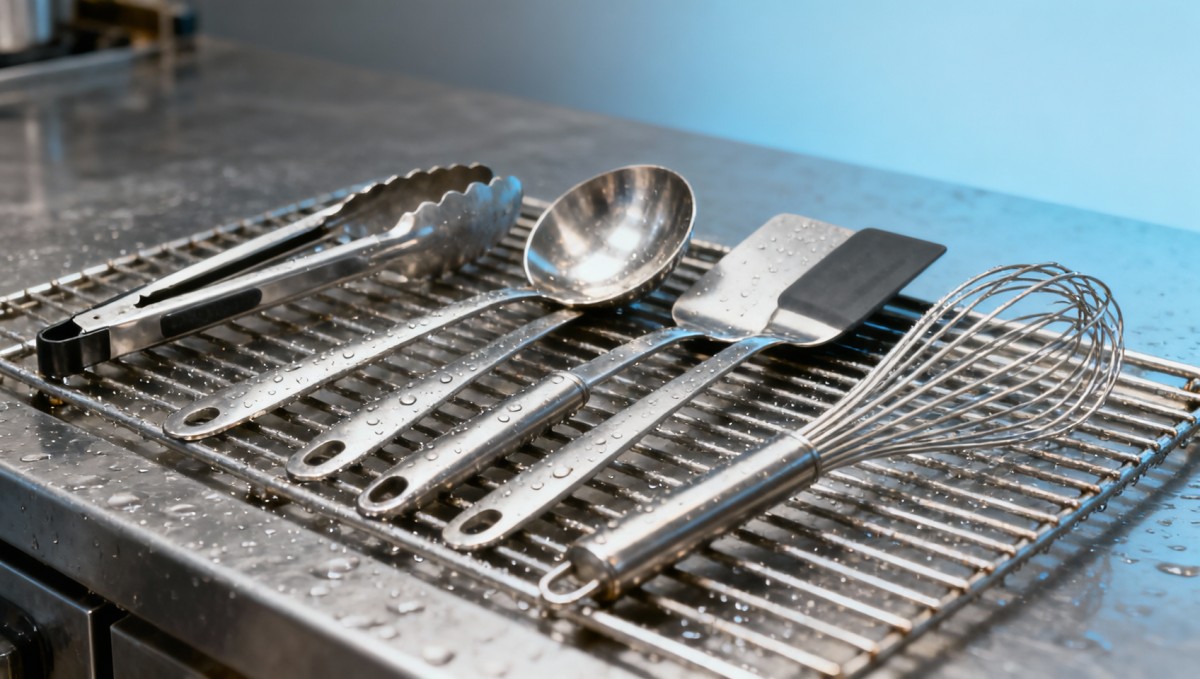
A humid kitchen creates a harsh operating environment because moisture rarely acts alone. Steam, salt, acids, detergents, chlorine-based cleaners, grease, and repeated heat shifts form a combined stress cycle. In commercial settings, a ladle, tong, knife, or scraper may be exposed to washing, drying, reheating, and storage conditions 20-50 times per day.
When low-grade metals are used, oxidation begins quickly at weld lines, hinge points, serrated edges, or scratches in the surface finish. Once rust starts, cleaning becomes harder, hygiene risk rises, and tool performance declines. Even if failure is not immediate, a tool can lose stiffness, sharpness, or grip control within 3-6 months in a high-humidity environment.
Humidity also affects non-metal parts. Handles made from poor-quality wood can swell or crack. Some plastics become slippery under heat, while low-cost rubber coatings may peel after repeated dishwasher exposure. In kitchens where wash temperatures reach 60°C-85°C, material stability matters as much as corrosion resistance.
For buyers comparing kitchen tools wholesale offers, the real issue is not the lowest unit price. The more useful question is how many service cycles the tool can withstand before replacement, how easily it can be sanitized, and whether it maintains structural integrity in wet storage zones, prep stations, and cleaning areas.
Common failure points in wet kitchen environments
- Rivets and joints that trap water and food particles, leading to hidden corrosion within 30-90 days.
- Thin stainless steel below practical commercial thickness, which bends under repeated pressure.
- Rough surface finishes that retain starch, oil, and protein residue after normal washing.
- Mixed-material designs where metal and handle components expand at different rates under heat.
How operators can spot early durability issues
Teams should inspect tools weekly in high-volume kitchens and at least twice per month in lower-volume environments. Look for orange discoloration, hinge wobble above 1-2 mm, flaking coating, handle rotation, or pitted surfaces near welds. These are early signs that a tool is not suitable for humid service conditions.
A simple internal durability log can help. Record purchase date, station use, cleaning method, and failure type. After 90-180 days, procurement teams often identify clear differences between suppliers, even when initial samples looked similar.
Materials and Construction That Extend Tool Life
The material base is the first durability filter. Stainless steel kitchen tools are generally the best choice for humid kitchens, but not all stainless grades perform equally. In practical procurement, 18/8 and 18/10 stainless steel are often preferred for utensils and serving tools because they provide stronger resistance to rust and staining than lower-grade alternatives used in budget products.
Construction details matter just as much as material grade. A one-piece stamped or forged design usually outlasts tools assembled from multiple weak joints. Seamless or low-gap construction reduces food buildup, improves cleaning results, and lowers the risk of moisture sitting inside cavities where corrosion can spread unnoticed.
Surface finishing is another overlooked factor. Polished or fine-brushed finishes are easier to clean than rough or decorative textures. In humid kitchens, smoother surfaces can reduce residue retention and make drying faster. This may seem small, but over 200-300 wash cycles, a cleaner finish can noticeably slow visible wear.
Handle design should support both comfort and durability. Ergonomic kitchen tools with heat-resistant, non-slip handles improve control during long shifts, but the handle material must tolerate hot water, detergent contact, and drying heat. In many commercial kitchens, tools should remain stable after at least 500-1,000 washing cycles under normal service conditions.
Key material and build features to evaluate
The table below summarizes common construction choices and how they perform in humid kitchens across restaurants, hotel operations, and food preparation facilities.
The key takeaway is that durability is cumulative. A corrosion-resistant metal body alone is not enough if the handle bond fails, the hinge traps water, or the finish scratches too easily. Long-lasting kitchen tools usually combine 4 elements: suitable stainless steel, low-gap construction, easy-clean surfaces, and stable grip design.
A note on thickness and tool category
Heavy-duty tools such as tongs, skimmers, turners, and bench scrapers need more structural strength than measuring spoons or serving spoons. Buyers should ask suppliers about metal thickness or gauge range, especially for tools used at grill stations, fry lines, and high-output prep areas where force and heat exposure are both frequent.
How to Compare Kitchen Tools for Wholesale and Procurement
For procurement managers and business owners, the best durable kitchen tools are not simply the most expensive items on a kitchen tools price list. The better approach is to compare total operating value across purchase cost, expected service life, cleaning labor, replacement frequency, and supplier reliability. In many operations, a tool that costs 15%-25% more upfront can reduce replacement demand by 30%-50% over one year.
This is especially important for restaurant groups, hotels, commissary kitchens, and distributors buying kitchen tools wholesale. At volumes of 200, 500, or 2,000 units, small quality differences create large maintenance and replenishment impacts. A low-price batch with inconsistent finishing can generate extra sorting, higher returns, and station-level complaints during peak service.
Supplier assessment should cover more than sample appearance. Ask about stainless grade consistency, production tolerances, edge finishing, dishwasher suitability, packaging for moisture-prone transport, and lead times. A standard lead time of 15-35 days may be acceptable, but replacement support and lot consistency matter just as much when planning replenishment cycles.
Buyers should also separate home-use tools from commercial kitchen tools. Products made for home kitchens may perform well at 1-3 uses per day, but fail quickly in restaurant environments with 50-100 handling cycles, stronger chemicals, and faster cleaning turnaround. Matching the tool class to the use case prevents false economy.
Procurement comparison framework
The following table can be used during supplier screening, RFQ review, or internal purchasing approval when comparing kitchen tools for restaurants and commercial kitchens.
A practical procurement rule is to score tools across 4 dimensions: material, construction, usability, and supply support. If one dimension is weak, the overall value drops. This method helps teams move beyond unit-price comparison and select tools that remain dependable in humid kitchens over longer replacement cycles.
A 5-step buying checklist
- Define the environment: home, restaurant, hotel, bakery, central kitchen, or food processing prep area.
- Match the tool to daily usage frequency, such as under 10 uses, 10-50 uses, or above 50 uses per day.
- Request details on material grade, assembly method, and wash compatibility.
- Test a sample for grip, cleaning ease, and visible corrosion after repeated wet exposure.
- Review supplier lead time, replacement support, and consistency across batch orders.
Maintenance Practices That Help Durable Tools Last Longer
Even the best stainless steel kitchen tools can fail early if maintenance is poor. In humid kitchens, cleaning and drying routines should be designed to remove residue quickly and limit standing moisture. The goal is simple: reduce the time that water, salt, and food acids remain on the tool surface after each use cycle.
A good maintenance routine starts with separation by tool type. Knives, tongs, ladles, peelers, whisks, and scrapers do not wear in the same way. Hinged or serrated tools need closer inspection because hidden residue can stay inside moving parts. High-contact tools should be checked daily, while lower-use items can follow a weekly review schedule.
Drying is often the weakest link. Many kitchens wash tools correctly but store them before they are fully dry. In humid rooms, this extends moisture contact for hours. Vertical drying racks, perforated storage bins, and spaced hanging systems can improve airflow and reduce the risk of trapped condensation.
Cleaning chemicals also matter. Overly aggressive chlorine exposure can damage certain finishes over time, especially if tools are not rinsed thoroughly. A balanced process using correct detergent concentration, rinse quality, and complete drying is usually more effective than stronger chemical use alone.
Recommended maintenance schedule
The schedule below helps operators extend the life of kitchen tools in wet preparation and cooking zones without creating an overly complex routine.
The most effective maintenance systems are simple and repeatable. If teams can follow 3-4 clear actions after every shift, tool life usually improves more than when complex procedures are written but ignored. For procurement and management teams, maintenance should be part of the purchasing decision, not an afterthought.
Storage mistakes to avoid
- Do not stack wet tools tightly in closed plastic bins with little airflow.
- Do not leave stainless tools in contact with highly acidic residue overnight.
- Do not mix damaged and serviceable tools without a review tag or replacement process.
Best-Fit Selection by Application and Frequently Asked Questions
Not every kitchen needs the same durability profile. A household buyer may prioritize comfort, compact storage, and moderate wash resistance. A restaurant operator often needs commercial kitchen tools that survive heavy repetition, while a procurement manager for hotels or food processing sites may focus on standardization, sanitation, and reorder stability across multiple departments.
For this reason, durable kitchen tools should be selected by application, not by appearance alone. The same stainless steel tong may be sufficient for buffet service but inadequate for grill station use. A scraper used in bakery prep may need a different handle and blade stiffness than one used in general food assembly.
In global sourcing, buyers also need to consider supplier communication, quality control responsiveness, and replacement planning. Manufacturing centers such as China, Germany, Italy, and Japan are important to the kitchen equipment industry, but country of origin alone does not define quality. What matters more is process consistency, specification clarity, and the supplier’s ability to deliver repeatable results.
As smart and efficient kitchen systems continue to expand across foodservice and food processing operations, manual kitchen tools still remain essential. They must fit hygiene workflows, support operator safety, and hold up under real humidity conditions. A durable tool is not just a utensil; it is part of a wider kitchen efficiency and food safety system.
Which tools benefit most from premium durability?
Priority categories include tongs, ladles, skimmers, peelers, bench scrapers, turners, and prep knives used in wet zones. These items typically face the highest combination of moisture, contact pressure, and wash frequency, so durability upgrades produce the fastest return in 6-12 months.
How can buyers test humid-kitchen suitability before a large order?
Request samples and run a 2-4 week internal trial. Use the tools in actual prep and wash cycles, then inspect for staining, grip change, hinge looseness, edge distortion, and cleaning difficulty. A short trial often reveals issues that product photos and basic catalogs cannot show.
What is a common mistake when comparing kitchen tools price lists?
The most common mistake is evaluating only unit price without considering use intensity and replacement frequency. A lower-cost tool that lasts 4 months may be less economical than a slightly higher-cost tool lasting 12 months, especially when labor, downtime, and replenishment administration are included.
Are durable kitchen tools important for home users too?
Yes, especially in apartments or coastal homes where humidity stays high and ventilation is limited. Home users may not need full commercial-grade construction in every category, but rust-resistant kitchen tools with easy-clean surfaces and stable handles still reduce waste and improve long-term value.
Durable kitchen tools last in humid kitchens when material quality, construction strength, ergonomic usability, and maintenance discipline work together. Stainless steel kitchen tools with smooth finishes, low-gap construction, and stable handles generally perform best across restaurants, hotels, food processing spaces, and demanding home kitchens.
If you are evaluating commercial kitchen tools, comparing kitchen tools wholesale options, or reviewing a kitchen tools price list for long-term value, focus on service life, cleaning performance, and supplier consistency rather than upfront cost alone. To discuss product details, sourcing criteria, or a tailored selection plan for your application, contact us today and get a customized solution for humid-kitchen performance.
Popular Tags
Kitchen Industry Research Team
Dedicated to analyzing emerging trends and technological shifts in the global hospitality and foodservice infrastructure sector.
Industry Insights
Join 15,000+ industry professionals. Get the latest market trends and tech news delivered weekly.
No spam. Unsubscribe anytime.

Contact With us
Contact:
Anne Yin (Ceramics Dinnerware/Glassware)
Lucky Zhai(Flatware)