
Kitchen tools for baking: when silicone beats steel
When choosing kitchen tools for baking, the debate between silicone and stainless steel kitchen tools matters more than ever. For home bakers, catering teams, and commercial kitchen tools buyers alike, the right material affects heat resistance, non-stick performance, durability, and ease of use. This guide explores when silicone outperforms steel and how to select durable kitchen tools that match professional and home use needs.
In the wider kitchen equipment industry, material choice is no longer a small detail. It directly influences food safety, workflow speed, cleaning labor, replacement frequency, and the consistency of baked products across restaurants, hotels, central kitchens, and household use.
For procurement teams and decision-makers, the question is not whether silicone is better than steel in every case. The real issue is where each material performs best, what risks appear under repeated production cycles, and how to balance unit price with service life, operator comfort, and output quality.
Where Silicone Performs Better in Baking Operations
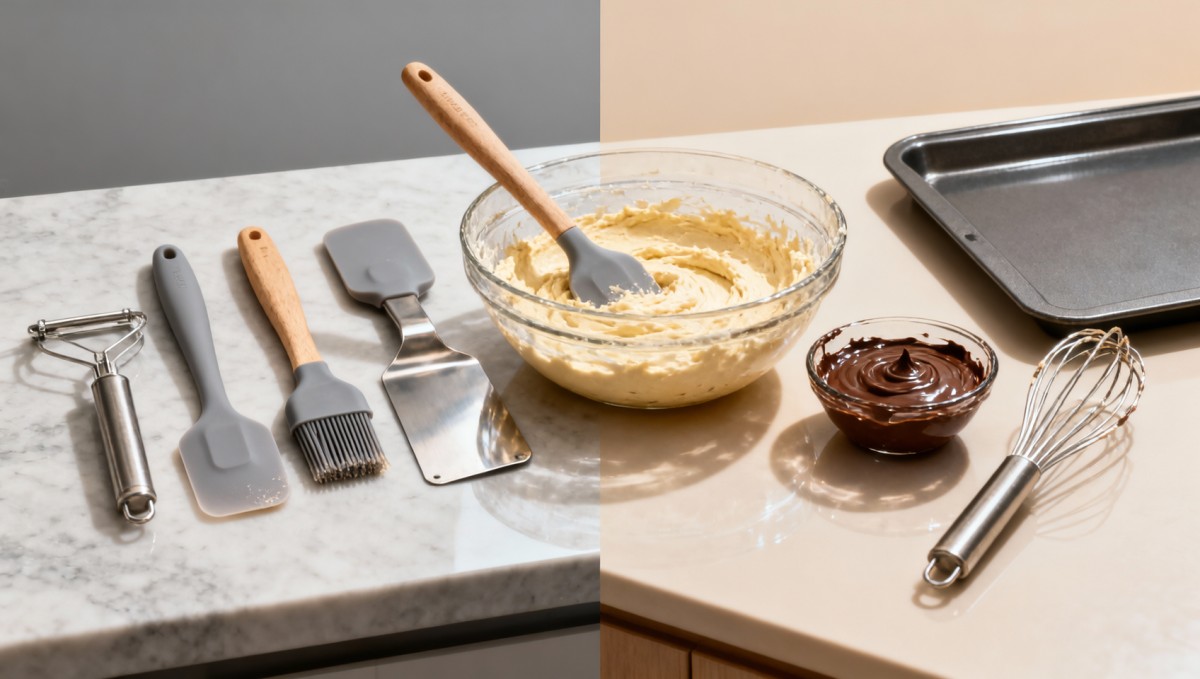
Silicone kitchen tools for baking are especially effective in tasks involving direct contact with sticky batters, melted sugar, chocolate, creams, and doughs that need gentle handling. In these situations, flexibility and non-stick release often matter more than rigid strength. A high-quality silicone spatula, scraper, or pastry brush can reduce product waste by 5% to 15% during bowl scraping and ingredient transfer.
Heat resistance is another practical advantage. Many food-grade silicone tools used in baking can handle temperatures in the range of 200°C to 260°C, which makes them suitable for mixing warm syrups, folding hot custard, spreading fillings, and handling pans that still retain residual heat. Steel tools can tolerate higher temperatures overall, but they do not offer the same surface gentleness or flexibility.
In commercial baking environments, silicone often wins when operators need speed without damaging coated trays, non-stick bakeware, or mixing vessels. A steel edge may last for years, but on delicate surfaces it can scratch coatings and shorten the life of pans after repeated use. For kitchens running 2 to 3 production shifts per day, this hidden wear can become a measurable cost.
Silicone also improves ergonomics in repetitive tasks. Flexible heads conform to curved bowls and containers, reducing wrist strain when operators scrape thick mixtures. In pastry stations where one employee may perform the same scraping or folding motion 50 to 100 times in a shift, tool comfort is not a minor issue. It affects both labor efficiency and consistency.
Typical baking tasks where silicone has an edge
- Scraping cake batter, mousse, buttercream, or ganache from bowls with minimal residue left behind.
- Brushing egg wash, butter, syrup, or glaze onto pastries without shedding bristles.
- Folding whipped mixtures where a softer edge helps preserve aeration.
- Working with non-stick pans, silicone mats, coated trays, and enamel-lined containers.
The table below compares common baking scenarios where silicone tools may outperform stainless steel tools from an operational point of view.
The key conclusion is straightforward: silicone beats steel when the baking process depends on flexibility, surface protection, even spread, and low-residue transfer. For sticky, delicate, or coated-surface applications, silicone tools often support better output quality and lower operating loss.
When Stainless Steel Remains the Better Choice
Stainless steel kitchen tools remain essential in baking operations that demand rigidity, sharpness, structural stability, and resistance to deformation. In dough cutting, bench scraping, lifting heavy baked items, portioning dense mixtures, or handling ingredients directly on hot sheet pans, steel often provides the control that silicone cannot match.
In high-volume kitchens, steel tools are frequently preferred where force is required. For example, a stainless steel bench scraper can divide dough blocks weighing 2 kg to 10 kg more efficiently than a soft scraper. It also keeps its edge over long production cycles, which matters in bakeries producing hundreds of units per batch.
Steel also performs well in sanitation routines involving aggressive mechanical cleaning. While quality silicone is durable, lower-grade products can tear, discolor, or retain odors after long exposure to oils, pigments, and repeated wash cycles. A well-finished stainless steel tool often tolerates heavy use, hot-water washing, and commercial dishwashing more predictably over 3 to 5 years.
For procurement managers, stainless steel can offer a lower long-term cost in specific stations. If the task involves scraping worktables, leveling dough, moving trays, or cutting pastry, the replacement rate for silicone may be too high. In these cases, buying silicone for every tool category creates unnecessary cost rather than efficiency.
Situations where steel should stay in the tool kit
- Portioning and cutting laminated dough, pizza dough, or bread dough with consistent pressure.
- Lifting or rotating heavier baked items where tool flex would reduce control.
- Working on stainless steel tables where a rigid straight edge speeds cleaning and dough collection.
- Applications involving direct impact, scraping force, or edge retention over long shifts.
Material selection should follow task intensity
A practical buying rule is to classify baking tools into soft-contact tools and force-contact tools. Soft-contact tools include spatulas, brushes, and some mixing spoons. Force-contact tools include dough cutters, offset lifters, whisks with rigid frames, and bench scrapers. This 2-category method helps teams avoid overstandardizing around a single material.
For mixed-use kitchens serving bakery, pastry, and prep functions, the most efficient inventory is often not 100% silicone or 100% steel. A blended set reduces misuse, extends tool life, and supports operators in switching between delicate decorating work and heavier prep tasks without compromise.
How Buyers Should Evaluate Silicone and Steel Tools
For B2B buyers, comparing kitchen tools for baking should go beyond basic appearance or catalog price. The better approach is to evaluate material grade, temperature range, handle construction, cleaning compatibility, contact safety, and expected use frequency. A low-cost tool that fails after 4 months in a busy pastry section is usually more expensive than a mid-range tool lasting 18 to 24 months.
Silicone tools should be checked for one-piece construction where possible. Joined heads and handles may trap food residue and weaken after repeated heating and washing. Buyers should also review whether the silicone is firm enough to control batter movement yet flexible enough to scrape effectively. Hardness balance affects actual use more than color or shape.
Stainless steel tools should be assessed for gauge, edge finish, handle grip, and corrosion resistance. In humid or high-acid kitchens, poorly finished steel may stain or develop rough areas over time. That creates both hygiene and handling concerns. Smooth welds, rounded transitions, and balanced weight are practical indicators of better build quality.
Another decision factor is operator training. If users regularly apply silicone tools to hard scraping tasks, breakage will increase. If they use steel on non-stick bakeware, pan damage rises. Procurement and operations teams should align tool selection with task instructions, not just with purchasing budgets.
Core evaluation factors for procurement
The following table can be used as a quick screening framework when comparing suppliers or planning kitchen tool replacement cycles.
This comparison shows that the best material depends on the work profile, not a single quality ranking. Buyers who match tools to task categories usually improve usability, reduce breakage, and simplify training across multiple kitchen stations.
A 4-step buying process
- List the top 5 baking tasks by frequency, such as scraping, brushing, cutting, lifting, and mixing.
- Estimate daily tool contact time, for example under 1 hour, 1 to 3 hours, or more than 3 hours.
- Match each task with either flexible-contact or force-contact requirements.
- Run a 2 to 4 week trial before full-volume procurement for kitchens with multiple operators.
Application Guidance for Home Kitchens, Catering Teams, and Commercial Buyers
Different user groups need different buying logic. A home baker may prioritize ease of cleaning, comfort, and a compact set of 3 to 6 tools. A catering team often needs portability, multi-use tools, and fast turnaround cleaning. A commercial bakery or hotel pastry department usually needs standardized tools that can survive repetitive use across multiple staff members.
For home use, silicone often provides the best experience in spatulas, pastry brushes, and mixing spoons because it is forgiving, easy on cookware, and simple to wash. Steel is still useful for measuring, whisking, and cutting. Since home production volume is lower, service life differences may matter less than convenience and storage efficiency.
For catering teams, the decision should focus on mobility and speed. Silicone tools that reduce residue and cleanup can shorten turnaround between batches. In mobile production environments where water access or dishwashing capacity is limited, tools that release batter and icing easily can save several minutes per cycle. Across 10 to 20 cycles in an event setting, this adds up.
For commercial kitchens and procurement departments, standardization matters most. Tool sets should be grouped by station, color-coded if required by hygiene policy, and replaced according to a documented inspection cycle, such as every 30, 60, or 90 days depending on wear. This is especially important in central kitchens and hotel groups where multiple operators share the same equipment.
Recommended tool mix by user type
The following matrix helps translate material choice into a practical purchasing plan for different operational contexts.
The main takeaway is that silicone and steel should be selected as a system, not as competing symbols. The better the match between user type and tool category, the more efficient the kitchen becomes in terms of speed, cleaning effort, and replacement control.
Common Mistakes, Maintenance Priorities, and Long-Term Value
One of the most common mistakes in baking tool procurement is assuming that “food grade” alone is enough. In reality, kitchens should assess use temperature, cleaning method, mechanical stress, and contact surface type. A silicone spatula that performs well in a home kitchen may fail quickly in a bakery running continuous batches for 6 to 8 hours.
Another frequent mistake is treating all silicone tools as equally durable. Lower-grade products may split at the neck, stain after contact with concentrated colorants, or become less stable under repeated hot washing. Procurement teams should request consistent product specifications and sample testing, especially for multi-site purchase plans.
Maintenance routines are simple but important. Silicone tools should be inspected for cracks, surface tears, head loosening, and odor retention. Steel tools should be checked for edge burrs, rust spots, joint wear, and handle looseness. A 6-point inspection done weekly in high-use kitchens can prevent hygiene issues and unexpected replacement orders.
From a long-term cost perspective, value is created by reducing hidden losses. Silicone can lower batter waste, protect non-stick assets, and simplify cleaning. Steel can reduce tool deformation, support precision tasks, and last longer in force-based applications. The highest value usually comes from combining both in a planned inventory rather than relying on one material for every process.
Practical maintenance checklist
- Inspect silicone edges every 7 days in heavy-use pastry stations and every 30 days in lighter-use kitchens.
- Remove any steel tool with rough edges immediately if it contacts coated trays or non-stick pans.
- Replace tools that retain odor, discolor severely, or show visible seam separation.
- Document replacement intervals by station to improve future procurement accuracy.
FAQ: questions buyers and operators often ask
How do I know if silicone is too soft for commercial use?
If the head bends excessively when scraping thick dough or heavy batter, operators will lose control and work slower. A quick trial over 2 to 3 production days is usually enough to judge firmness under real load.
Can silicone replace steel in all pastry stations?
No. Silicone is ideal for scraping, spreading, and coated-surface work, but steel is still better for cutting, lifting, and rigid portioning. Most professional kitchens need both.
What replacement cycle is reasonable?
In moderate use, silicone tools may last 6 to 12 months, while steel tools often last 2 to 5 years. Actual performance depends on temperature exposure, wash frequency, and misuse rate.
Which tools should a buyer test first?
Start with the highest-frequency items: spatulas, pastry brushes, bowl scrapers, and dough scrapers. These 4 categories reveal most of the material-fit issues in baking operations.
Silicone beats steel in baking when flexibility, non-stick contact, surface protection, and residue control matter most. Stainless steel remains the stronger choice when rigidity, edge performance, and heavy-duty control are required. For home bakers, catering teams, buyers, and decision-makers, the smartest approach is to build a task-based tool mix rather than rely on one material for every station.
If you are reviewing kitchen tools for baking for retail, foodservice, hotel, or commercial kitchen use, now is the right time to compare material fit, service life, and workflow impact in a structured way. Contact us to discuss product details, request a tailored tool selection plan, or learn more about practical kitchen equipment solutions for professional and home baking environments.
Popular Tags
Kitchen Industry Research Team
Dedicated to analyzing emerging trends and technological shifts in the global hospitality and foodservice infrastructure sector.
Industry Insights
Join 15,000+ industry professionals. Get the latest market trends and tech news delivered weekly.
No spam. Unsubscribe anytime.

Contact With us
Contact:
Anne Yin (Ceramics Dinnerware/Glassware)
Lucky Zhai(Flatware)