
Professional kitchen tools that reduce prep time, not quality
Professional kitchen tools help restaurants, caterers, processors, and home users cut prep time while maintaining consistency and quality. From durable kitchen tools and ergonomic kitchen tools to stainless steel kitchen tools for restaurants, buyers today compare performance, hygiene, and value across every kitchen tools supplier and kitchen tools manufacturer. This guide explores practical options for commercial and home use, helping procurement teams and operators evaluate solutions that improve workflow without compromising results.
In busy foodservice and processing environments, prep speed affects labor cost, service capacity, and product consistency. A 10-minute delay per prep station can scale into 1-2 lost labor hours across a shift, especially in restaurants handling 80-200 covers per day or central kitchens producing several hundred portions. That is why professional kitchen tools are no longer viewed as simple accessories; they are operational assets tied directly to throughput, hygiene, and staff safety.
For procurement teams, the challenge is not just finding tools that cut faster or last longer. The real decision involves selecting kitchen tools that fit ingredient volume, cleaning protocols, operator skill levels, and replacement cycles. For users and managers, the goal is practical: reduce repetitive motions, shorten prep steps, and preserve the quality standards customers expect.
Why Prep Efficiency Matters More Than Ever
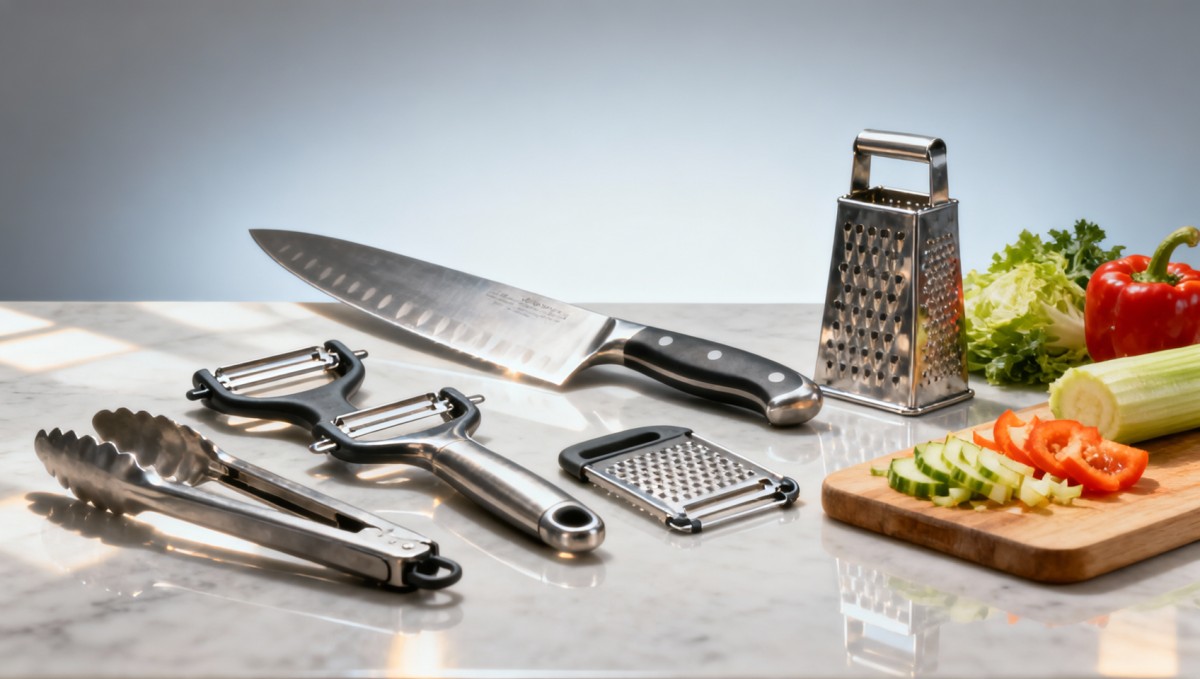
Across restaurants, hotels, food processors, and catering operations, labor pressure has made efficient prep workflows a priority. When teams face peak periods of 2-4 hours, even basic tools such as chef knives, peelers, graters, tongs, cutting boards, and portioning devices can become bottlenecks if they are poorly designed or inconsistent in performance. Professional kitchen tools reduce wasted motion and help keep output predictable during high-volume service.
The impact is measurable in daily tasks. A well-balanced knife can reduce trimming time by 15%-25% for vegetables and proteins, while ergonomic kitchen tools may lower hand fatigue during repetitive prep over an 8-hour shift. Stainless steel kitchen tools for restaurants also support faster sanitation turnaround because smooth, non-porous surfaces are easier to clean between stations.
Quality remains the other half of the equation. Faster prep only creates value when cut size, portion weight, peel depth, and presentation stay consistent. In food processing or centralized kitchens, small inconsistencies repeated across 300-500 units can increase raw material waste, affect cooking times, or trigger rework. That is why experienced buyers evaluate tool geometry, grip comfort, edge retention, and hygienic design together rather than in isolation.
The kitchen equipment industry is also moving toward smart and integrated systems, but handheld and bench-level tools still play a critical role. Even in partially automated kitchens, operators rely on manual tools for finishing, trimming, quality checks, and flexible batch work. In many facilities, the most practical productivity gains come from upgrading high-frequency tools before investing in larger capital equipment.
Common cost drivers behind slow prep
- Excessive manual steps, such as repeated peeling, re-cutting, or portion correction.
- Operator fatigue after 3-5 hours of continuous prep, leading to slower pace and uneven output.
- Frequent tool replacement caused by weak handles, poor edge retention, or corrosion.
- Longer cleaning cycles when tools have seams, coatings that degrade, or hard-to-reach surfaces.
For business decision-makers, these factors add up quickly. Saving 20-30 seconds per repetitive action across 500 repetitions per day can produce meaningful labor savings without changing recipes or staffing structure. That is why a professional kitchen tools review should focus on process impact, not just unit price.
Which Professional Kitchen Tools Deliver the Best Time Savings
Not every tool contributes equally to prep efficiency. The most valuable upgrades usually target tasks performed dozens or hundreds of times per shift. These include cutting, peeling, slicing, scraping, portioning, and transferring food between prep, cooking, and holding stages. A kitchen tools manufacturer serving commercial buyers should be able to explain where each tool saves time and where manual control still matters more than speed.
High-frequency prep tools often fall into three groups: precision cutting tools, handling and transfer tools, and sanitation-friendly support tools. Precision cutting covers chef knives, paring knives, serrated knives, mandolines, and sharpeners. Handling tools include tongs, scoops, ladles, fish spatulas, and bench scrapers. Support tools include cutting boards, measuring tools, peelers, and mixing utensils designed for fast cleaning and repeatable use.
The table below compares common categories by operational value. It is useful for procurement teams deciding where to prioritize budget in kitchens serving 50 covers per day versus 500 portions per batch.
The strongest return usually comes from tools used 100 times or more per shift. For example, a sharper and more stable peeler may save only 2-3 seconds per item, but across 200 kilograms of produce per day the time recovery becomes significant. Buyers should therefore map tool selection against task frequency and waste reduction rather than treating all utensils as low-value commodities.
Priority tools for different operation types
Restaurants and hotels
Focus on all-purpose chef knives, portion scoops, locking tongs, fish spatulas, and easy-sanitize cutting boards. These tools support mixed menus and fast station changes. In properties with breakfast, banquet, and à la carte service, versatility is often more valuable than highly specialized items.
Catering and central kitchens
Choose batch-oriented tools that improve repetitive handling, including bench scrapers, large-capacity measuring utensils, peelers with replaceable blades, and color-coded tools for zone control. In large-volume settings, standardization across 3-10 prep stations can simplify training and spare inventory.
Home premium users and small studios
Compact sets with professional-grade steel, slip-resistant grips, and dishwasher-safe construction offer the best balance. Even at lower daily volume, better ergonomics can noticeably improve prep speed and reduce waste from poor cuts or uneven peeling.
Key Selection Standards for Buyers, Operators, and Procurement Teams
Choosing a kitchen tools supplier should involve more than checking catalog breadth. Commercial buyers need to compare material durability, hygiene, ergonomic design, replacement planning, and consistency of manufacturing. A tool that performs well for 2 weeks but degrades after repeated washing or heavy cutting can raise total cost of ownership over a 6-12 month purchasing cycle.
Material is often the first filter. Stainless steel kitchen tools remain a preferred option because they resist corrosion, support food safety protocols, and hold up under high-frequency washing. However, buyers should also review handle material, joint construction, blade geometry, and whether surfaces are smooth enough to avoid food trapping. In kitchens with daily sanitizing cycles, tool longevity is influenced as much by design detail as by metal grade.
Ergonomics should be evaluated through actual use. A handle that looks comfortable on paper may still create wrist strain during repetitive prep. Operators should test grip stability in wet conditions, pressure distribution over 30-60 minutes of work, and ease of control for both left- and right-handed users where possible. This is especially important for facilities managing labor turnover and rapid onboarding.
The comparison table below summarizes practical decision points that matter in both procurement reviews and end-user trials.
A good purchasing process usually includes 4 steps: shortlist, sample test, operational review, and supply confirmation. In many B2B projects, sample testing over 7-14 days reveals issues that spec sheets cannot show, such as edge dulling speed, handle separation, or cleaning difficulty after exposure to oils, acids, and detergents.
A practical supplier checklist
- Confirm application fit by station: prep, line, bakery, butchery, pastry, or packaging.
- Review expected daily use volume, such as under 50 cycles, 50-200 cycles, or over 200 cycles.
- Check cleaning method compatibility, including dishwasher use, chemical sanitizers, and manual wash frequency.
- Clarify delivery windows, especially if lead times range from 7 days for stock items to 4-8 weeks for custom procurement.
- Ask about replacement support for high-wear components or commonly reordered items.
For enterprise decision-makers, supplier stability is critical as global trade continues to shape sourcing. Manufacturing centers in China, Germany, Italy, and Japan offer broad capability, but buyers should align sourcing choice with required quality level, delivery certainty, and long-term standardization goals.
Implementation, Hygiene Control, and Long-Term Value
Even high-quality tools underperform if rollout is poorly managed. Implementation should include station mapping, basic operator training, sanitation routines, and replacement planning. For many kitchens, the best results come from introducing upgraded tools in 1-3 critical stations first, then expanding once measurable gains in speed or consistency are confirmed.
Hygiene is especially important in modern foodservice and food processing settings. Tools used for raw proteins, allergens, and ready-to-eat foods should be separated by color coding or storage zoning where possible. Cleaning intervals should be defined by task type and shift intensity. In high-risk environments, visual inspection each shift and deep cleaning at least once per day are common practical standards, even when local protocols differ.
Maintenance planning also influences value. Knives may require sharpening after 1-3 shifts in heavy use or weekly in moderate use. Peelers, graters, and tongs should be inspected for alignment, looseness, and surface wear every 2-4 weeks. Replacing a worn tool early often costs less than absorbing the labor loss, product damage, or safety risk caused by continued use.
Operations pursuing smarter kitchens can integrate manual tool reviews into broader digital management routines. For example, a monthly equipment audit can include small tools, documenting breakage frequency, prep delays, and sanitation failures. This approach helps connect tool performance with labor planning, procurement cycles, and waste control rather than leaving utensils outside strategic oversight.
Typical implementation workflow
- Identify the top 5-10 repetitive prep tasks causing delay, waste, or operator fatigue.
- Select 2-3 tool categories for pilot testing, such as knives, peelers, and transfer tools.
- Run a 7-14 day trial and track task time, user feedback, cleaning ease, and visible wear.
- Standardize successful items by station and create basic replacement intervals.
- Review performance every 30-90 days as menu mix, volume, or staffing changes.
Common mistakes to avoid
- Buying the cheapest tool without testing long-term edge retention or structural durability.
- Using one tool type across all stations when prep volumes and tasks are clearly different.
- Ignoring operator comfort, which can reduce real productivity even if specifications look strong.
- Overlooking sanitation details such as crevices, rivets, or finishes that trap residue.
When tools are chosen and implemented correctly, the result is not just faster prep. Kitchens gain smoother workflow, more consistent product output, lower fatigue-related error rates, and clearer purchasing logic for future expansion. That makes professional kitchen tools relevant not only to daily users, but also to long-term business planning.
Frequently Asked Questions Before Buying Professional Kitchen Tools
How do I know whether a tool is truly commercial-grade?
Look beyond appearance. Commercial-grade tools should withstand repeated daily use, frequent washing, and longer operating hours. Ask how the tool performs over 50, 100, or 200 uses per day, whether surfaces resist corrosion, and whether the design supports quick cleaning. Sample testing for at least 1 week is often more useful than relying on catalog language alone.
Are stainless steel kitchen tools always the best option?
They are often the safest and most versatile choice for restaurants and food processing environments because of hygiene and durability advantages. However, the best option still depends on the task. Buyers should assess the full construction, including handle comfort, weld quality, edge retention, and whether the tool is intended for wet, acidic, or high-temperature environments.
What lead time should procurement teams expect?
For standard stock items, lead time may be around 7-15 days depending on region and order size. For customized packaging, special materials, or multi-site procurement programs, 4-8 weeks is a more typical planning range. Early confirmation of MOQ, packaging method, and replacement policy can prevent delays during rollout.
How often should tools be replaced?
Replacement depends on tool type, workload, and cleaning conditions. High-use knives may need sharpening frequently and eventual replacement based on wear. Tongs, peelers, and scrapers should be checked every 2-4 weeks in heavy-use settings. A simple inspection program based on safety, hygiene, and performance is more reliable than waiting for visible failure.
Professional kitchen tools create value when they improve speed, protect product quality, and fit the operational realities of restaurants, hotels, processors, and home premium users. The best purchasing decisions balance ergonomics, hygiene, durability, and supply reliability, while focusing on the tasks repeated most often each day. If you are comparing a kitchen tools supplier or planning a broader procurement upgrade, now is the right time to review your prep workflow, test the right tool categories, and build a more efficient kitchen system. Contact us to discuss product details, request a tailored recommendation, or explore more kitchen equipment solutions for your business.
Popular Tags
Kitchen Industry Research Team
Dedicated to analyzing emerging trends and technological shifts in the global hospitality and foodservice infrastructure sector.
Industry Insights
Join 15,000+ industry professionals. Get the latest market trends and tech news delivered weekly.
No spam. Unsubscribe anytime.

Contact With us
Contact:
Anne Yin (Ceramics Dinnerware/Glassware)
Lucky Zhai(Flatware)