
Commercial Induction Cooker Not Heating Evenly? 7 Causes and Practical Fixes
When uneven heating starts disrupting real kitchen work
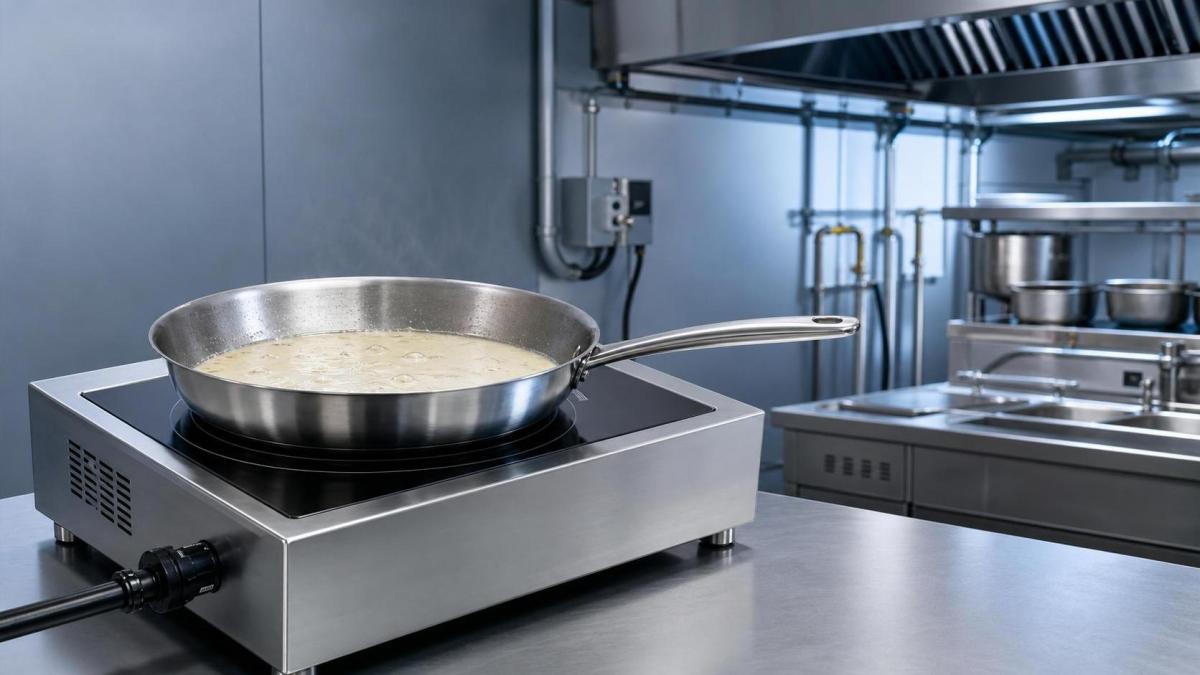
A Commercial Induction Cooker rarely fails at a convenient time.
The issue often appears during peak service, batch cooking, or menu changes.
When heat spreads unevenly, sauces split, proteins cook inconsistently, and holding times become unreliable.
In restaurants, that usually means slower tickets.
In hotels and central kitchens, it can create larger quality gaps across repeated batches.
This matters even more in a kitchen equipment market moving toward smarter, energy-efficient systems.
Stable heating is no longer just a performance issue.
It affects energy use, food safety routines, service consistency, and maintenance planning.
A practical diagnosis starts by matching the fault to the operating scene, not only the error symptom.
Different kitchens show the same fault for different reasons
The same Commercial Induction Cooker can behave differently in a wok station, buffet line, or food prep area.
That is why uneven heating should never be judged by the hot surface alone.
A high-output line kitchen often stresses cooling and power stability.
A quieter production kitchen may expose cookware mismatch or sensor drift sooner.
In actual use, the better approach is to confirm three basics first.
- Whether the problem follows one pan, one zone, or the full Commercial Induction Cooker.
- Whether the issue appears under light load, full load, or only after long operation.
- Whether recent changes involved cookware, ventilation, menu process, or electrical supply.
Those checks narrow the fault path much faster than replacing parts too early.
The 7 causes usually become clearer once the scene is separated
1. Cookware mismatch is more common than many teams expect
A Commercial Induction Cooker depends on magnetic compatibility and flat bottom contact.
Pans with warped bases, mixed materials, or uneven thickness often create patchy heat zones.
This appears often in kitchens that replace cookware gradually rather than all at once.
The fix is simple but specific.
Test with a known compatible pan, then compare heating spread and recovery speed.
If performance improves, standardize pan base diameter and induction-grade material.
2. Coil wear or coil positioning can distort heat distribution
In busy commercial kitchens, internal vibration and repeated thermal cycling can shift coil alignment.
When that happens, the Commercial Induction Cooker may still power on normally.
Yet one side of the vessel receives stronger energy transfer.
This is more likely in older units or stations with frequent impact from heavy cookware.
Inspection should include coil condition, mounting integrity, and signs of overheating around the assembly.
3. Temperature sensor drift often causes misleading heating behavior
A sensor that reads inaccurately may reduce or pulse output too early.
The result looks like uneven heating, but the root cause is bad temperature feedback.
This is common in sites using the Commercial Induction Cooker for long simmering cycles.
Compare displayed temperature behavior with an external measuring tool.
If the deviation is repeated, recalibration or sensor replacement is usually the safer solution.
4. Cooling airflow problems show up during sustained service
A Commercial Induction Cooker under poor ventilation can throttle output to protect internal electronics.
Line kitchens with grease buildup are especially vulnerable.
At first, heating seems normal.
After repeated batches, heat becomes inconsistent and recovery slows.
Check fan operation, air inlets, filters, and cabinet clearance.
Cleaning airflow paths often restores stable output without deeper electrical repair.
5. Unstable power input creates irregular energy delivery
Uneven heating sometimes begins after site expansion, equipment relocation, or added kitchen load.
Voltage drop, phase imbalance, or loose terminals can limit how the Commercial Induction Cooker performs.
This is worth checking in hotels, food courts, and central kitchens with shared electrical demand.
Measure input conditions during operation, not only at idle.
Many intermittent heating complaints disappear once supply quality is corrected.
6. Control board faults may mimic random heating inconsistency
If output jumps, pauses, or fails to match set levels, the power control stage may be unstable.
On a Commercial Induction Cooker, that can come from damaged components, moisture exposure, or aging circuitry.
The pattern is often less visible during short tests.
It becomes obvious in repeated cooking cycles using the same load.
Where possible, compare output behavior with service diagnostics and historical fault logs.
7. Surface condition and installation errors are easy to overlook
A cracked, uneven, or poorly seated glass surface changes pan contact and heat transfer perception.
Improper installation height can also reduce airflow or create vibration stress.
This is often missed after transport, kitchen remodeling, or imported equipment setup.
If a Commercial Induction Cooker developed the problem soon after installation, check mounting and levelness before deeper disassembly.
What usually matters most in restaurants, hotels, and production kitchens
Not every site should troubleshoot in the same order.
The operational pattern changes the most likely cause and the best first action.
This kind of scene-based check prevents wasted service time and unnecessary parts replacement.
Practical fixes work better when they match the operating pattern
A useful repair is not only about restoring heat today.
It should reduce repeat failure under the same kitchen conditions.
- For cookware-related faults, mark approved pan types and remove mixed nonstandard stock.
- For airflow issues, add cleaning intervals based on grease exposure, not generic monthly routines.
- For power instability, record readings during peak operation and after equipment additions.
- For sensor and board issues, compare repeated cycle behavior instead of relying on one quick boil test.
- For installation concerns, verify levelness, clearance, and vibration after transport or kitchen layout changes.
In actual applications, this is where maintenance becomes part of kitchen performance management.
That aligns with the wider shift toward intelligent and energy-efficient kitchen equipment.
Misjudgments that often keep the Commercial Induction Cooker fault coming back
One common mistake is blaming the appliance before checking the pan.
Another is treating all uneven heating as a power board problem.
That may lead to expensive replacement without solving the condition that caused the fault.
There is also a broader site-level mistake.
Many kitchens review equipment ratings but ignore ventilation, shared load, workflow intensity, and cookware turnover.
A Commercial Induction Cooker can meet specification on paper and still perform poorly in practice.
The difference usually comes from real operating conditions, not brochure values.
A better next step is to build a repeatable troubleshooting path
When a Commercial Induction Cooker is not heating evenly, speed matters, but sequence matters more.
Start with scene confirmation, then isolate cookware, airflow, power, sensing, and control behavior.
That approach fits restaurants, hotels, and food production kitchens because it reflects how the equipment is really used.
It also supports the broader direction of the kitchen equipment industry, where stable output, efficiency, and service continuity all matter.
A practical next move is to document the exact operating scene, compare fault timing, and standardize the first inspection points.
Once that baseline is clear, it becomes much easier to decide whether the Commercial Induction Cooker needs adjustment, parts replacement, or a site condition fix.
Popular Tags
Kitchen Industry Research Team
Dedicated to analyzing emerging trends and technological shifts in the global hospitality and foodservice infrastructure sector.
Industry Insights
Join 15,000+ industry professionals. Get the latest market trends and tech news delivered weekly.
No spam. Unsubscribe anytime.
Hot Articles
 How to Size a Commercial Oven for Peak Production Without Wasting Energy
- How to Evaluate Foodservice Equipment Suppliers for Reliability, Service, and Total Cost
- How to Choose a Cutlery Set for Restaurants: Material, Durability, and Cost
- How to Evaluate Restaurant Supplies Distributors for Reliable Multi-Location Delivery
Contact With us
Contact:
Anne Yin (Ceramics Dinnerware/Glassware)
Lucky Zhai(Flatware)