
Commercial Kitchen Equipment Maintenance: Daily, Weekly, and Monthly Tasks
Commercial Kitchen Equipment Maintenance: Daily, Weekly, and Monthly Tasks
A missed cleaning step or an unnoticed worn seal can turn a routine service visit into an emergency repair. Effective kitchen equipment maintenance starts with a schedule that separates daily operating checks from weekly cleaning and monthly inspections. The aim is not simply to keep appliances looking clean. It is to spot changes before they interrupt service, compromise food safety, or damage another component.
That schedule must reflect the kitchen. A hotel breakfast line, a high-volume frying station, and a central production kitchen put different loads on their equipment. Use the tasks below as a working framework, then adjust them to manufacturer instructions, operating hours, water quality, and local requirements.
Set responsibilities before setting intervals
Daily checks usually belong to trained kitchen staff; deeper inspections belong to maintenance personnel with the appropriate competence. Make that boundary explicit. “Check the fryer” is too vague. “Inspect for external oil leaks before startup and report any leak before use” gives the operator an observable task and a clear response.
Before maintenance, isolate the relevant energy sources and follow the site’s lockout procedures. Allow hot surfaces and oil to cool, release stored pressure where applicable, and account for automatic restart functions. Switching off at the control panel is not necessarily electrical isolation. Gas work, refrigerant work, internal electrical testing, and safety-control adjustments require appropriately qualified personnel.
Keep each asset’s model, serial number, manual, service history, and approved cleaning products accessible. Imported equipment may have different electrical configurations, chemical restrictions, or replacement-part specifications even when the cabinet looks familiar.
Daily tasks: catch changes during normal operation
Cooking equipment: look beyond surface cleanliness
At startup, check cooking appliances for loose handles, damaged cords, missing guards, external leaks, and unusual ignition behavior. During operation, note delayed heat-up, uneven cooking, repeated ignition attempts, or unfamiliar noises. These observations are more useful than a general report that an appliance “doesn’t work properly.”
At shutdown, remove food debris and grease using the approved procedure. Clear accessible burner openings only as the manufacturer permits; do not enlarge ports or probe gas components. Clean griddle surfaces with suitable tools and chemistry. Aggressive scraping or an unsuitable cleaner can damage coated or polished cooking surfaces.
For fryers, follow the specified oil filtration routine, inspect accessible drain components, and check that valves close correctly. Oil filtration is an operating task, not a substitute for inspecting the fryer. Oil beneath the cabinet needs investigation, even if the unit still reaches its setpoint.
Refrigeration: record conditions, not just the display
Check cabinet temperatures against the site’s food-safety limits using the approved verification method. A controller display shows a sensor reading; it does not prove every stored product is at a safe temperature. Record abnormal readings alongside door activity, recent loading, and defrost status so the service team has context.
Wipe door gaskets, remove debris from their folds, and make sure doors close without assistance. Keep internal air passages and external ventilation openings clear. A container pushed against an air outlet can create a warm area that looks like a refrigeration fault. Report persistent ice, water pooling, or unusually long running periods rather than repeatedly changing the setpoint.
Warewashing: verify the process as well as the machine
Drain and clean the dishwasher according to its instructions, removing and cleaning accessible strainers and spray components where specified. Check that spray arms rotate freely after reassembly. Inspect chemical containers, pickup tubes, and visible connections for empty supplies, kinks, or leaks.
Verify sanitizing performance using the method appropriate to the machine and local requirements. Depending on the system, that may involve suitable temperature indicators or chemical test strips. A normal-looking control-panel reading alone is not enough. If verification fails, use the site’s approved alternative process until correct operation is restored.
Weekly tasks: remove buildup and inspect wear points
Weekly work should reach areas that a closing shift cannot clean properly. Plan access when equipment is cool and production is low. Moving a range or refrigerator without checking its utility connections can turn cleaning into a damaged hose, strained cable, or broken drain.
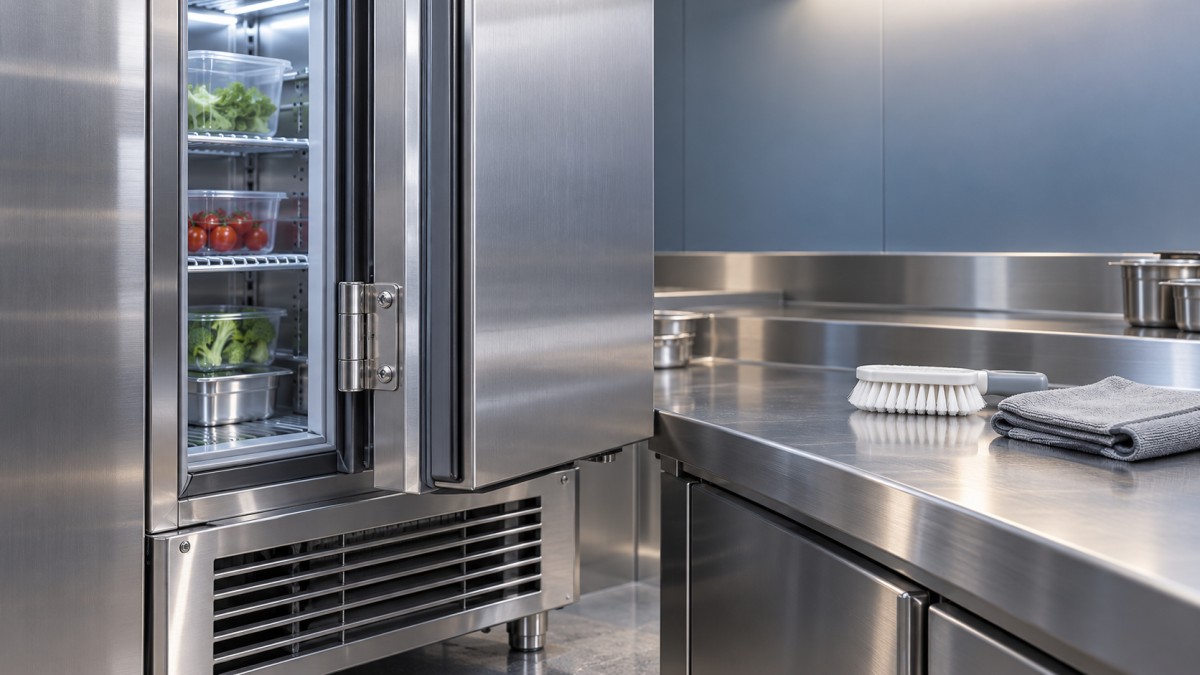
- Inspect door hardware. Check hinges, catches, closers, and gasket seating. Look for tears, hardened sections, and gaps. A poor seal may need adjustment rather than immediate gasket replacement.
- Clean accessible grease-management parts. Remove and clean hood grease filters as instructed, ensuring they are correctly reinstalled before cooking resumes. This does not replace professional exhaust-system inspection or cleaning.
- Inspect dishwasher spray patterns. Remove accessible obstructions using approved methods. Poor wash results may come from blocked jets, unsuitable rack loading, or chemical supply problems—not necessarily a failing pump.
- Check water connections and drains. Look for mineral tracks, damp insulation, slow drainage, loose supports, and recurring puddles. Do not tighten fittings blindly; identify the source first.
Refrigeration condenser cleaning deserves a condition-based decision. A unit beside a flour station or greasy cooking line may need attention more often than one in a clean preparation room. Inspect accessible coils regularly, but follow the manufacturer’s method and interval for cleaning. Disconnect power where required, protect fragile fins, and avoid driving debris farther into the coil.
Do not spray down appliances unless they are designed for that cleaning method. Water forced into controls, motors, insulation, or electrical compartments can create faults that appear only after the kitchen reopens.
Monthly inspections: test performance and investigate trends
A monthly visit should answer a different question from daily cleaning: is the equipment still performing as expected under realistic conditions? Arrange a short operating window rather than inspecting every appliance cold and idle. Some faults appear only during heat-up, a loaded wash cycle, or refrigeration recovery after normal door openings.
Check temperature control before adjusting it
Compare cooking temperatures with a suitable, verified reference instrument, following the manufacturer’s test procedure. Measurement position, stabilization time, and load matter. An infrared reading from a reflective surface, for example, may be misleading. Do not recalibrate a thermostat simply because one quick measurement differs from the dial.
For refrigeration, review temperature history, alarms, defrost behavior, and recovery. Inspect accessible fans, drains, and evaporator areas within the permitted service scope. Persistent icing warrants diagnosis: door leakage, airflow obstruction, drainage problems, and defrost faults can produce overlapping symptoms. Removing the ice alone does not establish the cause.
Treat scale according to water conditions
Inspect dishwashers, steam equipment, and other water-fed appliances for scale. Monthly inspection is useful; monthly descaling is not a universal rule. Frequency depends on water hardness, treatment performance, consumption, and manufacturer guidance. Excessive or unsuitable chemical treatment can damage seals and metals.
Check water-treatment service indicators and replacement requirements. A filter or treatment cartridge cannot be judged by installation date alone when throughput varies substantially. Use available consumption information and the supplier’s specified limits.
Where prescribed, qualified technicians should inspect electrical connections, protective devices, gas systems, and safety interlocks using the appropriate procedures. Never bypass an interlock to keep an appliance available for service. A recurring safety trip is a fault to diagnose, not an operating inconvenience.
Know which findings cannot wait
A maintenance calendar is not permission to postpone a dangerous condition. Suspected gas leakage, exposed wiring, smoke, oil reaching hot components, or a failed safety device requires immediate action under the site’s emergency and isolation procedures. For a suspected gas leak, avoid operating electrical switches nearby and follow the established evacuation and emergency-contact process.
Other problems need prioritization rather than automatic shutdown. A worn handle may be scheduled if it remains secure and safe; a refrigerator unable to maintain required storage conditions needs immediate food-safety action. Keep equipment disposition and food disposition separate: repairing the refrigerator does not establish that its contents are safe.
Make the service record useful to the next technician
A useful kitchen equipment maintenance record captures the asset, symptom, operating conditions, measured results, work completed, and remaining action. Write “water appears beneath the door during the rinse stage” rather than “dishwasher leaks.” Include photographs where they clarify wear, routing, or the leak location.
After service, document the functional test and any restrictions before returning equipment to use. Connected controllers and digital maintenance systems can make trends easier to review, but their alerts still need interpretation. Repeated temperature alarms during deliveries may suggest a loading issue; alarms overnight point toward a different investigation.
Start the next review with repeat faults and overdue corrective work, not just unchecked boxes. If the same gasket keeps failing or the same drain keeps blocking, revisit alignment, cleaning practices, installation, and operating conditions. A preventive schedule is working when it helps resolve recurring causes—not merely record the same repair again.
Popular Tags
Kitchen Industry Research Team
Dedicated to analyzing emerging trends and technological shifts in the global hospitality and foodservice infrastructure sector.
Industry Insights
Join 15,000+ industry professionals. Get the latest market trends and tech news delivered weekly.
No spam. Unsubscribe anytime.



Contact With us
Contact:
Anne Yin (Ceramics Dinnerware/Glassware)
Lucky Zhai(Flatware)