
Why a restaurant kitchen hood system fails compliance
A restaurant kitchen hood system can fail compliance for reasons that extend far beyond obvious grease buildup or weak exhaust performance.
Small defects in capture, duct layout, fire safety, cleaning access, or maintenance records often trigger serious inspection findings.
In commercial kitchens, compliance affects safety, insurance exposure, operating continuity, and long-term equipment efficiency.
Understanding why a restaurant kitchen hood system fails compliance helps reduce downtime, limit fire risk, and support a safer foodservice environment.
What does compliance mean for a restaurant kitchen hood system?
Compliance means the restaurant kitchen hood system meets safety, ventilation, construction, and maintenance requirements defined by local codes and recognized standards.
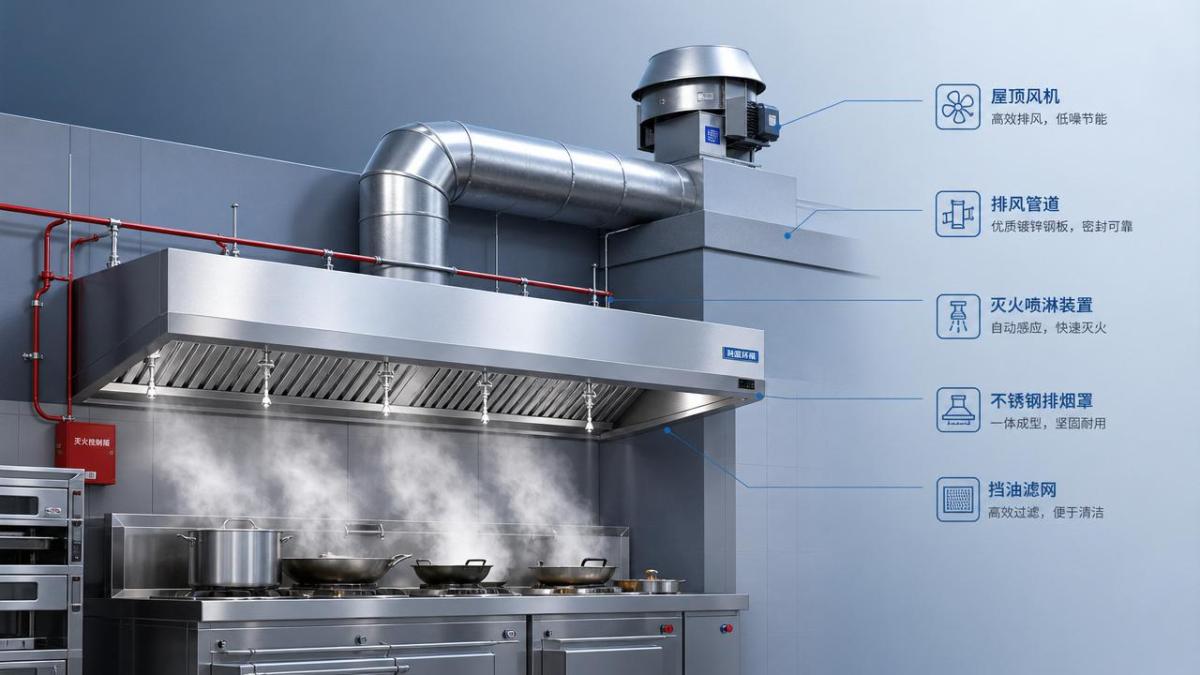
It is not limited to installing a hood above cooking equipment.
Inspectors usually review the full exhaust path, including filters, plenum, ductwork, fan, make-up air, suppression, and service accessibility.
A compliant restaurant kitchen hood system must capture grease-laden vapors effectively before they spread into surrounding work areas.
It must also resist grease accumulation, contain fire, and allow regular cleaning without unsafe dismantling.
Many failures happen because owners assume airflow alone determines compliance.
In reality, documentation, installation details, and fire protection integration carry equal weight during inspections.
Key compliance elements commonly reviewed
- Correct hood type for the cooking duty
- Adequate exhaust and capture performance
- Proper grease filters and drain arrangements
- Code-compliant duct construction and routing
- Integrated fire suppression coverage
- Accessible cleaning and inspection points
- Maintenance logs and service records
Why does the wrong hood design cause compliance failure?
A restaurant kitchen hood system often fails because the original design does not match the cooking process underneath.
Heavy grease appliances produce different contaminants than ovens, steamers, or warming stations.
When hood type, overhang, and airflow are undersized, smoke and grease escape beyond the capture zone.
That creates unsafe surfaces, poor indoor air quality, and a visible sign of non-compliant performance.
Common design mistakes
- Using a light-duty hood above charbroilers or fryers
- Insufficient hood overhang at front or sides
- Improper mounting height above cooking equipment
- Ignoring cross-drafts from doors or air diffusers
- Selecting fan capacity without real cooking load analysis
Layout changes after installation also create problems.
A restaurant may replace one appliance with a higher-grease unit, yet keep the same restaurant kitchen hood system.
That mismatch can immediately move the system out of compliance.
In the broader kitchen equipment industry, this issue appears frequently during expansions, retrofits, and concept changes.
How do ductwork and airflow issues lead to inspection problems?
Even a well-sized hood can fail if the duct system weakens airflow or traps grease in inaccessible sections.
A restaurant kitchen hood system depends on the entire exhaust route working as one coordinated system.
Long horizontal runs, excessive bends, leakage, and poor sealing all reduce effective exhaust performance.
When static pressure increases, the fan may no longer deliver the required capture velocity.
Typical airflow and duct defects
- Duct joints that allow grease leakage
- Unapproved materials or thin metal construction
- Missing access panels for internal cleaning
- Fan belts, motors, or bearings performing below design
- Unbalanced make-up air disturbing hood capture
Make-up air is often overlooked during troubleshooting.
If replacement air enters too fast or from the wrong angle, it pushes contaminants outside the hood envelope.
That can make a restaurant kitchen hood system appear underpowered, even when fan capacity seems adequate on paper.
What fire protection gaps make a restaurant kitchen hood system non-compliant?
Fire protection is one of the most critical compliance areas in any restaurant kitchen hood system.
A hood that removes smoke well may still fail inspection if suppression coverage, nozzle placement, or interlocks are incorrect.
Because grease fires spread rapidly, regulators expect the exhaust system and suppression system to work together without delay.
Frequent fire safety failures
- Blocked or misaligned suppression nozzles
- Appliance changes without suppression reconfiguration
- Manual pull stations placed poorly or missing signage
- Gas or electric shutoff interlocks not functioning
- Expired inspections or missing recharge records
Filters also matter during fire events.
Wrong filter angle or damaged baffles can allow grease to travel deeper into the duct, raising ignition risk.
That turns a maintenance defect into a major life-safety issue.
Can poor cleaning and documentation cause compliance failure?
Yes. Many inspections fail because the restaurant kitchen hood system lacks evidence of proper cleaning, service, and corrective actions.
Grease thickness, visible residue, and inaccessible buildup are obvious warning signs.
But even a clean-looking system may fail if records are incomplete or outdated.
Inspection teams often want proof that the system was maintained at suitable intervals for its cooking volume.
Documentation that should be available
- Cleaning schedules and contractor reports
- Fan and motor service records
- Fire suppression inspection certificates
- Repair history for filters, ducts, and access doors
- Airflow test or balancing reports when available
This is especially important in modern foodservice operations using automated and high-output kitchen equipment.
Higher production volume can increase grease loading faster than managers expect.
Without documented preventive maintenance, a restaurant kitchen hood system becomes difficult to defend during audits.
How can compliance risks be identified before an official inspection?
The best approach is a structured pre-inspection review combining visual checks, performance testing, and record verification.
A restaurant kitchen hood system should be evaluated as both a safety asset and an operational system.
That means checking not only visible cleanliness but also hidden mechanical and administrative weaknesses.
Quick self-check questions
- Does smoke stay fully captured during peak cooking?
- Are filters installed correctly and draining properly?
- Can every duct section be inspected and cleaned?
- Are suppression tags current and easy to verify?
- Have recent equipment changes been reviewed for impact?
Pre-inspection reviews are more effective when tied to actual cooking conditions.
Testing during low-load periods can hide defects that appear only during rush service.
What practical steps reduce future restaurant kitchen hood system failures?
Long-term compliance depends on design alignment, scheduled maintenance, and disciplined change control.
Every modification to cooking equipment should trigger a review of the restaurant kitchen hood system above it.
That includes airflow demand, fire suppression coverage, and cleaning frequency.
Practical prevention steps
- Match hood type to real cooking duty, not assumptions
- Inspect fans, belts, and filters on a fixed schedule
- Keep suppression inspections current and documented
- Review make-up air whenever capture problems appear
- Store service reports in one accessible compliance file
- Reassess the full system after renovations or menu changes
The kitchen equipment sector is moving toward smarter monitoring and more energy-efficient ventilation controls.
These tools can improve performance, but they do not replace code-compliant design and routine verification.
A restaurant kitchen hood system remains compliant only when hardware, airflow, fire protection, and records stay aligned.
In summary, a restaurant kitchen hood system fails compliance when technical details and daily management stop supporting each other.
The most reliable next step is a focused audit covering design, airflow, duct access, suppression, and maintenance documentation.
That action helps prevent costly violations while keeping commercial kitchens safer, cleaner, and more resilient.
Popular Tags
Kitchen Industry Research Team
Dedicated to analyzing emerging trends and technological shifts in the global hospitality and foodservice infrastructure sector.
Industry Insights
Join 15,000+ industry professionals. Get the latest market trends and tech news delivered weekly.
No spam. Unsubscribe anytime.
Hot Articles
 How to Size a Commercial Oven for Peak Production Without Wasting Energy
- How to Evaluate Foodservice Equipment Suppliers for Reliability, Service, and Total Cost
- How to Choose a Cutlery Set for Restaurants: Material, Durability, and Cost
- How to Evaluate Restaurant Supplies Distributors for Reliable Multi-Location Delivery

Contact With us
Contact:
Anne Yin (Ceramics Dinnerware/Glassware)
Lucky Zhai(Flatware)