
How to Organize a Restaurant Kitchen for Faster Prep and Safer Workflow
Learning how to organize a restaurant kitchen is essential for faster prep, safer movement, and more consistent daily operations. A well-planned kitchen layout helps staff reduce wasted steps, improve food safety, and keep tools, ingredients, and equipment within easy reach. This guide explores practical ways to create a more efficient workflow for busy restaurant teams.
For kitchen operators, line cooks, supervisors, and purchasing teams, organization is not only about cleanliness. It directly affects ticket speed, cross-contamination control, labor efficiency, equipment utilization, and maintenance cost over 8–12 operating hours per day.
In commercial foodservice settings, even a small change in tool placement, prep zoning, or cold storage access can reduce unnecessary walking by 10%–20%. That improvement becomes meaningful in restaurants handling 100 to 300 covers daily.
Build the Kitchen Around Workflow, Not Around Empty Space
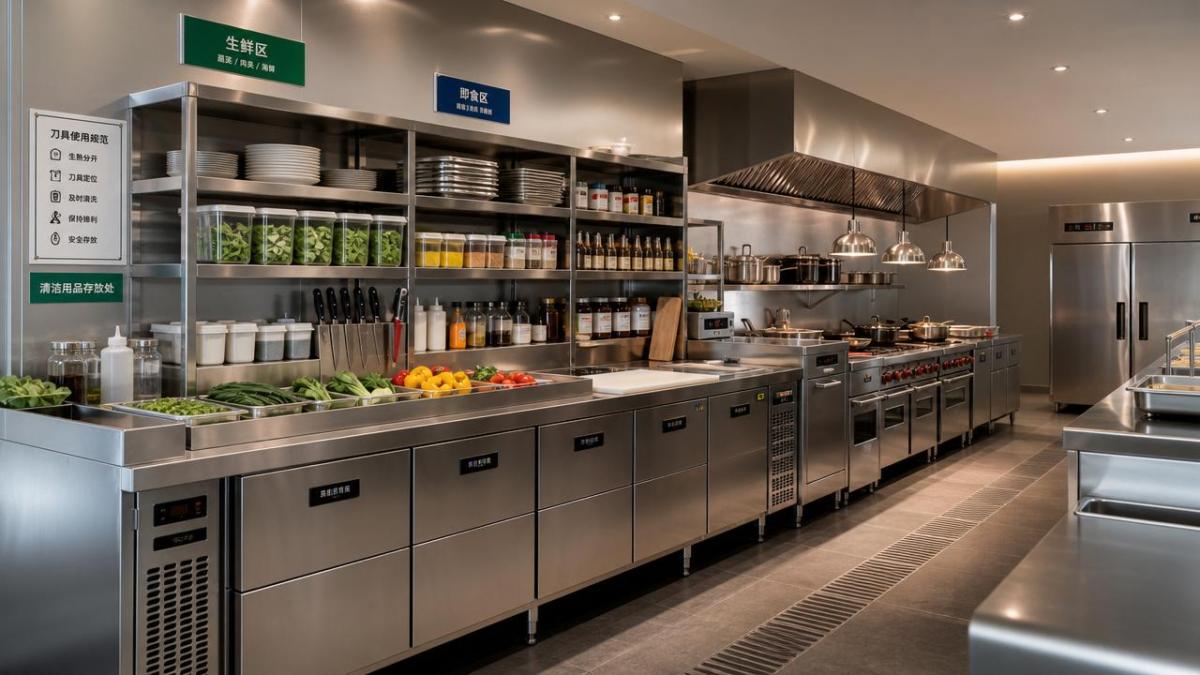
When teams ask how to organize a restaurant kitchen, the first rule is simple: design around movement. A kitchen should support a logical path from receiving to storage, prep, cooking, plating, service, dish return, and cleaning.
If raw products cross paths with finished plates, or if cooks must turn 3 to 5 times to reach core tools, the layout is already costing time. Good organization reduces overlap, bottlenecks, and avoidable safety risks.
Map the 7 Core Work Zones
Most restaurant kitchens function better when divided into 7 practical zones: receiving, dry storage, cold storage, prep, cooking, plating, and warewashing. In larger operations, add a dedicated baking, butchery, or packaging area if output volume requires it.
For example, prep benches should sit close to refrigerated storage, usually within 2–4 steps. Cooking equipment should be grouped by process type, such as grill, fryer, range, oven, or combi unit, rather than scattered by available wall space.
Basic zoning checklist
- Separate raw meat, produce, and ready-to-eat prep surfaces
- Keep high-use utensils within arm’s reach of each station
- Allow at least one clear movement lane for staff carrying hot food
- Place sanitation supplies near prep and warewashing points
- Store heavy smallwares between knee and shoulder height when possible
The table below shows a practical way to organize key zones for faster prep and safer workflow in commercial kitchens of small to medium size.
This setup works because it links storage, prep, and cooking in a short operational chain. Instead of treating equipment as isolated assets, the kitchen becomes an integrated production system with fewer interruptions and clearer staff responsibilities.
Reduce Steps Per Task
A fast kitchen often wins through small reductions repeated hundreds of times. If a prep cook saves 4 seconds each time they reach for hotel pans, and repeats that action 150 times, the gain exceeds 10 minutes in one shift.
Track common tasks for 2 to 3 service periods. Measure how many times staff walk to cold storage, dry shelves, dish return, spice racks, or sinks. Those movement patterns reveal where restaurant kitchen organization is helping or slowing service.
Match Equipment Type to Production Volume
Modern kitchen equipment should support the workflow rather than dominate it. A compact undercounter refrigerator may outperform a larger remote unit if it cuts ingredient retrieval time during peak hours by 15% or more.
Likewise, integrated worktables with refrigerated drawers, ingredient rails, or overhead shelves can combine 3 functions in one footprint. That matters in kitchens under 40 square meters, where every meter affects prep speed and staff turning space.
Create a Safer Workflow With Storage Rules and Clear Separation
Anyone learning how to organize a restaurant kitchen must address safety at the same time as efficiency. A kitchen can look tidy and still create hazards if chemicals, raw proteins, knives, hot trays, and delivery carts move through the same traffic path.
Safer workflow depends on separation, labeling, visibility, and access control. These factors become more important in high-output kitchens, central kitchens, and restaurants with frequent staff rotation or multilingual teams.
Use Vertical Storage Intelligently
Wall shelving, overhead racks, magnetic knife strips, and mobile ingredient carts can free up floor area, but they need rules. Heavy items should stay on lower shelves, while daily-use containers should remain between 80 cm and 150 cm height when possible.
Avoid stacking more than 2 unstable containers in busy prep areas. If staff must lift above shoulder level during service, injury risk rises and retrieval speed falls. Organization should shorten motion, not create hidden strain.
Separate Raw, Ready-to-Eat, and Cleaning Items
Food safety depends on physical and visual separation. Raw poultry, seafood, produce, dairy, sauces, and cooked proteins should never be mixed casually in shared bins or unlabeled shelves. Color-coded systems help when teams work under pressure.
The table below gives a practical storage and handling framework that supports faster training and lowers the chance of cross-contact in daily restaurant operations.
This type of structure supports both compliance and speed. It reduces decision fatigue during service because staff no longer wonder where items belong or whether a container is safe to use.
Keep Cleaning Part of the Workflow
A kitchen stays organized only if cleaning is built into the shift, not left to closing time. Good operators schedule 3 checkpoints: pre-service setup, mid-shift reset, and end-of-day sanitation. Each checkpoint can take 5–20 minutes depending on station size.
This routine also protects equipment. Crumb buildup, grease accumulation, blocked vents, and wet floor corners shorten service life and increase repair frequency. Organized kitchens usually see fewer avoidable maintenance calls over a 6–12 month period.
Standardize Stations for Faster Prep and Easier Training
Restaurant kitchen organization becomes more reliable when every station follows the same logic. Standard placement reduces onboarding time, lowers errors during rush periods, and helps relief staff move between stations without losing speed.
A common mistake is allowing each cook to build a personal setup. That may work for one person, but it weakens consistency across 2, 3, or 4 shifts. Standardization matters even more in restaurants with seasonal hiring.
Set a Repeatable Station Layout
Each station should have a fixed place for knives, tongs, towels, pans, backups, waste container, sanitizer, and plating tools. Label drawers or shelf edges if needed. The goal is that any trained staff member can start work within 3–5 minutes.
- List the 10 to 15 most-used tools at each station
- Place them in order of task sequence, not by size
- Store one backup set nearby, but not in the main work zone
- Review the setup every 2 weeks based on service feedback
Use Prep Levels and Refill Limits
Overstocking a station looks safe, but often creates waste, clutter, and temperature control issues. Instead, define a par level for each ingredient based on 60–90 minutes of expected service demand, then refill in controlled batches.
This approach is especially effective when using refrigerated prep tables, drawer chillers, and ingredient rails. It keeps the line clean while preserving speed during peaks. It also supports inventory accuracy and more stable product rotation.
Signs that a station needs reorganization
- Staff leave the station more than 6 times per hour for basic items
- Open containers crowd the work surface during service
- Finished plates compete for space with raw prep ingredients
- Shift handovers require repeated verbal explanation
- Cleaning takes more than 20 minutes because storage lacks structure
Choose Equipment and Systems That Support Organization Long Term
How to organize a restaurant kitchen is also a purchasing question. The right shelves, prep tables, refrigeration units, carts, and modular cooking equipment can simplify operations for years, while the wrong choices create daily friction.
For B2B buyers and operators, the focus should be on workflow fit, cleanability, durability, and maintenance access. Equipment should match output volume, menu complexity, utility conditions, and available floor area rather than just initial price.
Evaluate 4 Practical Buying Factors
When selecting equipment for a more organized kitchen, compare at least 4 dimensions: footprint, access frequency, cleaning effort, and station integration. A lower-cost unit may become expensive if it slows prep or blocks movement for 300 services per week.
Stainless worktables with undershelves, mobile racks with lockable casters, refrigerated prep counters, and modular storage systems are often easier to adapt than fixed furniture. This flexibility matters when menus or service style change over time.
Consider Smart and Energy-Efficient Upgrades
In modern kitchens, digital temperature monitoring, programmable cooking systems, and energy-efficient refrigeration can strengthen organization by reducing manual checks and keeping performance more stable. These upgrades are especially useful for multi-shift operations.
Not every site needs advanced automation, but even simple additions such as temperature alarms, labeling printers, or digital task checklists can improve control. Small process tools often deliver value faster than a full layout rebuild.
Plan Implementation in Manageable Stages
Reorganizing a restaurant kitchen does not need to happen all at once. Many operators use a 3-stage plan: first audit movement and storage, then redesign stations, then upgrade equipment. Each stage can be tested over 1 to 2 weeks before full rollout.
This staged approach limits service disruption and gives staff time to adapt. It also helps decision-makers compare what should be solved by training, what should be solved by storage hardware, and what requires new commercial kitchen equipment.
Common Questions From Operators
How often should a kitchen layout be reviewed?
At minimum, review the workflow every 6 months, or sooner after a menu change, equipment replacement, or sustained rise in order volume. High-growth restaurants may need quarterly checks.
What is the fastest low-cost improvement?
Usually, relabeling storage, fixing station positions, and moving top-use ingredients within 1 step of the work area produce immediate results. These changes require little capital and often improve speed within days.
When should new equipment be considered?
If staff repeatedly work around a layout problem caused by oversized, inefficient, or poorly placed equipment, replacement becomes justified. Frequent congestion, temperature inconsistency, and difficult cleaning are clear warning signs.
A well-organized kitchen improves more than appearance. It supports faster prep, safer staff movement, cleaner food handling, better use of commercial kitchen equipment, and smoother training across shifts. For restaurants, hotels, central kitchens, and foodservice operators, these gains directly affect output and reliability.
If you are reviewing how to organize a restaurant kitchen for a new project or an operational upgrade, now is the right time to assess layout, storage systems, prep flow, and equipment fit together. Contact us to discuss your workflow needs, get a tailored equipment suggestion, and explore more efficient kitchen solutions.
Popular Tags
Kitchen Industry Research Team
Dedicated to analyzing emerging trends and technological shifts in the global hospitality and foodservice infrastructure sector.
Industry Insights
Join 15,000+ industry professionals. Get the latest market trends and tech news delivered weekly.
No spam. Unsubscribe anytime.

Contact With us
Contact:
Anne Yin (Ceramics Dinnerware/Glassware)
Lucky Zhai(Flatware)