
Commercial Cooking Equipment Selection: Key Specs for Busy Kitchens
Selecting commercial cooking equipment for a busy kitchen is a technical decision that directly affects throughput, food quality, energy use, safety, and long-term operating costs. For technical evaluators, the challenge is not only comparing capacity or price, but also verifying performance specifications, materials, controls, maintenance requirements, and compliance with foodservice standards. This guide outlines the key specs to review when assessing equipment for restaurants, hotels, central kitchens, and food processing environments where reliability and efficiency are critical.
In high-volume foodservice, a single under-specified appliance can create bottlenecks during 2–3 peak service windows per day. The right evaluation method connects menu demand, thermal performance, utility capacity, hygiene requirements, and maintenance access before procurement approval.
Define Operating Load Before Comparing Equipment
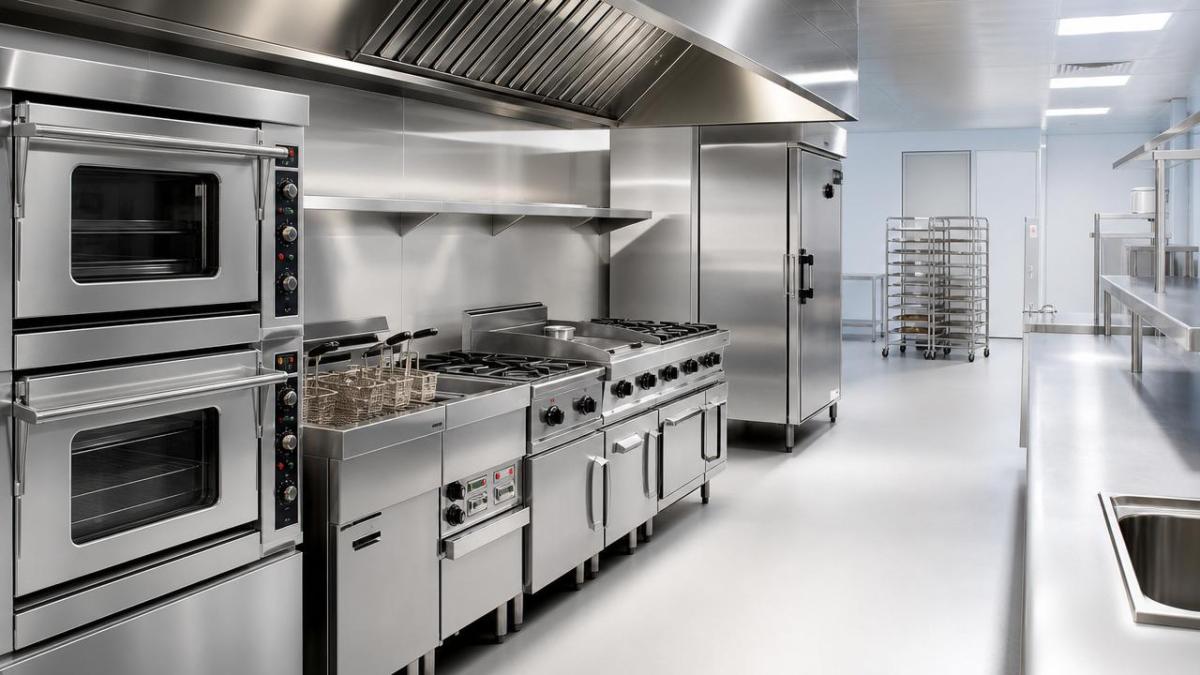
Commercial cooking equipment should be selected from operating data, not only catalog capacity. A 200-seat restaurant, hotel buffet, or central kitchen may require different duty cycles, recovery speeds, and holding strategies.
Technical evaluators should begin with a 7-day production profile. Include peak covers, batch sizes, menu complexity, cleaning windows, and expected growth over the next 24–36 months.
Map Throughput to Menu and Service Pattern
Throughput is not only meals per hour. It includes preheating time, recovery after loading, holding stability, and staff movement between stations during rush periods.
For fryers, ovens, ranges, steamers, and griddles, compare real batch output under loaded conditions. A fryer rated at 20 liters may perform differently depending on burner power and oil recovery.
- Estimate peak production in 15-minute intervals, not only daily volume.
- Identify dishes requiring simultaneous heat sources during service.
- Allow 10–20% capacity headroom for menu changes and seasonal peaks.
- Check whether cleaning or changeover removes equipment from service for 30–90 minutes.
Match Equipment Type to Production Environment
Restaurants often prioritize compact layouts and fast response. Hotels need repeatable quality across banquet, breakfast, and room service operations. Food processing facilities require documented controls and longer continuous duty cycles.
The following table outlines common evaluation priorities for commercial cooking equipment across busy kitchen environments and helps narrow the technical specification before supplier comparison.
The key conclusion is that capacity figures must be interpreted by scenario. The same commercial cooking equipment can be suitable in one kitchen but inefficient in another if load patterns differ.
Key Performance Specs Technical Evaluators Should Verify
Performance verification should cover thermal output, control precision, energy consumption, construction, and installation limits. These specs determine whether commercial cooking equipment performs reliably after commissioning.
Technical documents should be checked against site utilities and kitchen workflows. A powerful unit is not useful if ventilation, drainage, electrical load, or gas supply cannot support it.
Thermal Capacity and Recovery Rate
Thermal capacity is commonly expressed in kW, BTU/h, or heating element output. For busy kitchens, recovery rate often matters more than maximum temperature.
For example, fryers should regain the target oil temperature quickly after each basket load. Ovens should stabilize after door opening within a predictable 2–5 minute range.
Control Accuracy and Repeatability
Digital controls, probes, timers, and programmable recipes support repeatable output. For many applications, acceptable process variation may be ±1°C–±5°C depending on product sensitivity.
Evaluate how controls behave under load, during voltage fluctuation, and after repeated opening. Simple interfaces can also reduce operator errors across 2 or 3 shifts.
Materials, Hygiene, and Durability
Busy kitchens need surfaces that resist corrosion, heat stress, moisture, detergent, and impact. Stainless steel grades such as 304 are commonly used for food-contact and cleaning-intensive areas.
Check welds, corners, hinges, seals, removable parts, and fasteners. Gaps that trap residue can increase sanitation time and raise inspection risk.
The table below summarizes practical specifications that technical evaluators can request when comparing suppliers of commercial cooking equipment for demanding environments.
A well-prepared comparison matrix reduces subjective decisions. It also helps procurement teams separate useful engineering differences from marketing claims that do not affect kitchen performance.
Energy Efficiency, Automation, and Smart Kitchen Integration
Energy-efficient commercial cooking equipment can lower operating cost, but only when matched to production style. Idle losses, standby settings, insulation, and heat recovery influence real consumption.
For technical review, compare energy use per batch, per hour, or per kilogram of product. This is more practical than comparing rated input alone.
Assess Energy Use Beyond Rated Power
A 15 kW appliance may be efficient if it cooks faster and spends less time at full load. Conversely, poor insulation can waste heat over 8 operating hours.
Request standby consumption, preheat duration, loaded cooking data, and recommended operating mode. A 5–10 minute difference in preheat can matter across multiple daily cycles.
Automation That Reduces Process Variation
Smart kitchen technologies are increasingly used in restaurants, hotels, and central kitchens. Automated recipes, sensor feedback, and digital logs improve repeatability across operators.
Useful automation should solve a defined issue, such as undercooked batches, excess oil degradation, inconsistent steaming, or missed cleaning cycles. Avoid paying for features staff will not use.
- Identify the process variation to control, such as temperature drift or timing error.
- Confirm whether sensors measure the correct point in the cooking chamber.
- Check if recipes can be locked, edited, and exported by authorized users.
- Review alarm history and data records for 30–90 days of operation.
- Verify that manual override remains safe and compliant during service.
Connectivity and Kitchen Management Systems
Connected commercial cooking equipment can support remote monitoring, preventive maintenance, and production reporting. Evaluate communication protocols, user permissions, cybersecurity, and update procedures.
For multi-site operators, digital dashboards can compare utilization across 3–10 locations. For central kitchens, logs may support internal traceability and corrective action reviews.
Safety, Compliance, and Installation Constraints
Safety specifications influence equipment approval, insurance review, operator training, and inspection readiness. Technical evaluators should assess the appliance together with ventilation, fire suppression, and workflow layout.
Commercial cooking equipment must align with applicable local codes and foodservice standards. Requirements vary by market, so documentation should be confirmed before shipment or installation.
Compliance Documents to Request
Do not rely only on brochure statements. Ask suppliers for test reports, declaration documents, installation manuals, wiring diagrams, gas connection data, and cleaning instructions.
- Electrical specifications, including voltage, phase, current, grounding, and protection requirements.
- Gas appliance data, including gas type, pressure range, burner rating, and exhaust needs.
- Food-contact material information and recommended cleaning chemicals.
- Installation clearance, ventilation load, drainage requirements, and floor load limits.
- Operator safety features, including interlocks, over-temperature protection, and emergency stop functions.
Ventilation, Heat, and Space Planning
Heat-producing equipment can affect comfort and HVAC load. Confirm hood coverage, make-up air, exhaust volume, and clearance around service panels before ordering.
In compact kitchens, even a 100 mm clearance error can interfere with doors, casters, maintenance panels, or cleaning access. Layout review should happen before purchase approval.
Installation Acceptance Checks
Commissioning should include at least 3 acceptance checks: utility verification, functional testing, and operator handover. Record baseline readings for future troubleshooting.
For complex restaurant appliances or food processing machinery, a 1–2 day installation window may be insufficient. Plan extra time for calibration and staff training.
Lifecycle Cost, Maintenance, and Supplier Evaluation
The purchase price is only one part of the lifecycle cost. Energy, downtime, spare parts, cleaning labor, and service response can exceed the initial price over 3–5 years.
For busy kitchens, maintenance access is a specification. If a technician needs to dismantle multiple panels for routine service, downtime and labor costs increase.
Maintenance Frequency and Spare Parts
Request the recommended preventive maintenance schedule. Many commercial cooking equipment categories need daily cleaning, weekly inspection, and quarterly or semiannual technical checks.
Consumables and wear parts should be easy to source. Filters, gaskets, probes, belts, igniters, heating elements, and control boards should have clear lead times.
- Daily: cleaning, residue removal, visual inspection, and drainage checks.
- Weekly: door seals, burners, filters, fasteners, and temperature probe condition.
- Monthly: calibration review, electrical terminals, gas fittings, and control alarms.
- Every 6–12 months: technician inspection, safety device testing, and performance verification.
Supplier Questions That Reveal Technical Capability
A capable supplier should provide clear documentation, realistic delivery times, spare parts support, and installation guidance. For exported equipment, packaging and local utility adaptation also matter.
Typical procurement should allow 2–6 weeks for specification confirmation, sample or drawing review, production scheduling, inspection, and shipping coordination depending on configuration.
Common Procurement Mistakes
One common mistake is buying commercial cooking equipment based on nominal capacity without checking recovery under real load. Another is ignoring ventilation and site utilities until installation.
Technical evaluators should also avoid over-automation. A feature-rich unit may still fail operationally if staff cannot maintain, clean, or troubleshoot it during peak hours.
A Practical Selection Workflow for Busy Kitchens
A structured workflow helps engineering, operations, procurement, and kitchen management reach a shared decision. It also reduces disputes between budget limits and performance expectations.
For most projects, the selection process can be organized into 5 steps: demand mapping, specification drafting, supplier comparison, site verification, and commissioning review.
Step-by-Step Evaluation Method
- Define menu output, peak loads, batch sizes, and future growth assumptions.
- Set technical thresholds for power, recovery, temperature control, material, and cleaning.
- Compare at least 2–3 qualified equipment options using the same checklist.
- Verify site utilities, ventilation, drainage, installation space, and service access.
- Document acceptance tests, training records, warranty terms, and spare parts plan.
This workflow is suitable for restaurants, hotels, central kitchens, and food processing facilities. It keeps commercial cooking equipment evaluation grounded in measurable performance and operational risk.
When to Request Custom Configuration
Custom configuration may be valuable when production volume, menu process, available utilities, or space constraints differ from standard catalog assumptions.
Examples include modified voltage, special tray sizes, additional safety interlocks, reinforced frames, integrated conveyors, or data logging for quality control procedures.
Final Decision Guidance for Technical Buyers
Selecting commercial cooking equipment for a busy kitchen requires more than matching capacity to budget. The strongest decisions connect throughput, energy, materials, controls, compliance, and lifecycle service.
Technical evaluators should prioritize measurable data: recovery time, loaded performance, temperature tolerance, utility requirements, cleaning time, maintenance frequency, and spare parts availability.
For restaurants, hotels, central kitchens, and food processing environments, the right solution improves consistency, reduces operating friction, and supports safer high-volume production.
If you are planning a new kitchen, upgrading existing restaurant appliances, or evaluating integrated kitchen systems, contact us to discuss product details, technical specifications, and customized solutions for your operating needs.
Popular Tags
Kitchen Industry Research Team
Dedicated to analyzing emerging trends and technological shifts in the global hospitality and foodservice infrastructure sector.
Industry Insights
Join 15,000+ industry professionals. Get the latest market trends and tech news delivered weekly.
No spam. Unsubscribe anytime.
Hot Articles
 How to Size a Commercial Oven for Peak Production Without Wasting Energy
- How to Evaluate Foodservice Equipment Suppliers for Reliability, Service, and Total Cost
- How to Choose a Cutlery Set for Restaurants: Material, Durability, and Cost
- How to Evaluate Restaurant Supplies Distributors for Reliable Multi-Location Delivery
Contact With us
Contact:
Anne Yin (Ceramics Dinnerware/Glassware)
Lucky Zhai(Flatware)