
How do commercial kitchen equipment manufacturers differ?
Choosing among commercial kitchen equipment manufacturers is not only about comparing prices. It requires understanding capacity, specialization, certifications, customization, efficiency, and service depth.
These differences directly affect kitchen performance, food safety compliance, operating costs, and long-term return on investment across restaurants, hotels, central kitchens, and food factories.
Core differences among commercial kitchen equipment manufacturers
Commercial kitchen equipment manufacturers differ first in what they are built to produce, how consistently they produce it, and how well they support it.
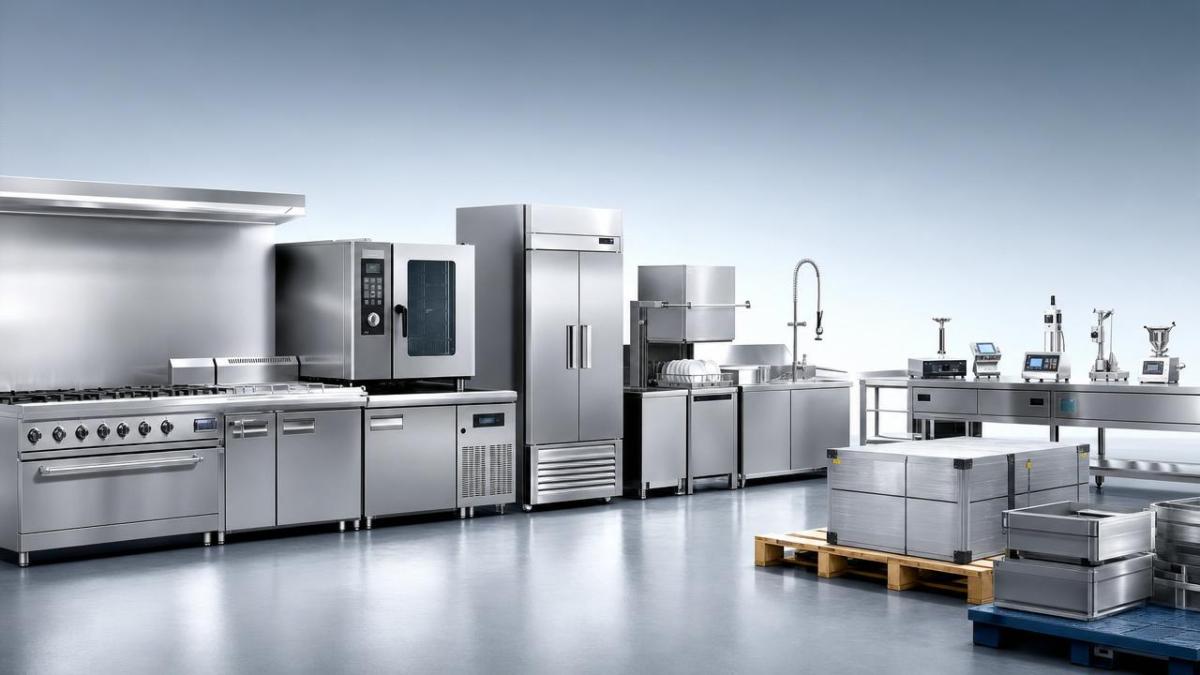
Some suppliers focus on cooking lines, including ranges, ovens, fryers, steamers, and griddles. Others specialize in refrigeration, dishwashing, preparation, or food processing machinery.
A broad catalog can simplify sourcing. However, depth in one product category often brings stronger engineering, better testing, and more stable performance.
Production scale also matters. Larger commercial kitchen equipment manufacturers may offer stable output, shorter lead times, and mature quality systems.
Smaller specialist factories may provide flexible customization, faster communication, and practical adaptations for unique kitchen layouts or regional cooking styles.
Main comparison dimensions
Manufacturing capability and quality control standards
Reliable commercial kitchen equipment manufacturers usually have structured production flows, from material inspection to assembly, testing, packaging, and final shipment checks.
Stainless steel grade is a basic indicator. Many professional kitchens require durable, corrosion-resistant surfaces that can withstand moisture, heat, cleaning chemicals, and daily impact.
Common materials include SUS304 for food-contact areas and SUS201 or other grades for less demanding structural parts, depending on application and budget.
Welding, polishing, insulation, wiring, burners, compressors, motors, and control panels reveal real production competence. Poor details often lead to failures later.
Quality control should not rely only on visual inspection. Functional tests, leakage tests, temperature tests, electrical safety checks, and packaging drop checks are important.
Quality signals to verify
- Documented incoming material inspection and supplier evaluation procedures.
- Clear production records for key components and assembly stages.
- Routine performance testing before shipment.
- Traceable serial numbers, labels, manuals, and spare parts lists.
- Packaging designed for sea freight, air freight, or long-distance land transport.
When comparing commercial kitchen equipment manufacturers, consistent process evidence is more valuable than polished showroom photos or a long product list.
Certification, compliance, and regional market requirements
Certification is a major difference among commercial kitchen equipment manufacturers, especially for exports and projects requiring formal acceptance by local authorities.
CE is commonly required in many European markets. UL, ETL, and NSF are often important for North American commercial kitchen applications.
ISO 9001 reflects quality management systems, although it does not replace product-level safety certification. Both factory systems and product approvals should be reviewed.
Electrical specifications also vary. Voltage, frequency, plug type, gas type, ventilation, drainage, and installation rules may differ by country or region.
For food processing facilities, hygiene design can be more demanding. Smooth surfaces, removable parts, cleanability, and contamination prevention become essential selection points.
Technology, automation, and energy efficiency differences
The kitchen equipment industry is moving toward intelligent controls, automated cooking, digital monitoring, and lower energy consumption.
Commercial kitchen equipment manufacturers differ greatly in how they integrate these technologies into practical, serviceable, and cost-effective equipment.
Some factories add basic digital displays. Others develop programmable controls, temperature memory, remote diagnostics, recipe management, and sensor-based safety functions.
Automation is especially valuable in central kitchens, chain restaurants, canteens, hotels, and food processing plants with repeated production tasks.
Energy efficiency is another major differentiator. Better insulation, optimized burners, efficient compressors, heat recovery, and smart standby modes reduce operating costs.
Technology features with practical value
- Accurate temperature control for consistent cooking and holding results.
- Automatic cleaning or easy-clean structures for lower labor intensity.
- Digital alarms for abnormal temperature, leakage, overload, or door opening.
- Modular design for easier maintenance and faster part replacement.
- Energy-saving modes that reduce idle consumption during off-peak periods.
Advanced features should match real usage. Unnecessary complexity may increase training needs, maintenance difficulty, and spare parts dependence.
Customization ability and application fit
Customization is a key reason commercial kitchen equipment manufacturers are not interchangeable. Standard models rarely fit every workflow, menu, or installation condition.
Common customization includes dimensions, power configuration, gas type, stainless steel thickness, door direction, control language, logo, packaging, and accessory options.
For restaurant appliances, customization may focus on space efficiency and menu speed. For food processing machinery, precision and hygiene may matter more.
For hotel kitchens, durability, appearance, noise control, and multi-station coordination are often important. For central kitchens, capacity planning becomes critical.
A capable supplier should ask about workflow, capacity, installation environment, cleaning method, local standards, and expected service life before quoting.
Service, spare parts, and lifecycle cost evaluation
After-sales support is one of the clearest differences among commercial kitchen equipment manufacturers. Equipment value depends on uptime, not only purchase price.
Good support includes installation guidance, operation manuals, maintenance schedules, troubleshooting videos, spare parts availability, and responsive technical communication.
For international orders, documentation quality becomes important. Clear packing lists, wiring diagrams, exploded drawings, and part codes reduce repair delays.
Lifecycle cost includes energy use, consumables, cleaning labor, downtime, repairs, replacement parts, and expected working life.
A cheaper machine can become expensive if it consumes more energy, fails often, or requires rare parts with long delivery times.
Practical evaluation checklist
- Confirm whether the model matches daily capacity, peak demand, and available space.
- Request certification documents for the target market and product category.
- Review material specifications, component brands, and test procedures.
- Ask for spare parts lists, warranty terms, and estimated maintenance intervals.
- Compare total cost of ownership, not only unit price.
- Check packaging strength for the intended shipping method.
This approach helps separate professional commercial kitchen equipment manufacturers from traders or factories with limited long-term support capacity.
Selecting a reliable supplier for long-term value
The best choice depends on application needs, compliance obligations, expected workload, and maintenance resources.
Commercial kitchen equipment manufacturers with strong engineering, transparent testing, and responsive service usually provide better value than low-price-only options.
Before confirming an order, compare technical drawings, specifications, certifications, production photos, test videos, packaging plans, and spare parts arrangements.
For customized projects, start with a clear equipment list, kitchen layout, utility conditions, food output targets, and applicable local standards.
A structured comparison makes supplier selection more objective and reduces hidden risks after installation.
When evaluating commercial kitchen equipment manufacturers, focus on performance evidence, compliance fit, lifecycle cost, and practical support.
The next step is to prepare specifications, confirm operating conditions, and request detailed proposals from qualified suppliers for direct comparison.
Popular Tags
Kitchen Industry Research Team
Dedicated to analyzing emerging trends and technological shifts in the global hospitality and foodservice infrastructure sector.
Industry Insights
Join 15,000+ industry professionals. Get the latest market trends and tech news delivered weekly.
No spam. Unsubscribe anytime.
Hot Articles
 How to Size a Commercial Oven for Peak Production Without Wasting Energy
- How to Evaluate Foodservice Equipment Suppliers for Reliability, Service, and Total Cost
- How to Choose a Cutlery Set for Restaurants: Material, Durability, and Cost
- How to Evaluate Restaurant Supplies Distributors for Reliable Multi-Location Delivery
Contact With us
Contact:
Anne Yin (Ceramics Dinnerware/Glassware)
Lucky Zhai(Flatware)