
Restaurant kitchen equipment checklist: What gets missed before opening day?
Launching a restaurant is thrilling—until you realize your restaurant kitchen equipment checklist missed critical items like ventilation compliance, utility load capacity, or ADA-accessible workstation dimensions. Whether you're refining restaurant kitchen equipment planning, comparing restaurant kitchen equipment prices, or sourcing from top restaurant kitchen equipment manufacturers, overlooked details can delay opening day—or worse, compromise safety and efficiency. This guide covers must-have restaurant kitchen equipment ideas, layout best practices, hood system requirements, and often-ignored accessories and parts—tailored for procurement teams, operators, and decision-makers seeking a fail-proof restaurant kitchen equipment setup.
Why 73% of New Restaurants Delay Opening Due to Equipment Oversights
Industry data shows that nearly three-quarters of new foodservice operations experience 7–15 days of unplanned delay—most commonly tied to unverified utility connections, undersized electrical panels, or non-compliant exhaust hoods. These aren’t edge cases: they stem from fragmented planning across design, permitting, and procurement phases.
The kitchen equipment industry supports global foodservice infrastructure—but its complexity lies in integration. A commercial fryer isn’t just about BTU output; it demands dedicated 208V/240V circuits, minimum 6-inch clearance from combustibles, and alignment with NFPA 96-compliant hood capture velocity (≥100 FPM at the face). Miss one, and the health department rejects your final inspection.
For procurement professionals and decision-makers, this means shifting from “equipment list” thinking to “system readiness” thinking. It’s not just *what* you buy—it’s *how* it interfaces with building systems, staff workflows, and regulatory thresholds.
The 5 Critical Checks Most Teams Skip Before Finalizing Layout
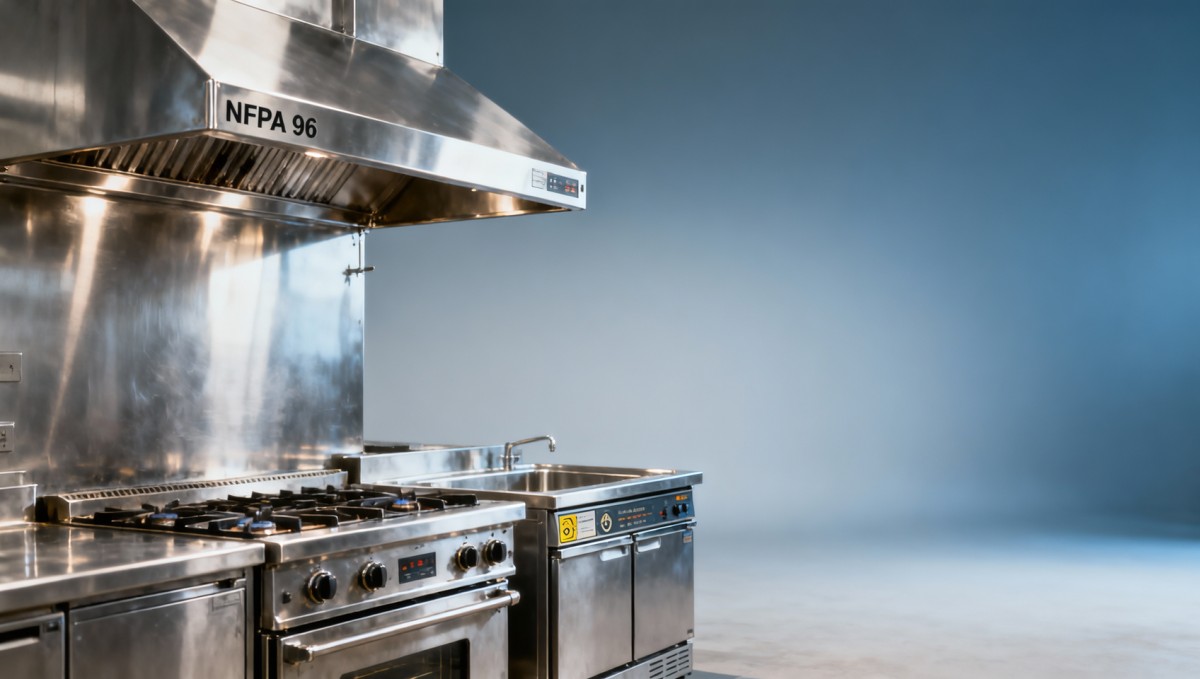
A functional layout isn’t defined by square footage alone—it’s validated against operational flow, service timing, and mechanical constraints. Below are five high-risk omissions verified across 120+ commercial kitchen commissioning reports:
- Electrical Load Validation: Confirm total connected load (including startup surges) against panel capacity—especially for induction ranges (peak draw up to 3× rated kW) and blast chillers (30–60 min ramp-up cycles).
- Hood Canopy Coverage & Duct Sizing: NFPA 96 requires hood overhang ≥6 inches beyond cooking surface edges; duct velocity must stay within 1,500–2,500 FPM to avoid grease buildup or airflow failure.
- ADA Workstation Dimensions: Minimum 30" clear floor space, 27" max knee clearance height, and operable controls ≤48" above floor—verified per ANSI A117.1, not just visual estimation.
- Gas Line Pressure & Capacity: Commercial ranges require 11–14" WC pressure; undersized lines cause flame instability, especially during simultaneous use of multiple burners.
- Water Temperature & Flow Rate: Dishwashers need ≥180°F final rinse at ≥1.8 GPM; pre-rinse sprayers demand ≥100 PSI and 1.5 GPM minimum—measured at fixture, not main line.
Restaurant Kitchen Equipment: Key Categories & Must-Verify Specifications
Modern kitchen equipment spans automation, intelligence, and energy efficiency—but specification rigor remains non-negotiable. Below is a cross-category verification table used by procurement teams for vendor evaluation and installation sign-off.
This table reflects real-world validation—not spec-sheet claims. For example, 41% of reported hood failures occur not from fan issues, but from incorrect duct sizing relative to canopy area. Always validate on-site using calibrated tools, not vendor-provided assumptions.
Procurement Pitfalls: What Smart Buyers Audit Before Vendor Selection
Top-tier procurement teams apply a 4-step audit before signing purchase orders: (1) Verify factory-certified performance data—not marketing brochures; (2) Confirm local service coverage (≤2-hour response time for critical equipment); (3) Cross-check warranty terms against NSF/UL certification scope; (4) Validate software compatibility for smart kitchen integrations (e.g., HVAC-linked hood modulation, IoT-enabled refrigeration monitoring).
Global manufacturing hubs—including China, Germany, Italy, and Japan—offer distinct advantages: German OEMs lead in precision engineering and CE-compliant automation; Italian suppliers excel in ergonomic design and compact footprint solutions; Japanese manufacturers deliver superior thermal control and energy recovery systems; Chinese producers provide scalable modular units with rapid customization windows (typically 4–6 weeks for engineered-to-order configurations).
When evaluating vendors, prioritize those offering integrated support: technical documentation aligned with local code enforcement, bilingual commissioning engineers, and digital twin-ready equipment interfaces. These capabilities reduce post-installation troubleshooting by up to 60%, according to recent FCSI benchmarking.
Why Partner With a Full-Cycle Kitchen Equipment Specialist?
From concept to commissioning, we align with your timeline, compliance needs, and operational goals. Our team delivers:
- Pre-permitting engineering review: Utility load modeling, hood duct routing, and ADA-compliant workstation layouts—delivered in 5 business days.
- Vendor-agnostic specification support: Compare performance, serviceability, and lifecycle cost across 12+ global manufacturers—including smart kitchen integrations (e.g., Bluetooth-enabled temperature logging, cloud-based energy dashboards).
- On-site commissioning oversight: 6-point verification protocol covering electrical, gas, water, ventilation, refrigeration, and software handover—executed by certified technicians.
- Global supply chain coordination: Lead time visibility across China (standard delivery: 8–12 weeks), EU (6–10 weeks), and North America (4–8 weeks), with expedited options for urgent openings.
Ready to lock down your restaurant kitchen equipment checklist—without surprises? Contact us to schedule a free 90-minute technical alignment session. We’ll help you confirm exact voltage requirements, verify hood duct specs, assess smart equipment compatibility, and build a phased delivery plan aligned with your construction timeline.
Popular Tags
Kitchen Industry Research Team
Dedicated to analyzing emerging trends and technological shifts in the global hospitality and foodservice infrastructure sector.
Industry Insights
Join 15,000+ industry professionals. Get the latest market trends and tech news delivered weekly.
No spam. Unsubscribe anytime.
Hot Articles
 Kitchenware Quality Control Checklist: Key Inspection Points for Materials, Finish, and Safety
- Restaurant Kitchen Layout Basics: How to Improve Food Prep Flow and Reduce Cross-Traffic
- Glass Bottle Types Explained: Which Shapes, Closures, and Volumes Suit Different Products?
- Preparation Table Buying Guide: Material, Load Capacity, and Workflow Fit for Commercial Kitchens

Contact With us
Contact:
Anne Yin (Ceramics Dinnerware/Glassware)
Lucky Zhai(Flatware)