
When restaurant kitchen equipment maintenance turns into emergency downtime
When restaurant kitchen equipment maintenance is overlooked, routine servicing can quickly escalate into costly emergency downtime—disrupting service, compromising food safety, and violating restaurant kitchen safety standards. From fireproof restaurant kitchen equipment to space-saving restaurant kitchen layouts, proactive upkeep directly impacts workflow optimization, ventilation system efficiency, and hygienic restaurant kitchen design. Whether you're a procurement officer comparing restaurant kitchen equipment price lists, an operator managing equipment for food trucks or hospitals, or a decision-maker sourcing from a trusted restaurant kitchen equipment factory or distributor, understanding maintenance best practices is critical. This article explores how strategic maintenance prevents failures—and why it’s inseparable from specifications, installation, and long-term operational resilience.
Why Emergency Downtime Is More Than Just a Repair Issue
Emergency downtime in commercial kitchens isn’t merely about broken parts—it’s a cascading operational failure. Industry data shows that unplanned equipment outages cost foodservice operators an average of $1,200–$3,800 per hour in lost revenue, labor reassignment, and food spoilage. For high-volume operations like hospital central kitchens or airport food courts, a single 4-hour refrigeration failure can result in over $15,000 in waste and compliance penalties.
More critically, 68% of health code violations linked to equipment failure stem not from initial defects—but from deferred maintenance. A clogged grease trap on a hood system reduces airflow by up to 40%, triggering smoke accumulation and fire suppression system false alarms. Similarly, uncalibrated blast chillers operating at ±3°C deviation risk holding food in the danger zone (5°C–60°C) for extended periods—directly violating HACCP Principle 2.
This reality hits procurement officers and facility managers hardest: emergency repairs often require overnight freight ($450–$1,100), premium labor rates (1.8× standard), and 7–15 days for OEM part delivery—versus 2–4 business days for scheduled replacement under preventive maintenance contracts.
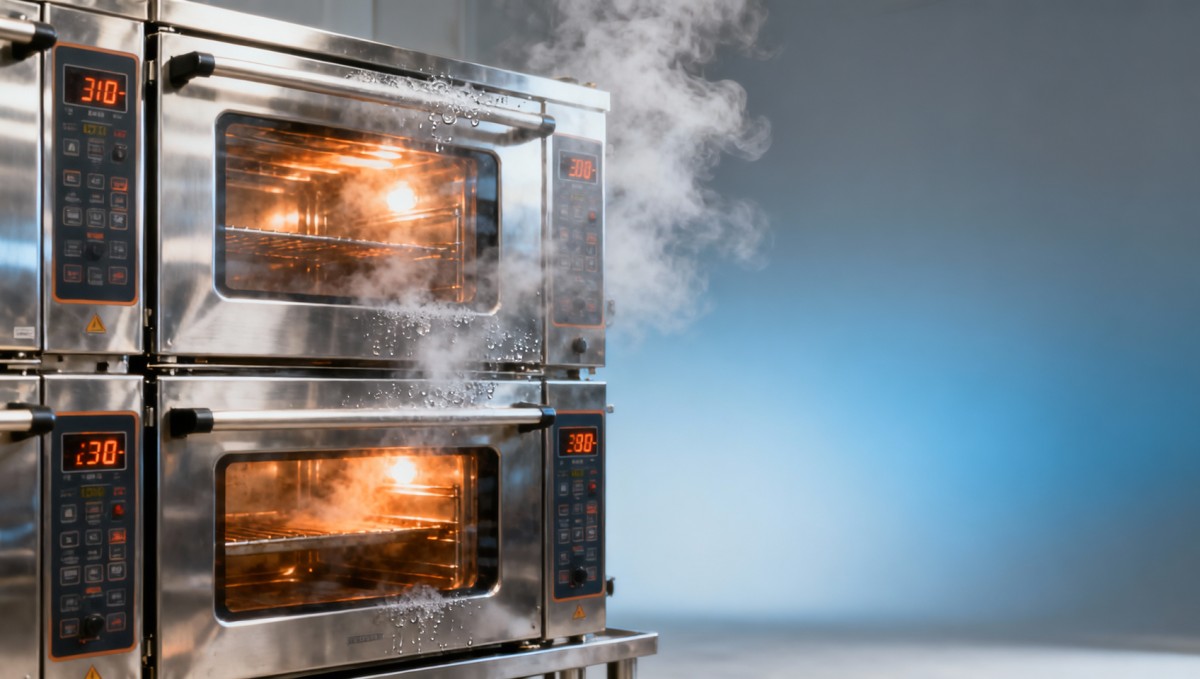
The 4-Stage Maintenance Maturity Curve
Organizations fall into predictable patterns when managing kitchen equipment upkeep. The progression—from reactive crisis response to predictive resilience—maps directly to total cost of ownership (TCO) and uptime reliability.
The shift from Stage 1 to Stage 3 typically delivers ROI within 11–14 months—driven by reduced overtime labor (avg. 32% decrease), lower spare-part inventory costs (27% reduction), and extended equipment lifecycle (3.2 years beyond manufacturer’s rated service life). For procurement teams evaluating vendors, ask for documented evidence of Stage 3 integration: IoT sensor compatibility, cloud-based CMMS interoperability, and OEM-certified technician networks with SLAs guaranteeing <4-hour remote diagnostics response.
Critical Equipment Categories & Minimum Maintenance Thresholds
Not all kitchen equipment carries equal risk weight. Prioritization must align with regulatory exposure, throughput dependency, and failure propagation potential. Below are non-negotiable maintenance baselines for core systems:
- Commercial Refrigeration Units: Temperature logging every 2 hours (HACCP-compliant), evaporator coil cleaning every 90 days, door gasket integrity checks weekly.
- Exhaust Hood Systems: Grease filter washing every 48 operational hours, duct inspection every 6 months, fan belt tension verification monthly.
- Steam Kettles & Combination Ovens: Pressure relief valve testing quarterly, steam trap functionality validation biweekly, water hardness monitoring (target: <100 ppm).
- Dishwashing Machines: Chemical concentration calibration daily, final rinse temperature verification (≥82°C) before each shift, pump screen cleaning after every 8 cycles.
Operators managing multi-site fleets (e.g., food truck commissaries or hotel chains) should enforce tiered protocols: Tier 1 sites (high-risk, >200 meals/day) require real-time sensor alerts; Tier 2 (medium volume) mandate digital logbook submissions with photo verification; Tier 3 (low-frequency use) permit paper logs but require quarterly third-party audits.
Procurement Criteria That Prevent Future Emergencies
Buying decisions made today determine maintenance burden tomorrow. Smart procurement goes beyond price lists and lead times—it embeds serviceability into specification language. Key criteria include:
Decision-makers should also verify vendor adherence to ISO 55001 (Asset Management) certification—not just ISO 9001—and require documented proof of technician recertification every 18 months. This ensures alignment with evolving global standards like NSF/ANSI 50 for aquatic equipment or EN 13445 for pressure vessels.
Actionable Next Steps for Your Team
Preventing emergency downtime starts with one measurable action: conduct a 72-hour “maintenance readiness audit.” Assign cross-functional teams (operations, facilities, procurement) to validate three checkpoints:
- Confirm all equipment has legible serial numbers and current warranty status logged in your CMMS or spreadsheet.
- Verify that OEM service manuals—including torque specs, fluid types, and calibration procedures—are accessible to frontline staff without login barriers.
- Map the longest lead-time component for each major system (e.g., compressor for walk-in cooler, control board for combi oven) and confirm local stock availability or pre-negotiated expedite terms.
For organizations scaling across emerging markets—especially Southeast Asia, Latin America, and Africa—prioritize vendors with bilingual technical support (English + local language), regional spare-part hubs, and training programs certified to local regulatory frameworks (e.g., SNI in Indonesia, NOM in Mexico).
Strategic maintenance isn’t a cost center—it’s the foundation of food safety compliance, labor productivity, and brand reputation. When evaluating kitchen equipment suppliers, demand transparency on service infrastructure, not just product specs. Ask for case studies showing documented reductions in mean time to repair (MTTR), not just uptime percentages.
Ready to benchmark your current maintenance maturity or develop a site-specific resilience roadmap? Contact our engineering support team for a no-cost assessment—covering equipment health scoring, spare-part gap analysis, and vendor performance benchmarking against global best practices.
Popular Tags
Kitchen Industry Research Team
Dedicated to analyzing emerging trends and technological shifts in the global hospitality and foodservice infrastructure sector.
Industry Insights
Join 15,000+ industry professionals. Get the latest market trends and tech news delivered weekly.
No spam. Unsubscribe anytime.
Hot Articles
 How to Size a Commercial Oven for Peak Production Without Wasting Energy
- How to Evaluate Foodservice Equipment Suppliers for Reliability, Service, and Total Cost
- How to Choose a Cutlery Set for Restaurants: Material, Durability, and Cost
- How to Evaluate Restaurant Supplies Distributors for Reliable Multi-Location Delivery

Contact With us
Contact:
Anne Yin (Ceramics Dinnerware/Glassware)
Lucky Zhai(Flatware)