
Dough mixer machine torque problems often start with hydration
Torque issues in a dough mixer machine often begin with one overlooked variable: hydration. For bakeries, kitchens, and food processing teams using planetary mixer machine systems alongside dough sheeter machine, dough divider machine, bakery proofer machine, and bakery oven machine equipment, understanding this relationship is essential to product consistency, machine protection, and workflow efficiency. This article explores why hydration affects torque, how operators can spot early warning signs, and what buyers should consider when selecting kitchen preparation equipment.
In commercial kitchens and bakery production lines, torque is not just a mechanical number. It reflects how hard the mixer motor, gearbox, and transmission components must work to move dough from rough incorporation to full gluten development. When hydration is too low, the dough mass becomes stiff, resistance rises rapidly, and the machine may draw higher load than expected within the first 2 to 6 minutes of mixing.
For operators, that means noise, heat, vibration, or inconsistent batch performance. For procurement teams and decision-makers, it affects equipment sizing, maintenance intervals, and total cost of ownership over 3 to 5 years. In integrated kitchen equipment environments where mixers feed sheeters, dividers, proofers, and ovens, even a small hydration error of 2% to 4% can create downstream inefficiencies.
Why Hydration Has a Direct Impact on Dough Mixer Machine Torque
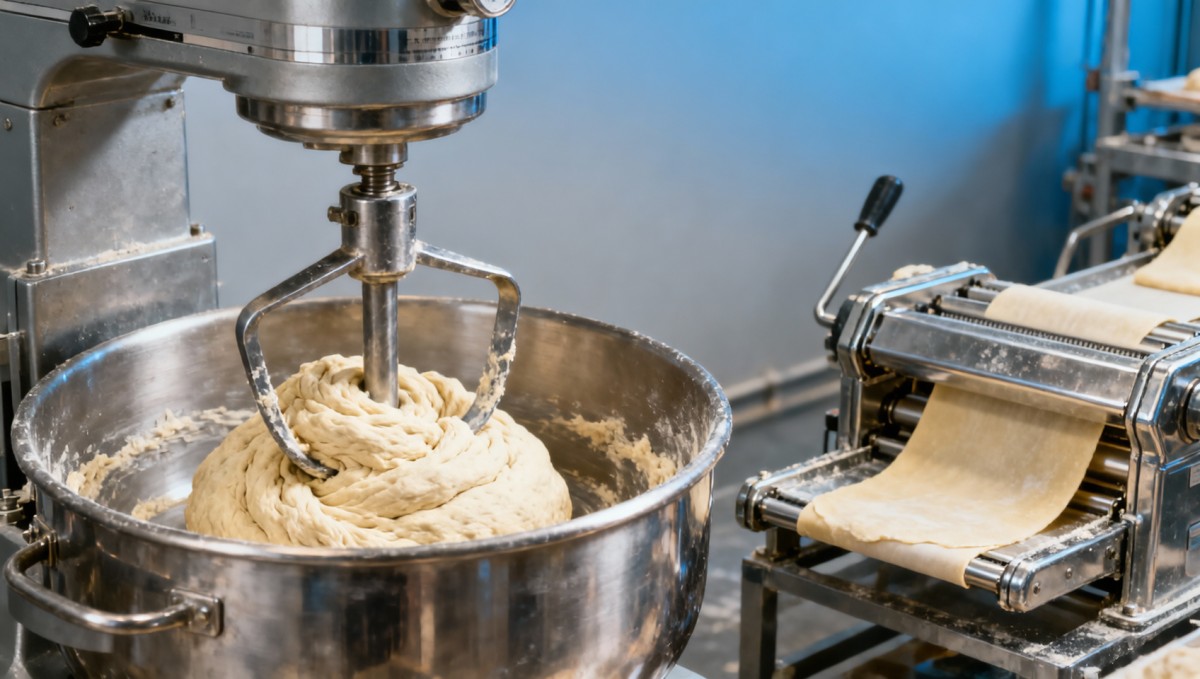
Hydration refers to the ratio of water to flour, usually expressed as a percentage. A dough at 50% hydration behaves very differently from one at 65% or 75%. Lower hydration generally creates a denser, less extensible mass, which increases resistance during bowl rotation and agitator movement. In practical terms, the dough mixer machine must generate more torque to achieve the same mixing result.
This relationship is especially important in commercial kitchen equipment settings where batch size ranges from 10 kg to 100 kg or more. A formula that mixes smoothly in a 20-liter unit may overload a larger system if scaling is done without adjusting hydration, flour absorption, and mixing speed. This is one reason why production teams often experience sudden torque spikes after changing flour source, ambient humidity, or water temperature.
Hydration also influences frictional heat. Stiffer dough transfers more stress into the transmission system, while prolonged mixing raises dough temperature by 2°C to 6°C depending on speed and batch volume. When dough temperature climbs too quickly, consistency can shift before the operator notices. That creates a dual problem: the recipe moves out of target, and the mixer runs under avoidable mechanical strain.
In food processing machinery selection, torque problems are often misdiagnosed as motor weakness. In reality, many cases begin with a mismatch between dough formula and machine duty cycle. A planetary mixer machine used for moderate-viscosity applications may struggle with repeated low-hydration dough at full load, even if its rated capacity appears sufficient on paper.
Hydration, resistance, and gluten development
Water controls how quickly flour proteins hydrate and form a workable network. At low hydration, gluten develops under higher mechanical force. At higher hydration, dough mobility improves, but overmixing can happen faster if speed settings are too aggressive. The best operating window often depends on 4 variables: flour protein level, target dough temperature, batch weight, and mixer type.
Typical torque-related triggers in bakery operations
- Hydration reduced by 3% to 5% without changing mixing time or speed.
- Flour with higher absorption replaces the previous supplier specification.
- Batch loading reaches 85% to 100% of nominal bowl capacity on stiff dough recipes.
- Cold dough mixing below 18°C increases initial resistance during the first stage.
The table below shows how hydration level typically changes dough behavior and equipment stress in bakery and foodservice production environments.
The key takeaway is not that higher hydration is always better. The correct target is recipe-specific. What matters is whether the dough mixer machine, its motor reserve, and the selected mixing profile are suitable for the hydration range used in daily production.
Early Warning Signs Operators Should Not Ignore
Most torque-related failures do not begin with a sudden breakdown. They start with small, repeatable symptoms that appear across several batches. Operators in bakeries, hotels, and central kitchens should watch for slower ingredient pickup, visible bowl drag, irregular hook movement, or a rising mixer surface temperature after 15 to 20 minutes of cumulative operation.
Another common sign is inconsistency between batches using the same formula. If one batch reaches target development in 8 minutes and the next takes 11 minutes with no intentional recipe change, hydration variation is a strong suspect. Water dosing error as small as 0.5 liter in a 25 kg flour batch can shift dough behavior enough to affect torque and final sheetability.
In integrated commercial kitchen equipment workflows, these issues often become visible downstream before the mixer is blamed. A dough sheeter machine may show edge tearing, the dough divider machine may produce uneven piece weights, or the bakery proofer machine may receive dough with unstable fermentation behavior. By that point, the original cause is harder to trace.
Operators should also pay attention to electrical and mechanical indicators if available. Repeated high current draw, tripped overload protection, belt slippage, and unusual transmission sound are all signals that the machine is working outside a comfortable range. Even without advanced sensors, a checklist-based observation routine performed once per shift can reduce avoidable wear.
A practical 5-point floor check
- Verify water weight or volume before each batch, especially when changing operators.
- Confirm flour lot and absorption behavior when a new delivery arrives.
- Check whether bowl loading exceeds 80% to 85% for stiff dough applications.
- Record mixing time, speed stage, and dough temperature after discharge.
- Inspect for noise, vibration, or heat around the gearbox and motor housing.
The following table helps operations teams connect common symptoms with likely hydration-related causes and immediate actions.
For plant managers and kitchen supervisors, the value of early detection is measurable. Identifying torque stress before component failure can prevent downtime that lasts 4 to 24 hours, depending on spare part availability and service response time.
How to Align Recipe Control, Equipment Settings, and Production Flow
Reducing torque problems requires more than telling staff to add more water. The better approach is to align recipe control, machine settings, and upstream-downstream handling. In kitchen electrical appliances and food processing machinery, stable performance usually comes from a documented process rather than operator intuition alone.
Start with formula discipline. Water should be measured by weight whenever possible, especially in batches above 15 kg flour. Volumetric filling can be acceptable for smaller operations, but weight-based dosing generally reduces variation. Teams should also consider flour storage conditions, because flour exposed to changing humidity may absorb water differently over 24 to 72 hours.
Next, refine the mixing profile. Many dough mixer machine problems occur because speed transitions are too aggressive. A 2-stage sequence often works better than immediate high-speed mixing: low speed for 2 to 4 minutes to combine ingredients, then development speed for 4 to 8 minutes depending on dough type. This reduces initial torque shock and improves consistency.
Finally, look at the full production line. Dough that leaves the mixer underdeveloped or overheated may create rework at the sheeting, dividing, or proofing stage. In a commercial bakery environment processing 8 to 12 batches per hour, a single unstable mixer station can disrupt oven loading and labor planning across the shift.
Recommended control points for daily production
- Keep target dough temperature within a defined band, often 24°C to 27°C for many bread applications.
- Use standard mixing times with permitted adjustment windows of no more than 10% to 15%.
- Review actual bowl fill ratio against recipe stiffness instead of relying only on nominal machine capacity.
- Record flour lot changes and compare dough feel during the first 3 batches after changeover.
Implementation sequence for operators and supervisors
- Define the target hydration range for each product, such as 58%–62% or 65%–70%.
- Set batch size limits for stiff, medium, and soft dough categories.
- Assign approved speed and time profiles by recipe family.
- Train operators to record exceptions at least once per shift.
- Review results weekly and adjust based on dough temperature and downstream performance.
When this discipline is maintained, kitchens and bakeries often see improvements in machine stability, reduced rework, and more predictable output from dough divider machine and bakery oven machine stages. The benefit is operational, not just mechanical.
What Buyers and Decision-Makers Should Evaluate Before Purchasing
For procurement teams, torque performance should be considered alongside capacity, power rating, and intended dough range. A mixer that handles soft batter well may not be ideal for repeated low-hydration bread dough. Buyers in restaurants, hotels, central kitchens, and food factories should define application mix before comparing machine prices.
One frequent purchasing mistake is selecting equipment only by bowl volume. Bowl size matters, but it does not fully describe usable dough capacity. The more relevant question is how the dough mixer machine performs at a specific hydration level, batch weight, and mixing frequency per hour. For example, a system may support 30 liters nominally but require derating for dense dough by 15% to 25%.
Decision-makers should also assess drivetrain strength, overload protection, service access, and compatibility with the wider kitchen equipment line. If the mixer feeds a dough sheeter machine, bakery proofer machine, and bakery oven machine in sequence, throughput balance matters. Buying an under-specified mixer can create a bottleneck even if downstream equipment is technically larger.
After-sales support is equally important. Spare part lead times of 3 to 7 days may be acceptable for some kitchens, while high-output food processing companies often require faster service planning. Clear operating guidance, commissioning support, and preventive maintenance schedules can significantly reduce torque-related misuse in the first 6 months.
Key evaluation criteria for B2B buyers
The comparison below highlights practical procurement factors that matter when choosing commercial kitchen equipment for dough preparation.
For procurement planning, it is useful to compare at least 4 dimensions: recipe fit, operating load, line integration, and service support. That gives a more complete basis for investment than headline price alone.
Questions buyers should ask suppliers
- What dough hydration range is suitable at full and reduced batch load?
- How many batches per hour can the machine support under normal production duty?
- What operating guidance is available for stiff dough applications?
- What is the standard lead time for common replacement parts and service response?
Maintenance, Risk Prevention, and Common Questions
Even the right mixer can suffer avoidable stress if maintenance is reactive rather than preventive. In commercial kitchen equipment fleets, a simple maintenance plan often delivers better results than expensive emergency repairs. Inspection frequency should reflect usage intensity. A bakery running 2 shifts per day may need weekly checks where a hotel kitchen may inspect monthly.
Operators should clean contact surfaces after every batch and verify that moving parts remain free from product buildup. Supervisors should review motor temperature patterns, fastener tightness, belt condition where applicable, and abnormal sound at defined intervals such as every 40 to 80 operating hours. These are practical steps that support both food safety and equipment life.
From a risk management perspective, the most costly misunderstanding is assuming torque issues are always a machine defect. In many cases, the root cause is process drift: changed flour, inaccurate dosing, oversized batches, or unsuitable mixing profiles. A balanced response considers machine condition and recipe behavior together.
For enterprises evaluating kitchen equipment investment, this matters because mechanical reliability and product consistency are inseparable. A dough mixer machine is not an isolated purchase. It is a critical node in a broader preparation system that influences labor efficiency, product quality, and line scheduling from mixing through baking.
FAQ: How much hydration change is enough to affect torque?
In many bread dough applications, a shift of 2% to 3% hydration can already change mixing resistance noticeably, especially in medium to low hydration formulas. The effect becomes stronger as batch size increases. Larger batches amplify the load on the mixer and make small formulation errors more costly.
FAQ: Is a planetary mixer machine suitable for all dough types?
Not always. A planetary mixer machine can be effective for many kitchen and bakery tasks, but very stiff dough or high-volume continuous production may require more specialized heavy-duty configurations. The correct choice depends on dough type, daily batch count, and whether the machine must support other tasks such as cream, batter, or filling preparation.
FAQ: What is a reasonable service planning interval?
A practical approach is daily cleaning, weekly visual checks, monthly operating review, and a more detailed technical inspection every 6 to 12 months, depending on load intensity. High-use food processing facilities may shorten that interval. The important point is consistency, not waiting for failure symptoms.
FAQ: Which downstream problems often point back to mixer hydration issues?
Common signals include poor sheeting behavior, weight variation after dividing, irregular proof expansion, and unstable oven spring. When several of these appear together, the mixer stage deserves immediate review before teams make unnecessary adjustments elsewhere in the line.
Hydration is one of the most practical levers for reducing torque stress, protecting kitchen equipment, and improving dough consistency across bakery and foodservice operations. When recipe control, machine sizing, operator checks, and maintenance routines are aligned, businesses can lower downtime risk and improve production stability across the full process line. If you are evaluating a dough mixer machine, planning an equipment upgrade, or looking to match mixers with dough sheeter machine, dough divider machine, bakery proofer machine, and bakery oven machine systems, contact us to discuss your application, get a tailored solution, and learn more about the right kitchen preparation equipment for your workflow.
Popular Tags
Kitchen Industry Research Team
Dedicated to analyzing emerging trends and technological shifts in the global hospitality and foodservice infrastructure sector.
Industry Insights
Join 15,000+ industry professionals. Get the latest market trends and tech news delivered weekly.
No spam. Unsubscribe anytime.

Contact With us
Contact:
Anne Yin (Ceramics Dinnerware/Glassware)
Lucky Zhai(Flatware)