
Vegetable cutter machine downtime usually comes from one issue
When a vegetable cutter machine suddenly stops working, the root cause is often simpler than expected—but the impact on kitchen preparation equipment efficiency can be serious. For operators, buyers, and foodservice managers, understanding this common issue helps reduce downtime, protect output quality, and keep every kitchen prep table running smoothly in fast-paced commercial environments.
In commercial kitchens, central food preparation rooms, and food processing facilities, a stoppage of even 15 to 30 minutes can delay batch preparation, increase labor pressure, and affect slicing consistency. In many cases, the machine itself is not experiencing a major mechanical failure. Instead, downtime usually comes from one issue: improper feeding, overload, or jamming caused by material mismatch and operator habits.
That single issue matters because vegetable cutter machines operate in high-frequency conditions. A unit may process 50 kg, 100 kg, or even more per hour depending on blade design, motor power, and raw material type. When the product is fed unevenly, loaded beyond its intended range, or used with unsuitable produce hardness, the machine may stop, trip a safety switch, or produce unstable cuts.
For information researchers, machine users, procurement teams, and business decision-makers, the practical question is not only why the machine stops, but how to prevent repeated downtime, how to evaluate equipment reliability, and how to choose a cutter that matches kitchen workflow. The sections below explain the most common root cause, the warning signs, the right maintenance logic, and the buying criteria that help reduce interruptions.
The one issue behind most vegetable cutter machine downtime
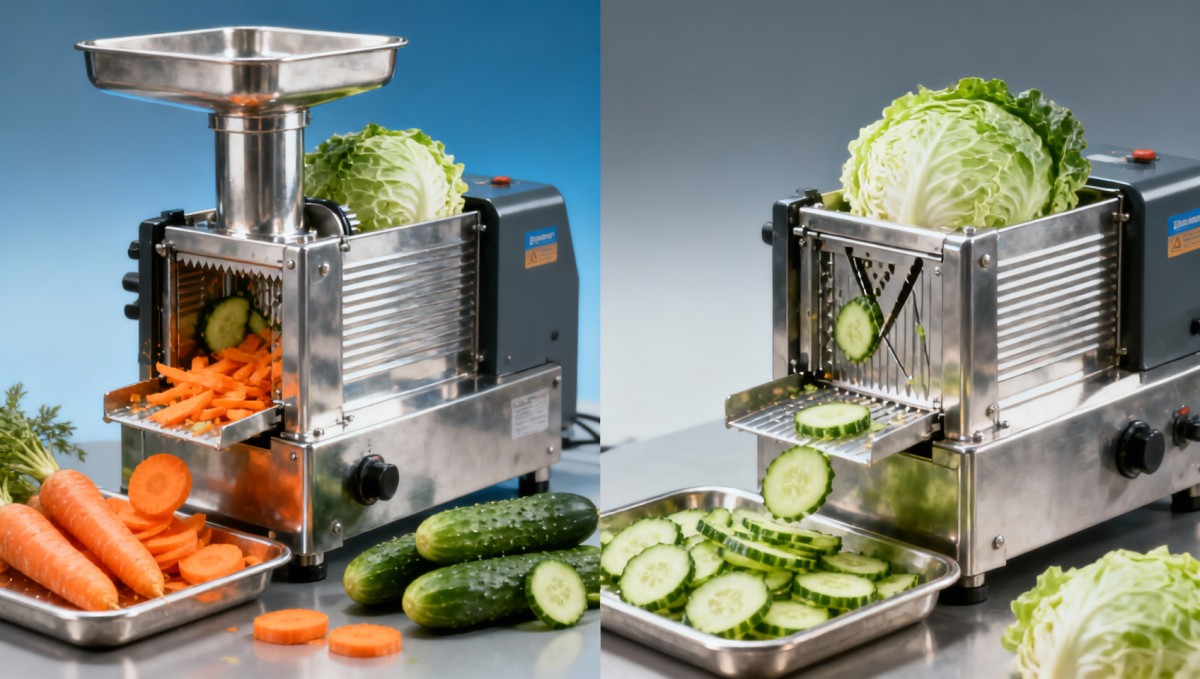
Although operators often suspect motor burnout, electrical faults, or blade damage first, most unplanned stoppages in a vegetable cutter machine begin with a feeding problem that develops into a jam. This is especially common when leafy vegetables, root vegetables, and mixed-moisture ingredients are processed in the same shift without adjusting feed speed, blade setup, or cleaning intervals.
A jam usually forms in 3 stages. First, material enters the cutting zone at an uneven angle. Second, excess volume or unsuitable size creates resistance around the blade or discharge channel. Third, the machine responds by slowing down, overheating, triggering overload protection, or stopping entirely. In many commercial units, this protective stop appears before serious damage occurs, which is why downtime can often be solved quickly if the real cause is identified early.
This pattern is common in restaurant kitchens during peak prep windows, especially within 1 to 2 hours before lunch or dinner service. It is also common in central kitchens running continuous batches of carrots, onions, cucumbers, cabbage, and potatoes, where output pressure encourages operators to push more material into the chute than the cutter is designed to handle.
Another overlooked factor is product condition. A vegetable cutter machine configured for fresh, uniform produce may struggle with frozen edges, excessive water content, fibrous stems, or irregular pre-cut lengths. Even a machine with a 0.75 kW to 2.2 kW motor can stop if the ingredient profile does not match the blade structure and feeding method.
Why overload and jamming happen so often
The kitchen equipment sector increasingly values automation and throughput, but manual loading habits still affect machine performance. Operators often assume that faster input means higher productivity. In reality, if a machine is rated for a stable feed volume rather than a maximum burst volume, overfeeding can reduce output by 20% to 40% because repeated stops interrupt workflow more than controlled operation does.
Jamming is also linked to inconsistent preparation before loading. Large root vegetables should often be pre-divided into manageable lengths, such as 80 mm to 150 mm, depending on the inlet size. Long leafy stems may need trimming to prevent wrapping around rotating components. Skipping these small steps may save 2 minutes at the beginning but create 10 to 20 minutes of downtime later.
Key triggers to watch
- Loading mixed vegetables with very different hardness levels in one continuous run.
- Ignoring recommended feed size and pushing oversized pieces into the chute.
- Running beyond normal cleaning intervals, allowing debris to narrow the discharge path.
- Using a blade set meant for slicing when the product contains fibrous stems better suited for dicing or separate pre-trimming.
The takeaway is simple: the most common downtime issue is rarely a mysterious defect. It is usually a mismatch between machine capacity, raw material condition, and operator behavior. Once that is understood, both day-to-day operation and procurement decisions become much more effective.
How to identify the warning signs before a full stop
Most vegetable cutter machine failures do not happen without warning. In practice, operators can detect 4 early signs: slower discharge, irregular cut size, rising motor sound, and product buildup near the feed opening. These symptoms often appear 5 to 15 minutes before a complete stop, which gives enough time for intervention if staff are trained to notice them.
For example, if slice thickness becomes visibly uneven or discharge speed drops during a constant feed cycle, the machine may already be under strain. A higher-pitched motor sound can indicate increasing resistance. If operators continue feeding product at the same rate, the protection system may trip. In a busy hotel kitchen or foodservice line, this often happens when staff are multitasking and visual checks become less frequent.
Good operating practice includes checking the machine every batch or every 20 to 30 minutes during long runs. Facilities with heavy prep demand should also define a quick-stop inspection routine. That routine can be completed in under 3 minutes and often prevents a longer shutdown later in the shift.
The table below shows practical warning signs and the likely action required. It can be used by kitchen supervisors, maintenance staff, or procurement teams developing standard operating procedures for vegetable processing equipment.
The main conclusion from these signs is that downtime prevention starts before the stop itself. A machine rarely goes from normal to failure instantly. Small performance changes usually appear first, and they provide useful information for both operating teams and maintenance planning.
A simple inspection routine for operators
- Before startup, check blade cleanliness, chute condition, and power connection.
- During operation, watch output consistency every 1 batch or every 10 kg to 20 kg of product.
- If sound or discharge changes, stop feeding first rather than forcing the next load.
- At shift end, remove debris fully and verify whether blade wear is affecting the next day’s run.
These steps are basic, but they help kitchens avoid the common cycle of repeated stoppage, rushed cleaning, and declining cut quality. In high-output environments, disciplined observation is as valuable as motor power.
Maintenance practices that reduce downtime and protect cut quality
Once the main issue is understood, maintenance should focus less on emergency repair and more on routine prevention. In most commercial vegetable cutter machine applications, daily cleaning, weekly inspection, and scheduled blade review are enough to prevent the majority of operating interruptions. The exact interval depends on whether the machine runs 1 hour per day, 4 hours per day, or in multiple continuous shifts.
Cleaning is not only a hygiene requirement. It directly affects airflow, discharge movement, blade performance, and motor load. Moist starch from potatoes, fine particles from cabbage, and fibrous residue from celery or leafy greens can accumulate quickly. If not removed, these materials reduce cutting efficiency and increase resistance in the chamber.
Blade condition is another major factor. Even when a machine does not stop completely, dull blades can increase pressure on the motor and lower output consistency. A facility that processes 30 kg to 80 kg per day may review blades weekly, while a central kitchen handling 200 kg or more per day may need inspection every 2 to 3 days depending on produce type and required cut precision.
Preventive maintenance also supports food safety. If residue stays trapped in hard-to-clean sections, the equipment can become harder to sanitize, especially in humid environments. This is why more buyers now look for machines with easier disassembly, smoother contact surfaces, and practical access for operator-level cleaning.
Recommended maintenance schedule
The schedule below provides a practical framework for restaurants, hotels, school kitchens, and food preparation centers. It is not tied to one brand, but it reflects common operating needs across the kitchen equipment industry.
The practical result of this schedule is predictable performance. Instead of waiting for a full stop, the kitchen can manage wear, sanitation, and output quality on a controlled cycle. For buyers, this also means lower long-term operating cost and fewer surprise disruptions during peak service hours.
Common maintenance mistakes
- Cleaning only visible surfaces while leaving fine residue inside the discharge route.
- Replacing blades too late, after cut quality has already dropped for several shifts.
- Using one machine for vegetables outside its intended texture range without checking load impact.
- Treating thermal shutdown as a random event instead of a sign of repeated overload.
For facilities aiming at stable throughput and lower labor stress, maintenance should be built into workflow rather than treated as an occasional repair task. In modern kitchen systems, uptime is an operational metric, not just a mechanical outcome.
What buyers and decision-makers should evaluate before purchasing
For procurement teams and business decision-makers, the downtime issue is not just a maintenance matter. It is also a selection issue. If the machine capacity, feed structure, blade options, and cleaning design do not fit the operation, stoppages will continue no matter how carefully staff work. That is why equipment selection should start with actual usage data, not only price or nominal hourly output.
A practical purchase review should include at least 4 dimensions: expected daily volume, main vegetable types, staffing level, and cleaning frequency. A restaurant handling 20 kg to 50 kg per day has very different needs from a central kitchen running 300 kg per day. The same applies to cut type. Slicing, shredding, dicing, and strip cutting place different demands on blades, feed channels, and motor stability.
It is also important to compare rated throughput with sustainable throughput. Some machines perform well in short tests but slow down in continuous use if the discharge path is narrow or the blade setup is difficult to clean. Decision-makers should ask how long the machine can run continuously, how many blade configurations are practical, and whether operators can perform routine cleaning without technical support.
The table below helps purchasing teams evaluate models with a focus on real operating continuity rather than headline specifications alone.
This comparison shows that the best choice is usually the one that matches process reality. A slightly higher initial equipment cost may be justified if it reduces labor intervention, cleaning time, and jam frequency over 12 to 24 months of operation.
Procurement checklist for B2B kitchens
- Define daily processing volume by product category, not only total weight.
- Confirm whether the machine is for restaurant prep, central kitchen use, or light food processing.
- Review cleaning time per shift and who will be responsible for routine maintenance.
- Ask for blade options that match your cut styles and raw material textures.
- Evaluate after-sales responsiveness, spare part availability, and operator training support.
In a market moving toward smarter and more efficient kitchen systems, selection criteria should support long-term reliability. The right vegetable cutter machine is not simply a cutting device; it is a productivity tool tied directly to labor planning, food consistency, and service speed.
Operational FAQs and implementation advice
Beyond basic troubleshooting, many buyers and users ask how to turn these principles into daily practice. The answer is to standardize operation around material control, cleaning rhythm, and capacity matching. That approach works for independent restaurants, hotel kitchens, chain foodservice locations, and semi-industrial prep facilities.
A vegetable cutter machine delivers the best value when the machine, the ingredient, and the operator routine are aligned. The FAQ below addresses common questions that appear during research, purchase planning, and operational training.
How often should a vegetable cutter machine be cleaned in commercial use?
For normal restaurant use, cleaning after each shift is a practical minimum. For continuous processing or mixed-material production, quick cleaning every 2 to 4 hours is often safer. If the machine handles high-starch or high-moisture vegetables, residue can build up faster and shorten the effective cleaning interval.
What processing volume justifies a more heavy-duty machine?
If daily volume regularly exceeds 100 kg, or if the machine runs in repeated 30-minute to 60-minute cycles, a more robust configuration is usually worth evaluating. Heavy-duty use also includes fibrous ingredients, multiple cut types, and environments where downtime creates labor bottlenecks across several prep stations.
Which implementation steps reduce downtime fastest?
- Train operators to recognize the 4 early warning signs before overload protection triggers.
- Standardize pre-cut size for large vegetables so loading stays within the inlet range.
- Separate materials by texture instead of mixing hard roots and leafy stems in one rush batch.
- Set a fixed cleaning interval and assign responsibility by shift, not by assumption.
- Track downtime events for 2 to 4 weeks to identify whether the root cause is feeding, blade wear, or cleaning delay.
Is downtime more often an operator issue or an equipment issue?
In many kitchens, it starts as an operator-process issue and becomes an equipment issue if repeated for too long. Overfeeding, poor cleaning, and wrong material handling create preventable stress. Over time, that stress can damage blades, seals, switches, or motor components. Preventing the first stage is far more cost-effective than repairing the second.
Vegetable cutter machine downtime usually comes from one issue: a mismatch between feeding practice and actual machine capacity. When kitchens control loading, monitor early warning signs, maintain blades and cleaning intervals, and purchase equipment based on real workflow, downtime drops and output stability improves. If you are comparing vegetable cutting solutions for restaurants, hotels, central kitchens, or food processing environments, now is the right time to review your current setup, request a tailored recommendation, and get a machine configuration that supports reliable daily production. Contact us to discuss product details, application requirements, or a customized kitchen equipment solution.
Popular Tags
Kitchen Industry Research Team
Dedicated to analyzing emerging trends and technological shifts in the global hospitality and foodservice infrastructure sector.
Industry Insights
Join 15,000+ industry professionals. Get the latest market trends and tech news delivered weekly.
No spam. Unsubscribe anytime.


Contact With us
Contact:
Anne Yin (Ceramics Dinnerware/Glassware)
Lucky Zhai(Flatware)