
Commercial ice maker sizing errors show up in summer first
When summer demand spikes, sizing mistakes in a commercial ice maker become impossible to ignore, affecting service speed, food safety, and operating costs. For buyers and kitchen operators comparing commercial freezer capacity, kitchen prep table workflow, and other kitchen preparation equipment, understanding where ice production calculations go wrong is the first step toward building a more reliable and efficient commercial kitchen.
In practice, most sizing problems do not appear during average weeks. They surface when ambient temperatures rise, beverage sales climb, banquet schedules tighten, and staff begin opening equipment doors more frequently. At that point, an ice machine that looked adequate on paper may fail to support real production demand across service, prep, storage, and sanitation.
For researchers, operators, procurement teams, and decision-makers, the key issue is not simply buying a larger unit. The real task is matching daily ice production, bin storage, recovery speed, kitchen layout, and utility conditions to the operating profile of the site. A well-sized system supports service continuity, reduces waste, and fits into a broader commercial kitchen equipment strategy.
Why commercial ice maker sizing errors become visible in summer
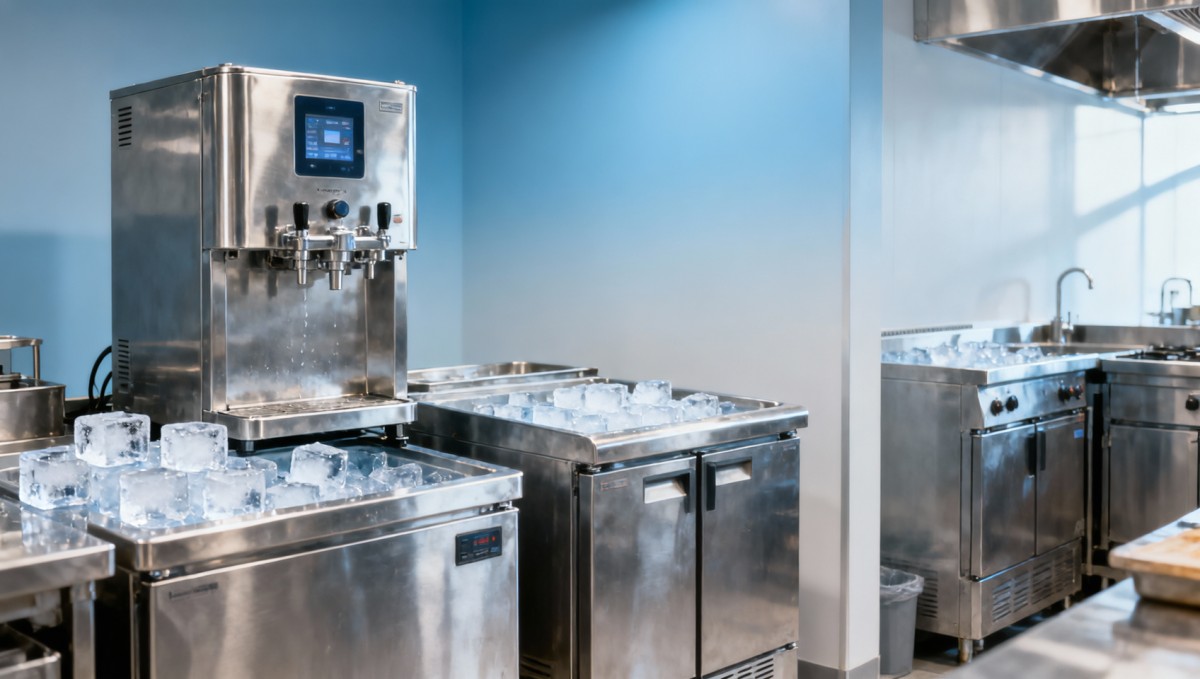
Summer exposes hidden weaknesses because commercial ice maker output is highly sensitive to heat, ventilation, and peak usage patterns. A unit rated for a certain volume per 24 hours is usually tested under standard conditions, not in a kitchen corner running at 32°C ambient temperature with warm incoming water and nonstop door openings. Under those conditions, real output can drop significantly.
A common mistake is sizing to average daily use rather than peak-hour demand. A restaurant may estimate 180 kg of ice per day, but if 45% to 55% of that demand occurs within a 4-hour lunch and dinner rush, the issue is not only total production. It is whether the machine and storage bin can keep up during concentrated spikes without service interruption.
Another summer-specific factor is surrounding equipment load. Commercial freezers, prep tables, combi ovens, and dishwashing areas all add heat into the room. If the ice machine sits next to hot-line equipment or lacks the recommended clearance of 150 mm to 300 mm around intake and exhaust zones, capacity loss and compressor strain become more likely during high-temperature months.
Operators also underestimate behavioral changes. In hot weather, customers order more cold drinks, staff use more ice for display and food holding, and back-of-house teams may need additional ice for produce cooling or seafood handling. An increase of just 20% to 30% in beverage-driven demand can turn a “correctly sized” machine into a daily bottleneck.
Typical summer stress points in a commercial kitchen
- Ambient room temperature rises from a normal 22°C–25°C to 30°C–35°C, reducing production efficiency.
- Incoming water temperature can increase by 5°C–10°C, extending freeze cycles.
- Drink sales may grow 15%–40% in cafés, bars, hotels, and quick-service operations.
- More frequent ice bin openings accelerate melt loss and reduce usable reserve during rush periods.
These factors explain why summer is often the first season when buyers discover that the original calculation was incomplete. The lesson is not seasonal panic purchasing. It is the need for a full demand model that accounts for environment, workflow, and service intensity.
Where ice production calculations go wrong
Sizing errors usually begin with a simplified formula: seats multiplied by a rough ice-per-customer estimate. While this can be a starting point, it is too limited for modern foodservice operations. A hotel breakfast station, a cocktail bar, a central kitchen, and a seafood restaurant may all serve similar daily covers, yet their ice profiles differ in type, timing, and storage needs.
The second error is confusing production rate with available ice. A machine rated at 240 kg per 24 hours does not mean 240 kg is immediately ready at opening time. If the storage bin only holds 100 kg and the operation consumes 60 kg in the first 90 minutes, the site depends on recovery speed. This is why production capacity and bin capacity must be evaluated together.
The third error is ignoring use beyond beverages. Ice may support salad bars, seafood display, ingredient chilling, dough temperature control, food safety holding, and emergency backup during refrigeration fluctuations. In food processing or high-volume prep environments, non-beverage usage can account for 25% to 50% of daily consumption.
The fourth error is failing to apply a summer operating margin. In many projects, adding a 15% to 25% buffer above expected peak demand is a practical planning method. The exact margin depends on climate, room design, service style, and whether the site has one machine or a redundant two-unit arrangement.
Common miscalculations and their operational effect
The table below summarizes recurring sizing mistakes seen across restaurants, hotels, and production kitchens. It also shows why procurement teams should compare machine capacity with actual service rhythm rather than headline specifications alone.
The main conclusion is that sizing must connect at least 4 variables: daily consumption, peak-hour drawdown, storage reserve, and environmental derating. If one of these is omitted, the commercial ice maker may appear correctly specified while still failing in real summer operation.
A practical 5-step calculation framework
- Measure expected daily ice use by application: drinks, prep, display, food safety, and backup.
- Identify the highest 2-hour and 4-hour demand blocks during service.
- Compare machine production capacity with required refill speed and bin drawdown.
- Adjust for room temperature, water temperature, and ventilation conditions.
- Add a 15%–25% resilience margin for summer peaks and future menu changes.
How to size a commercial ice maker with the rest of the kitchen system
A commercial ice maker should not be specified in isolation. In professional kitchen design, it must work with freezer storage, refrigerated prep stations, kitchen prep table traffic, ingredient flow, and utility planning. A site with poor prep zoning may consume more ice simply because staff use it as a temporary cooling solution while products wait for space in refrigerated workstations.
This is especially important for procurement teams comparing several categories of kitchen preparation equipment. If a commercial freezer is undersized or too far from the prep line, operators may rely on more open-pan chilling. If a prep table lacks enough refrigerated pan capacity, ice is often used to bridge temperature control. These indirect workflow issues can add hidden ice demand that was never included in the machine selection.
The most effective approach is to review the kitchen as a connected cold-chain system. That means mapping product movement from receiving to storage, prep, service, and cleaning. In many facilities, 3 zones matter most: the beverage zone, the food prep zone, and the holding or display zone. Each zone has different timing and contamination risks, so the ice solution may require separate access points or even separate equipment types.
Decision-makers should also look at redundancy. For operations with more than 250 seats, multi-outlet beverage demand, or critical banquet service, two mid-capacity units can sometimes offer better continuity than one large unit. If one machine needs cleaning or service, the second unit reduces disruption and protects foodservice continuity during the busiest months.
Kitchen system checkpoints before final equipment selection
- Check whether prep tables provide enough refrigerated ingredient capacity for the busiest 2 service windows.
- Confirm that freezer and cold-room capacity cover at least 1 to 3 days of planned inventory without overflow.
- Measure walking distance from ice access point to beverage and prep stations; long paths increase handling time and waste.
- Review drainage, water filtration, and ventilation before approving the final location.
The following comparison helps teams connect ice maker sizing with broader kitchen planning decisions rather than treating it as a stand-alone purchase.
When the ice system is aligned with freezer planning, prep line design, and service flow, operators gain more than extra kilograms per day. They reduce staff movement, improve temperature control, and lower the risk of last-minute workarounds that raise labor pressure during summer peaks.
Selection standards for buyers, operators, and enterprise decision-makers
Different stakeholders look at commercial ice maker sizing from different angles. Operators care about whether the machine runs through service without interruption. Procurement teams compare lifecycle cost, utility demand, and service support. Business leaders focus on downtime risk, food safety exposure, and the fit between equipment investment and growth plans over the next 12 to 36 months.
A balanced selection process usually starts with 4 practical metrics: daily production under site conditions, storage bin capacity, energy and water efficiency, and cleaning or maintenance burden. Capacity alone is not enough. A larger unit with poor access for cleaning or poor water quality protection may create scaling, sanitation, and service issues that erase its benefit.
The ice type also matters. Cube ice, nugget ice, flake ice, and half-dice options serve different uses. Beverage-heavy locations often prefer consistent cube formats for presentation and slower melt. Seafood displays and ingredient holding may require flake-style solutions. Buyers should link the ice form to application, because the wrong ice type can increase consumption or fail to support handling needs.
For multi-site groups and expanding brands, standardization can be just as valuable as raw capacity. Using a defined equipment range across 5, 10, or 20 outlets simplifies staff training, spare parts planning, preventive maintenance, and vendor coordination. Standardization also helps procurement teams compare performance across branches more clearly.
A practical buyer checklist
- Validate output at expected summer conditions, not only laboratory rating conditions.
- Check whether bin capacity supports the first 2 to 3 hours of the busiest service block.
- Review filtration, cleaning frequency, and access for routine sanitation every 3 to 6 months.
- Confirm electrical load, drainage, and ventilation requirements before final purchase approval.
- Assess after-sales response expectations, especially for summer service windows.
Typical sizing bands by use case
The ranges below are not fixed rules, but they are useful starting points for early planning discussions in foodservice and kitchen equipment procurement.
What matters most is not fitting neatly into a capacity band. It is using these bands to ask better questions about operating rhythm, growth, resilience, and total kitchen performance.
Implementation, maintenance, and summer risk control
Even a correctly sized commercial ice maker can underperform if installation and maintenance are weak. Water filtration, condenser cleanliness, drainage reliability, and airflow all influence performance. In many kitchens, preventive maintenance every 3 to 6 months is a sensible baseline, while high-mineral water or high-volume summer service may justify shorter intervals.
Placement discipline is equally important. The machine should not be squeezed into dead space without regard to heat rejection or cleaning access. If service technicians cannot reach panels easily, routine maintenance gets delayed. Over time, scale buildup, blocked filters, and poor condenser condition reduce output, increase power draw, and shorten component life.
For enterprise operators, summer preparation should be treated as a pre-season readiness process. That can include checking bin hygiene, inspecting water lines, reviewing hourly draw patterns, and confirming emergency response arrangements before the hottest months begin. A 2-hour service interruption during peak beverage traffic can have a larger revenue effect than many buyers initially assume.
Maintenance also links directly to food safety. Ice is a food-contact product, so sanitation standards matter. Poor cleaning routines, contaminated scoops, or cross-traffic between prep zones and the ice bin can create hygiene problems. That is why operators should train staff on handling procedures, cleaning frequency, and separation from raw-food workflows.
FAQ for sizing and operation
How much safety margin should buyers add for summer?
A practical planning allowance is often 15% to 25% above expected peak demand. In very hot regions, high-volume beverage operations, or sites with limited ventilation, some teams may review a wider margin. The final number should reflect real site conditions rather than a generic rule.
Is one large machine better than two smaller units?
Not always. One large machine may save floor space, but two units can improve redundancy, cleaning flexibility, and risk control. For sites with banquets, hotel events, or high dependence on cold beverages, split capacity may reduce downtime impact and allow staggered maintenance.
How often should a commercial ice maker be cleaned?
Many operations schedule routine cleaning and inspection every 3 to 6 months, but water hardness, seasonal load, and sanitation risk may require more frequent attention. Weekly visual checks, monthly filter review, and seasonal deep cleaning are common operational practices.
What should procurement teams ask suppliers before ordering?
Ask for production assumptions, installation requirements, water quality recommendations, maintenance access needs, and realistic service response arrangements. It is also useful to confirm how the quoted capacity changes when room temperature and water temperature rise above standard conditions.
Commercial ice maker sizing errors rarely start as obvious failures. They begin as small planning gaps around peak demand, storage reserve, installation environment, and kitchen workflow. Summer simply reveals those gaps faster. For restaurants, hotels, food processing sites, and multi-site foodservice operators, the right solution is a system-based evaluation that links ice demand with commercial freezer capacity, prep table design, utility readiness, and maintenance discipline.
If you are reviewing kitchen preparation equipment, expanding a foodservice operation, or replacing an undersized ice machine before the next peak season, now is the right time to validate your demand model and equipment configuration. Contact us to discuss your operating scenario, get a tailored equipment recommendation, and explore more reliable commercial kitchen solutions.
Popular Tags
Kitchen Industry Research Team
Dedicated to analyzing emerging trends and technological shifts in the global hospitality and foodservice infrastructure sector.
Industry Insights
Join 15,000+ industry professionals. Get the latest market trends and tech news delivered weekly.
No spam. Unsubscribe anytime.



Contact With us
Contact:
Anne Yin (Ceramics Dinnerware/Glassware)
Lucky Zhai(Flatware)