How to compare glass party vase options for bulk orders
Choosing the right glass party vase for bulk orders requires more than comparing prices. Procurement teams need to evaluate material quality, size consistency, packaging safety, customization options, and supplier reliability to avoid costly mistakes. Whether sourcing for hospitality, events, or retail distribution, a smart comparison process helps secure durable products, stable delivery, and better long-term value.
For buyers serving restaurants, hotels, banquet halls, catering groups, and kitchen-related hospitality projects, the right glass party vase often supports table presentation, buffet styling, event decoration, and branded guest experiences. In bulk purchasing, even a small variation of 2–3 mm in height, rim diameter, or base thickness can affect shelf display, floral arrangement stability, and visual consistency across hundreds of units.
That is why comparison should focus on total procurement value instead of unit price alone. A lower quote may lead to 5%–8% breakage during shipping, delayed replenishment, or mismatch with foodservice presentation standards. A stronger sourcing process helps procurement teams reduce returns, control operating costs, and align decorative glassware purchases with broader hospitality and kitchen service goals.
Why glass party vase comparison matters in bulk procurement
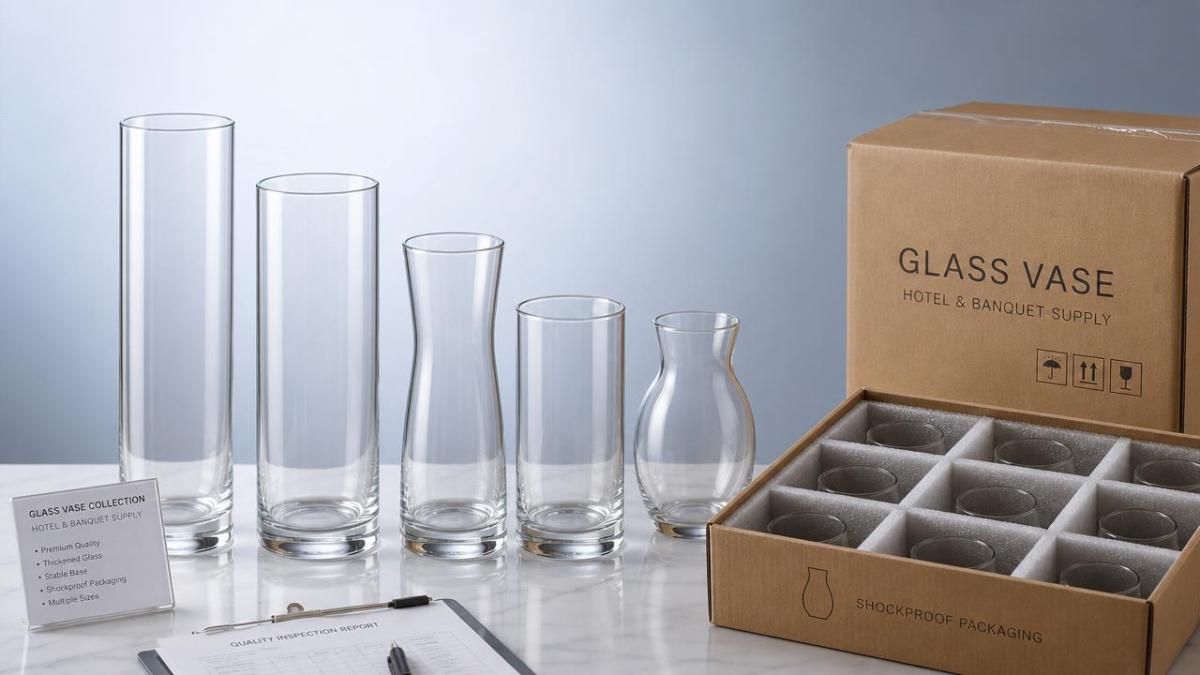
In hospitality and foodservice environments, decorative items are rarely isolated purchases. A glass party vase may be ordered together with buffet accessories, serving equipment, tableware, beverage stations, or banquet setup supplies. Procurement teams therefore need products that fit operational workflows, storage limits, cleaning routines, and event turnover schedules that may run 2 to 4 times per week.
Bulk buyers usually compare at least 4 core factors: glass quality, dimensional consistency, packaging protection, and supplier execution. When one of these elements fails, the impact reaches beyond aesthetics. Unstable vases can tip during service, inconsistent sizing disrupts visual merchandising, and weak packaging can create replacement costs before products even reach the warehouse.
Common B2B use cases
The same glass party vase may serve very different purchasing purposes depending on the channel. Hotels may use 200 to 800 pieces for weddings and conference banquets. Restaurant groups may buy smaller runs of 50 to 150 units per branch. Retail importers often focus on resale packaging, barcode placement, and seasonal style variations.
- Hotel banquet and event decoration programs
- Restaurant tabletop styling and seasonal promotions
- Catering and central kitchen event support systems
- Retail distribution for home, party, and hospitality supply stores
- Gift and promotional sourcing for branded service environments
Key risks when comparing only on price
A low quotation can look attractive at the RFQ stage, but procurement teams should calculate the landed risk. If a shipment of 1,000 pieces arrives with a 6% defect rate, the actual usable volume drops to 940 units before deployment. That gap may force emergency replenishment, which often costs 10%–20% more due to rush production or air freight.
The table below shows how common comparison points affect purchasing outcomes for hospitality and kitchen-support buyers.
For most procurement teams, packaging and tolerance control are as important as style. A visually attractive glass party vase loses value quickly if it cannot survive handling in warehouses, banquet setup, or cross-border transport. Reliable comparison starts with measurable checkpoints, not broad claims.
How to evaluate product specifications before placing a bulk order
A structured specification review helps buyers compare like for like. Many quotation problems happen because suppliers price different quality levels under similar product photos. Before evaluating cost, procurement teams should confirm 6 specification points: material type, dimensions, thickness, weight, finish quality, and packing configuration.
Material and visual quality
Clear soda-lime glass is common in volume orders because it balances cost and appearance. Buyers should still ask whether the glass has visible bubbles, mold lines, sharp rim edges, or color inconsistency. For banquet or retail display use, acceptable quality should support clean transparency under direct lighting from 3000K to 4000K indoor conditions.
Questions to include in your technical review
- What is the standard height and opening diameter in millimeters?
- What is the tolerance range for each production batch?
- What is the average unit weight and base thickness?
- Is the rim smooth enough for hand washing and repeated handling?
- Are there visible defects allowed per carton or per 100 pieces?
Size consistency for hospitality presentation
If the glass party vase will be used on restaurant tables, buffet counters, or wedding centerpieces, consistency matters. A difference of only 5 mm between pieces may be noticeable in a premium setting. Buyers should request sample sets of 3 to 5 units from the same production run instead of evaluating a single pre-selected sample.
The following table provides a practical specification framework for comparing multiple suppliers.
These parameters make quotations easier to compare and reduce disputes after delivery. For procurement teams managing multiple hospitality sites, standardizing specification sheets can also shorten future sourcing cycles by 20%–30%.
Supplier comparison: beyond price, MOQ, and lead time
A competitive glass party vase offer should combine product fit, production reliability, and communication discipline. In practice, buyers should compare at least 5 supplier capabilities: MOQ flexibility, sample handling, production lead time, quality control process, and after-sales support. This is especially important when decorative glassware is sourced alongside kitchen equipment or hospitality operating supplies under one procurement schedule.
MOQ and production planning
Typical MOQ for standard vase designs may start from 100 to 500 pieces, while custom colors, decals, or gift box packaging may raise the threshold to 1,000 units or more. Buyers should confirm whether MOQ applies per design, per size, or per color. That distinction affects inventory turnover and the feasibility of mixed hospitality programs.
Lead time and order rhythm
For standard models, production may take around 15–30 days after deposit and sample confirmation. Custom decoration can extend lead time by 7–15 additional days. Procurement teams planning seasonal events, restaurant launches, or retail campaigns should build in buffer time for sample approval, packaging revision, and shipping delays.
Supplier screening checklist
- Can the supplier provide current production photos or batch inspection records?
- How many days are needed for a plain sample and a customized sample?
- Can carton marks, labels, and barcodes be adapted for warehouse systems?
- What is the stated breakage handling process if damage exceeds the agreed threshold?
- Is mixed loading with related hospitality or kitchen-support products possible?
For buyers in broader foodservice supply chains, mixed procurement can be a major advantage. If a supplier or trading partner can coordinate decorative glass items with tabletop accessories or non-electric service products, consolidation may reduce freight complexity and improve receiving efficiency at hotels, restaurants, or distribution centers.
Packaging, logistics, and damage control for bulk glass party vase orders
Packaging is often the hidden factor that decides whether a bulk glass party vase order is profitable. A good product packed poorly can turn into a claims problem within 7 to 21 days of transit. Procurement teams should assess inner protection, outer carton strength, palletization practice, and labeling clarity before confirming shipment.
What protective packaging should include
At a minimum, bulk packaging should use compartment dividers, sufficient cushioning, and export-ready cartons suited to stacking pressure. For long-distance shipments, especially sea freight, moisture exposure and carton compression should be considered. Buyers handling 500 to 5,000 pieces should also review pallet height and loading layout to reduce movement during transport.
Below is a practical guide for comparing packaging methods and logistics risks.
For cross-border orders, packaging review should be part of sample approval. A buyer may accept a beautiful vase sample, but if the transit packaging is not tested or at least visually verified, hidden cost can erase the savings of the original quote. This is especially relevant when decorative items are needed for coordinated hotel openings or high-volume banquet schedules.
Customization, quality control, and final buying decisions
Many buyers need more than a standard glass party vase. Hospitality groups may require a specific height to fit table concepts, while retailers may request custom labels, color finishes, or gift-ready cartons. Customization adds value, but it also adds approval steps. In most projects, buyers should plan for 3 stages: sample review, production confirmation, and pre-shipment inspection.
When customization makes sense
Customization is worth considering when the order volume is high enough to justify tooling, decoration setup, or private packaging. For example, a hotel chain with 10 properties may standardize one vase style across all banquet rooms. A distributor may choose custom outer cartons to improve shelf identity and reduce relabeling time at the warehouse.
Quality control points before shipment
A practical pre-shipment check should cover appearance, measurement, count accuracy, and packaging condition. Even without a formal third-party inspection, buyers can request batch photos, random measurement records, and carton marking confirmation. For bulk orders above 1,000 pieces, a pre-shipment review is often a lower-cost precaution than post-arrival dispute handling.
Final decision framework for procurement teams
- Shortlist 2 to 3 suppliers with comparable specifications.
- Review total landed cost instead of ex-factory price only.
- Compare defect tolerance, breakage handling, and replacement terms.
- Confirm lead time against event, launch, or stocking schedules.
- Approve production sample and packaging sample before deposit release.
For procurement professionals in hospitality, foodservice, and kitchen-support supply chains, a good glass party vase purchase is one that arrives intact, matches the approved sample, fits the visual concept, and can be reordered without friction. Consistency, responsiveness, and packaging discipline often matter more than a marginal price gap of a few cents per unit.
A reliable comparison process helps buyers balance appearance, operational durability, and supply stability. By checking specifications, supplier capability, packaging protection, and customization requirements in a structured way, procurement teams can reduce avoidable loss and secure better long-term value from every glass party vase order. If you are planning a hospitality, event, retail, or foodservice-related sourcing project, contact us now to get a tailored bulk solution, discuss product details, and explore more sourcing options.
Popular Tags
Kitchen Industry Research Team
Dedicated to analyzing emerging trends and technological shifts in the global hospitality and foodservice infrastructure sector.
Industry Insights
Join 15,000+ industry professionals. Get the latest market trends and tech news delivered weekly.
No spam. Unsubscribe anytime.
Hot Articles
 Choosing Commercial Cooking Appliances for Your Menu and Peak Service Demand
- Choosing Bakery Equipment for a Small Bakery: Capacity, Space, and Budget
- How to Choose Glass Office Decor Vases That Enhance Reception and Meeting Spaces
- How to Choose Ceramic Serving Plates for Restaurants, Catering, and Banquet Service
Contact With us
Contact:
Anne Yin (Ceramics Dinnerware/Glassware)
Lucky Zhai(Flatware)